Skip to Content
Merck
CN

92732

Trimethylsulfonium hydroxide solution

~0.25 M in methanol, derivatization grade (GC derivatization), LiChropur

Synonym(s):

TMSH

Sign In to View Organizational & Contract Pricing.

Select a Size


About This Item

Linear Formula:
(CH3)3S(OH)
CAS Number:
Molecular Weight:
94.18
UNSPSC Code:
12352200
NACRES:
NA.22
PubChem Substance ID:
MDL number:
Beilstein/REAXYS Number:
3910286
Technical Service
Need help? Our team of experienced scientists is here for you.
Let Us Assist
Technical Service
Need help? Our team of experienced scientists is here for you.
Let Us Assist

Product Name

Trimethylsulfonium hydroxide solution, ~0.25 M in methanol, derivatization grade (GC derivatization), LiChropur

InChI key

MDTPTXSNPBAUHX-UHFFFAOYSA-M

SMILES string

[OH-].C[S+](C)C

InChI

1S/C3H9S.H2O/c1-4(2)3;/h1-3H3;1H2/q+1;/p-1

grade

derivatization grade (GC derivatization)

form

liquid

quality

LiChropur

reaction suitability

reagent type: derivatization reagent
reaction type: Alkylations

packaging

pkg of 10 × 1 mL

concentration

~0.25 M in methanol

technique(s)

gas chromatography (GC): suitable

storage temp.

2-8°C

Quality Level

Application

TMSH solution has been used as a derivatizing agent in a study to determine the fatty acids in milk samples using thermochemolysis-gas chromatography-mass spectrometry.

General description

Trimethylsulfonium hydroxide (TMSH) is a methylating reagent. It can be prepared by dissolving trimethylsulfonium iodide in methanol and water solvent further treating with silver oxide.

Other Notes

Reagent for the methylation of nucleophiles, e.g. carboxylic acids, alcohols, thiols, N-heterocycles; Rapid derivatization of acids for GC by pre-column transesterification of glycerides

Legal Information

LiChropur is a trademark of Merck KGaA, Darmstadt, Germany

signalword

Danger

Hazard Classifications

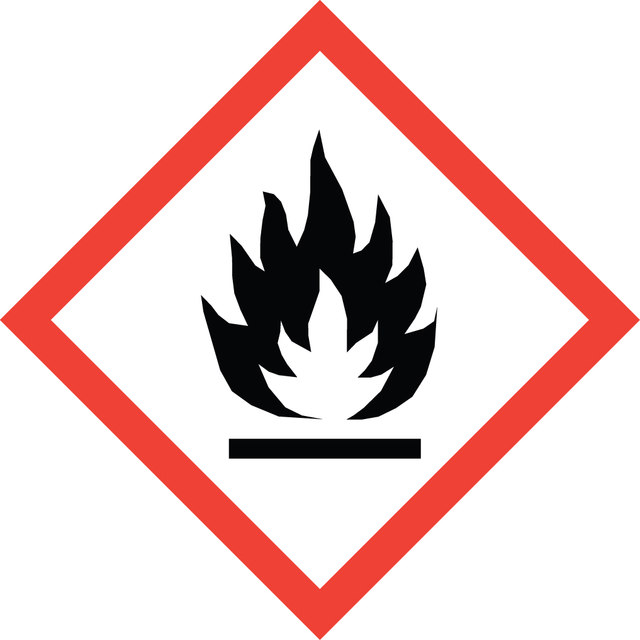
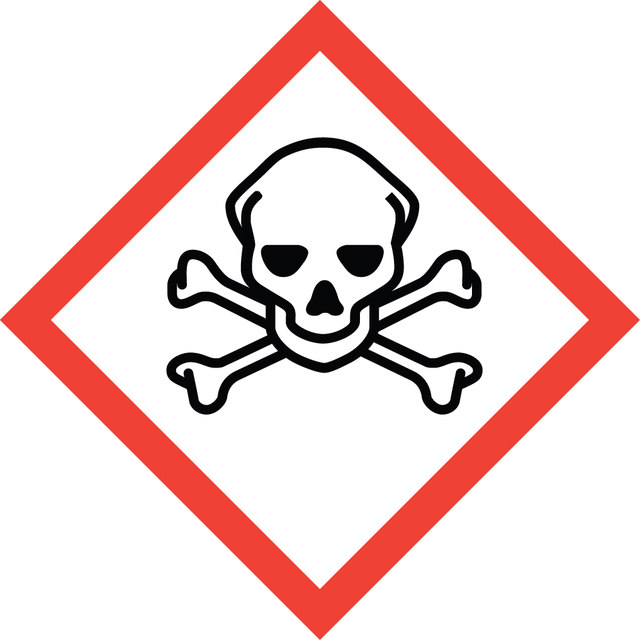
Acute Tox. 3 Dermal - Acute Tox. 3 Inhalation - Acute Tox. 3 Oral - Eye Irrit. 2 - Flam. Liq. 2 - Skin Irrit. 2 - STOT SE 1

target_organs

Eyes,Central nervous system

Storage Class

3 - Flammable liquids

wgk

WGK 2

flash_point_f

51.8 °F - closed cup

flash_point_c

11 °C - closed cup

ppe

Faceshields, Gloves, Goggles, type ABEK (EN14387) respirator filter

Regulatory Information

危险化学品
This item has

Choose from one of the most recent versions:

Certificates of Analysis (COA)

Lot/Batch Number

Don't see the Right Version?

If you require a particular version, you can look up a specific certificate by the Lot or Batch number.

Already Own This Product?

Find documentation for the products that you have recently purchased in the Document Library.

Visit the Document Library

K.D. Muller et al.
Chromatographia, 30, 245-245 (1990)
Direct analysis of fatty acid profile from milk by thermochemolysis?gas chromatography?mass spectrometry.
Reis, Mariza Gomes, et al.
Journal of Chromatography A, 1218.2, 316-323 (2011)
K. Yamauchi et al.
Bulletin of the Chemical Society of Japan, 59, 2947-2947 (1986)
Marco Beccaria et al.
Analytical and bioanalytical chemistry, 410(30), 7987-7996 (2018-10-30)
Gas chromatography (GC) coupled with electron ionization (EI) mass spectrometry (MS) is a well-established technique for the analysis of volatile and semi-volatile compounds. The main advantage is the highly repeatable fragmentation of the compounds into the ion source, generating intense
Félix B Rosumek et al.
Frontiers in zoology, 14, 36-36 (2017-07-19)
Trophic interactions are a fundamental aspect of ecosystem functioning, but often difficult to observe directly. Several indirect techniques, such as fatty acid analysis, were developed to assess these interactions. Fatty acid profiles may indicate dietary differences, while individual fatty acids

Our team of scientists has experience in all areas of research including Life Science, Material Science, Chemical Synthesis, Chromatography, Analytical and many others.

Contact Technical Service