Skip to Content
Merck
CN

918660

γ-Valerolactone

greener alternative

BioRenewable, ≥99%, ReagentPlus®

Synonym(s):

GVL, γ-Methyl-γ-butyrolactone, 4,5-Dihydro-5-methyl-2(3H)-furanone, 4-Hydroxypentanoic acid lactone

Sign In to View Organizational & Contract Pricing.

Select a Size


About This Item

Empirical Formula (Hill Notation):
C5H8O2
CAS Number:
Molecular Weight:
100.12
NACRES:
NA.21
UNSPSC Code:
12352100
Beilstein/REAXYS Number:
80420
MDL number:
Assay:
≥99%
Bp:
207-208 °C (lit.)
82-85 °C/10 mmHg (lit.)
Technical Service
Need help? Our team of experienced scientists is here for you.
Let Us Assist
Technical Service
Need help? Our team of experienced scientists is here for you.
Let Us Assist

Product Name

γ-Valerolactone, BioRenewable, ≥99%, ReagentPlus®

SMILES string

CC1CCC(=O)O1

InChI key

GAEKPEKOJKCEMS-UHFFFAOYSA-N

InChI

1S/C5H8O2/c1-4-2-3-5(6)7-4/h4H,2-3H2,1H3

vapor density

3.45 (vs air)

product line

ReagentPlus®

assay

≥99%

form

liquid

greener alternative product characteristics

Safer Solvents and Auxiliaries
Use of Renewable Feedstocks
Design for Degradation
Learn more about the Principles of Green Chemistry.

sustainability

Greener Alternative Product

dilution

(for general lab use)

refractive index

n20/D 1.432 (lit.)

bp

207-208 °C (lit.)
82-85 °C/10 mmHg (lit.)

mp

−31 °C (lit.)

density

1.05 g/mL at 25 °C (lit.)

greener alternative category

Quality Level

Looking for similar products? Visit Product Comparison Guide

Application

Cross-coupling reactions
  • HATU Amide Coupling
  • Suzuki-Miyaura coupling reaction
  • Sonogashira coupling reaction


ATRP polymerization
  • Replacement of DCM in peptide synthesis


Features and Benefits

  • Made from Renewable Resource - rice
  • Biodegradable
  • Non-toxic
  • Low vapor pressure

General description

We are committed to bringing you Greener Alternative Products, which adhere to one of the four categories of Greener Alternatives. This product is a Biobased products, showing key improvements in Green Chemistry Principles “Less Hazardous Chemical Syntheses” ,“Use of Renewable Feedstock” and "Design for Degradation".

Legal Information

ReagentPlus is a registered trademark of Merck KGaA, Darmstadt, Germany

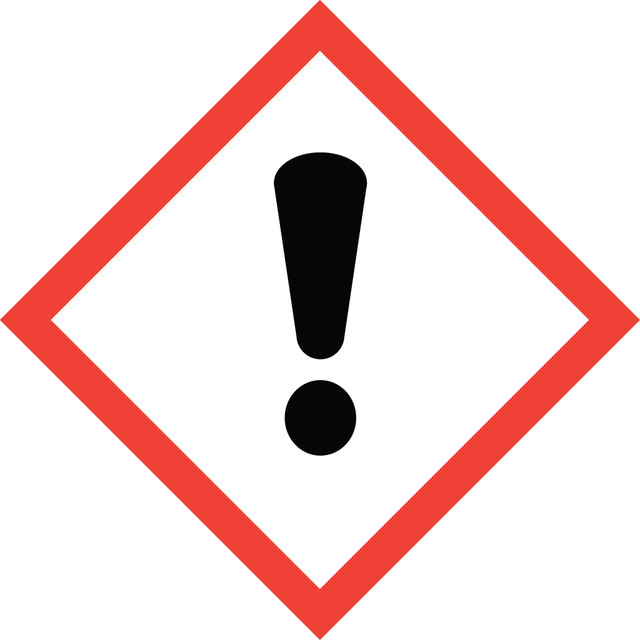
pictograms

Exclamation mark

signalword

Warning

hcodes

Hazard Classifications

Eye Irrit. 2 - Skin Irrit. 2

Storage Class

10 - Combustible liquids

wgk

WGK 1

flash_point_f

204.8 °F - closed cup

flash_point_c

96 °C - closed cup


Choose from one of the most recent versions:

Certificates of Analysis (COA)

Lot/Batch Number

Don't see the Right Version?

If you require a particular version, you can look up a specific certificate by the Lot or Batch number.

Already Own This Product?

Find documentation for the products that you have recently purchased in the Document Library.

Visit the Document Library

  1. What is a BioRenewable solvent?

    BioRenewable solvents are sourced from renewable and sustainable biobased materials, such as soy/palm oil, wood waste, hay or corn byproducts, etc. It is important to highlight that our BioRenewable products do not compete with food production.

  2. Why should you use BioRenewable solvents?

    You will contribute to create a sustainable world, significantly lowering environmental impact. Biorenewable solvents also decrease petroleum sources dependency, have higher recovery rates, and/or are safer for handling and disposal.

  3. Do BioRenewable solvents have a similar quality to petroleum-based solvents?

    BioRenewable solvents can have the same or higher purity level compared to traditional solvents. These solvents are free of the many byproducts of petroleum manufacturing, such as benzene, aldehydes, and ethers.

Our team of scientists has experience in all areas of research including Life Science, Material Science, Chemical Synthesis, Chromatography, Analytical and many others.

Contact Technical Service