Skip to Content
Merck
CN

89193

Cholecalciferol

tested according to Ph. Eur.

Synonym(s):

Cholecalciferolum, (+)-Vitamin D3, 7-Dehydrocholesterol activated, Activated 7-dehydrocholesterol, Calciol

Sign In to View Organizational & Contract Pricing.

Select a Size


About This Item

Empirical Formula (Hill Notation):
C27H44O
CAS Number:
Molecular Weight:
384.64
EC Number:
200-673-2
UNSPSC Code:
12352200
PubChem Substance ID:
Beilstein/REAXYS Number:
2339331
MDL number:
Technical Service
Need help? Our team of experienced scientists is here for you.
Let Us Assist
Technical Service
Need help? Our team of experienced scientists is here for you.
Let Us Assist

InChI key

QYSXJUFSXHHAJI-YRZJJWOYSA-N

InChI

1S/C27H44O/c1-19(2)8-6-9-21(4)25-15-16-26-22(10-7-17-27(25,26)5)12-13-23-18-24(28)14-11-20(23)3/h12-13,19,21,24-26,28H,3,6-11,14-18H2,1-2,4-5H3/b22-12+,23-13-/t21-,24+,25-,26+,27-/m1/s1

SMILES string

CC(C)CCC[C@@H](C)[C@@]1([H])CC[C@@]([C@]1(C)CCC/2)([H])C2=C\C=C(C[C@@H](O)CC3)/C3=C

agency

tested according to Ph. Eur.

application(s)

pharmaceutical (small molecule)

storage temp.

2-8°C

Looking for similar products? Visit Product Comparison Guide

Biochem/physiol Actions

Vitamin D acts through a receptor that is a member of the ligand-dependent transcription factor superfamily. Modulates the proliferation and differentiation of both normal and cancer cells. Has antiproliferative and antimetastatic effects on breast, colon, and prostate cancer cells. Activated vitamin D receptors in intestine and bone maintain calcium absorbance and homeostasis.
Vitamin D acts through a receptor that modulates the proliferation and differentiation of both normal and cancer cells.

pictograms

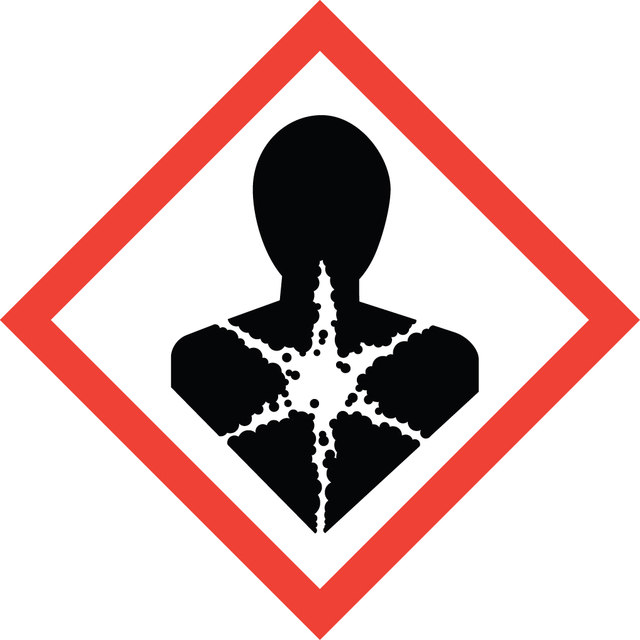
Skull and crossbonesHealth hazard

signalword

Danger

Hazard Classifications

Acute Tox. 2 Dermal - Acute Tox. 2 Inhalation - Acute Tox. 2 Oral - STOT RE 1 Oral

Storage Class

6.1A - Combustible acute toxic Cat. 1 and 2 / very toxic hazardous materials

wgk

WGK 2

flash_point_f

Not applicable

flash_point_c

Not applicable

ppe

Eyeshields, Faceshields, Gloves, type P3 (EN 143) respirator cartridges

Regulatory Information

新产品
This item has

Choose from one of the most recent versions:

Certificates of Analysis (COA)

Lot/Batch Number

It looks like we've run into a problem, but you can still download Certificates of Analysis from our Documents section.

If you need assistance, please contact Customer Support

Already Own This Product?

Find documentation for the products that you have recently purchased in the Document Library.

Visit the Document Library

C Jackson et al.
QJM : monthly journal of the Association of Physicians, 100(4), 185-192 (2007-02-20)
We evaluated the effect of supplementation with vitamin D(3) (excluding the potential effect of calcium supplementation) on the risk of fall and fracture, primarily in postmenopausal women, using a systematic literature review of MEDLINE, EMBASE, BIOSIS and the Cochrane Database
Robert Scragg et al.
Hypertension (Dallas, Tex. : 1979), 64(4), 725-730 (2014-07-02)
Previous randomized controlled trials of vitamin D supplementation and blood pressure (BP) mainly have given vitamin D for short periods (<6 months) or at low doses (400 IU per day). This study aims to determine whether long-term high-dose vitamin D
Frances C Bach et al.
Journal of cellular physiology, 229(12), 1999-2014 (2014-04-30)
The endocrine feedback loop between vitamin D3(1,25(OH)2D3) and parathyroid hormone (PTH) plays a central role in skeletal development. PTH-related protein (PTHrP) shares homology and its receptor (PTHR1) with PTH. The aim of this study was to investigate whether there is
Negar Tabatabaei et al.
The Journal of nutrition, 144(12), 1994-2001 (2014-10-25)
Whether there is a dose-dependent effect of maternal dietary cholecalciferol during pregnancy on maternal glucose tolerance is unknown. In addition, circulating osteocalcin is increased by 1,25-dihydroxyvitamin D [1,25(OH)2D] and may improve glucose homeostasis. This study was designed to test whether
Umon Agata et al.
Journal of nutritional science and vitaminology, 59(1), 29-36 (2013-03-29)
Low calcium (Ca) intake is the one of risk factors for both bone loss and medial elastocalcinosis in an estrogen deficiency state. To examine the effect of different amounts of Ca intake on the relationship between bone mass alteration and

Our team of scientists has experience in all areas of research including Life Science, Material Science, Chemical Synthesis, Chromatography, Analytical and many others.

Contact Technical Service