Skip to Content
Merck
CN

88789

Formaldehyde dimethyl acetal

analytical standard

Synonym(s):

Dimethoxymethane, Methylal

Sign In to View Organizational & Contract Pricing.

Select a Size


About This Item

Linear Formula:
CH2(OCH3)2
CAS Number:
Molecular Weight:
76.09
UNSPSC Code:
41116107
NACRES:
NA.24
PubChem Substance ID:
EC Number:
203-714-2
Beilstein/REAXYS Number:
1697025
MDL number:
Technical Service
Need help? Our team of experienced scientists is here for you.
Let Us Assist
Technical Service
Need help? Our team of experienced scientists is here for you.
Let Us Assist

Product Name

Formaldehyde dimethyl acetal, analytical standard

InChI key

NKDDWNXOKDWJAK-UHFFFAOYSA-N

InChI

1S/C3H8O2/c1-4-3-5-2/h3H2,1-2H3

SMILES string

COCOC

grade

analytical standard

assay

≥99.5% (GC)

shelf life

limited shelf life, expiry date on the label

technique(s)

HPLC: suitable
gas chromatography (GC): suitable

refractive index

n20/D 1.354

bp

41-43 °C

density

0.860 g/mL at 20 °C (lit.)

application(s)

cleaning products
cosmetics
environmental
flavors and fragrances
food and beverages
personal care

format

neat

Quality Level

Looking for similar products? Visit Product Comparison Guide

Application

2-Fluorobiphenyl may be used an analytical standard for the determination of the analyte in surface water samples, chemical raw materials, binary and ternary mixtures with methanol and/or water by various chromatography techniques.
Refer to the product′s Certificate of Analysis for more information on a suitable instrument technique. Contact Technical Service for further support.

General description

Formaldehyde dimethyl acetal is formed as a by-product during the production of trioxane, a crucial intermediate for the manufacture of polyacetal plastics.

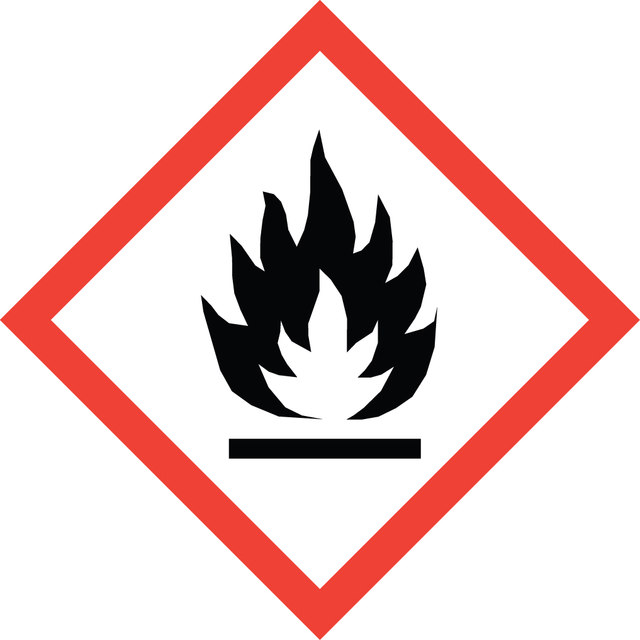
pictograms

Flame

signalword

Danger

hcodes

Hazard Classifications

Flam. Liq. 2

supp_hazards

Storage Class

3 - Flammable liquids

wgk

WGK 1

flash_point_f

-0.4 °F - closed cup

flash_point_c

-18 °C - closed cup

ppe

Eyeshields, Faceshields, Gloves

Regulatory Information

危险化学品
This item has

Choose from one of the most recent versions:

Certificates of Analysis (COA)

Lot/Batch Number

Don't see the Right Version?

If you require a particular version, you can look up a specific certificate by the Lot or Batch number.

Already Own This Product?

Find documentation for the products that you have recently purchased in the Document Library.

Visit the Document Library

Research on method for determination of methylal in chemical raw materials by head space GC-MS
ZHANG Y, et al.
Chinese journal of Health Laboratory Technology, 6 (2010)
Vapor- liquid and liquid- liquid equilibria in binary and ternary mixtures of water, methanol, and methylal
Albert M, et al.
Journal of Chemical and Engineering Data, 46(4), 897-903 (2001)
C J Miermans et al.
Chemosphere, 40(1), 39-48 (2000-02-09)
Volatile organic compounds are widely introduced into the Dutch aquatic environment. Liquid-liquid extraction and isolation by means of resins give poor recoveries for volatiles. In this study, a method has been developed to analyse these compounds with a purge and
Jenn-Huei Lii et al.
Carbohydrate research, 340(5), 853-862 (2005-03-23)
The rotational barrier for a methyl group at the end of an anomeric system is sometimes lower than we might have anticipated. Thus, in the trans-trans conformation of dimethoxymethane, the barrier to methyl rotation is calculated (B3LYP/6-311++G(2d,2p)) to be 2.22
Ronald J Gillespie et al.
Chemistry (Weinheim an der Bergstrasse, Germany), 16(12), 3663-3675 (2010-02-26)
All the atoms in a molecule attract each other until they reach their equilibrium positions at which point the repulsive forces between the atoms just balance the attractive forces and there are no resultant forces acting on any of the

Our team of scientists has experience in all areas of research including Life Science, Material Science, Chemical Synthesis, Chromatography, Analytical and many others.

Contact Technical Service