Skip to Content
Merck
CN

85126

Silanization solution I

~5% (dimethyldichlorosilane in heptane), Selectophore

Synonym(s):

Dichlorodimethylsilane solution, Dimethyldichlorosilane solution

Sign In to View Organizational & Contract Pricing.

Select a Size


About This Item

Empirical Formula (Hill Notation):
C2H6Cl2Si
CAS Number:
Molecular Weight:
129.06
UNSPSC Code:
26111700
NACRES:
NB.61
PubChem Substance ID:
MDL number:
Beilstein/REAXYS Number:
605287
Technical Service
Need help? Our team of experienced scientists is here for you.
Let Us Assist
Technical Service
Need help? Our team of experienced scientists is here for you.
Let Us Assist

Product Name

Silanization solution I, ~5% (dimethyldichlorosilane in heptane), Selectophore

InChI

1S/C2H6Cl2Si/c1-5(2,3)4/h1-2H3

SMILES string

C[Si](C)(Cl)Cl

InChI key

LIKFHECYJZWXFJ-UHFFFAOYSA-N

product line

Selectophore

form

liquid

concentration

~5% (dimethyldichlorosilane in heptane)

refractive index

n20/D 1.388

Quality Level

Looking for similar products? Visit Product Comparison Guide

General description

Visit our Sensor Applications portal to learn more.

Other Notes

Ready-to-use solution for silanizing micro-electrodes
dimethyldichlorosilane/heptane 1/30 (v/v)

Legal Information

Selectophore is a trademark of Merck KGaA, Darmstadt, Germany

signalword

Danger

Hazard Classifications

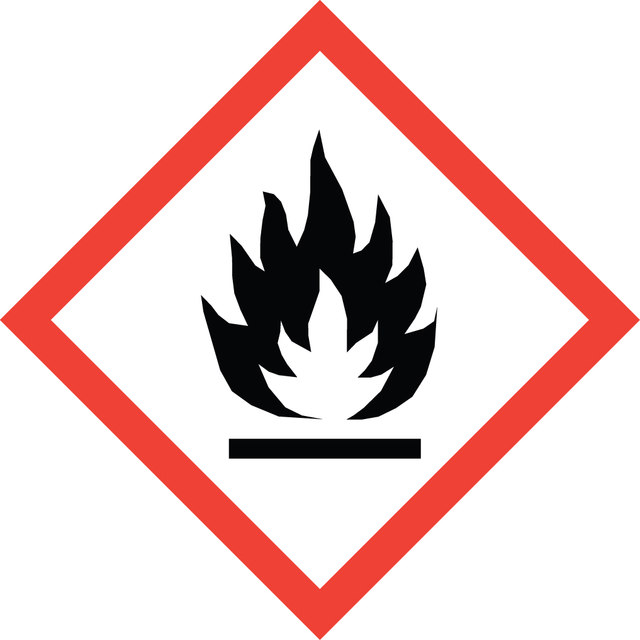
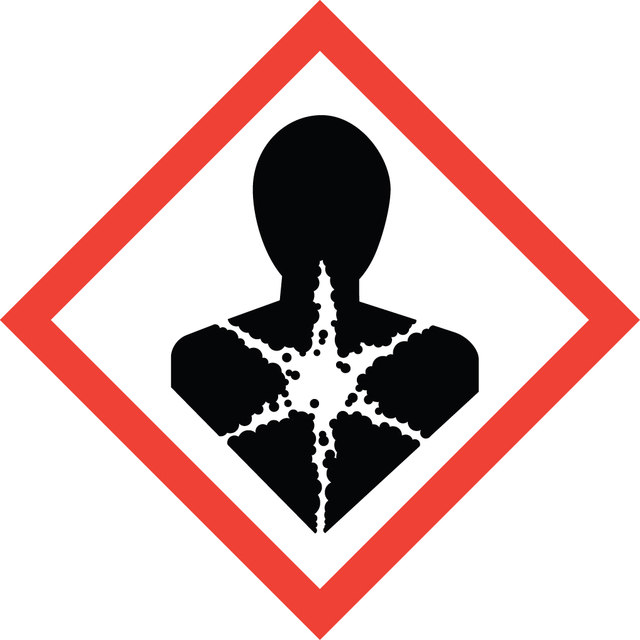
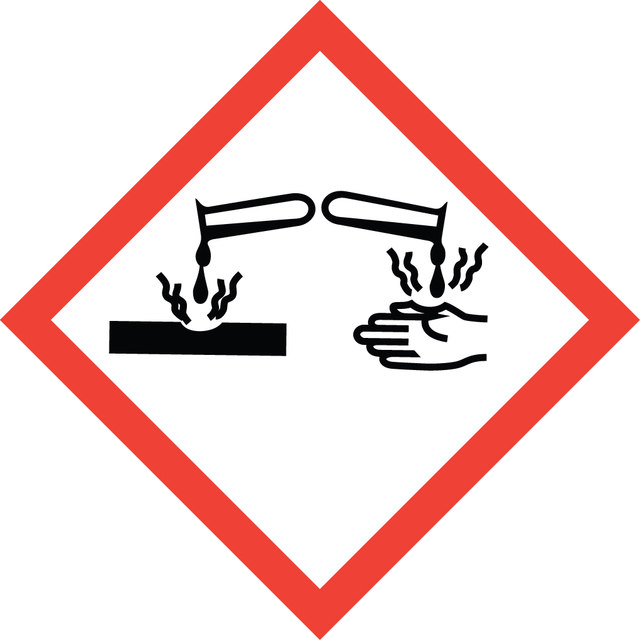
Aquatic Acute 1 - Aquatic Chronic 1 - Asp. Tox. 1 - Eye Dam. 1 - Flam. Liq. 2 - Skin Corr. 1A - STOT SE 3

target_organs

Central nervous system

Storage Class

3 - Flammable liquids

wgk

WGK 2

flash_point_f

24.8 °F - closed cup

flash_point_c

-4 °C - closed cup

ppe

Faceshields, Gloves, Goggles, type ABEK (EN14387) respirator filter

Regulatory Information

危险化学品
This item has

Choose from one of the most recent versions:

Certificates of Analysis (COA)

Lot/Batch Number

Don't see the Right Version?

If you require a particular version, you can look up a specific certificate by the Lot or Batch number.

Already Own This Product?

Find documentation for the products that you have recently purchased in the Document Library.

Visit the Document Library

María Jesús Andrés-Costa et al.
Scientific reports, 7(1), 15777-15777 (2017-11-19)
European legislation focusing on water quality is expected to broaden to encompass several pharmaceuticals as priority hazardous substances. This manuscript aims to challenge current regulatory approaches that do not recognize stereochemistry of chiral pharmaceuticals by testing the hypothesis that environmental
Ion-selective electrode for intracellular potassium measurements.
A Haemmerli et al.
Analytical chemistry, 52(8), 1179-1182 (1980-07-01)
Y C Tseng et al.
Biomaterials, 16(13), 963-972 (1995-09-01)
Amphipathic ethylene glycol-butadiene block copolymers (PEG-PB) with different chain lengths of poly(ethylene glycol) (PEG) were synthesized by reacting poly(ethylene glycol methyl ether) (m-PEG, mol. wt = 350, 550, 750, 2000 and 5000) with telechelic polybutadiene (PB). The PEG-PB copolymers formed
Zhanhui Wang et al.
Journal of biochemical and biophysical methods, 57(3), 203-211 (2003-09-27)
The feasibility of using protein A to immobilize antibody on silicon surface for a biosensor with imaging ellipsometry was presented in this study. The amount of human IgG bound with anti-IgG immobilized by the protein A on silicon surface was
P Mondal et al.
Talanta, 83(5), 1482-1486 (2011-01-18)
Polypyrrole nanoparticles of desired structure have been synthesized through simple micelle technique. It is then grafted with functionalized silica gel to develop a novel organic-inorganic hybrid material. The role of dimethyl dichloro silane (coupling agent) in grafting is demonstrated. The

Our team of scientists has experience in all areas of research including Life Science, Material Science, Chemical Synthesis, Chromatography, Analytical and many others.

Contact Technical Service