Skip to Content
Merck
CN

77597

1-Pentanol

analytical standard

Synonym(s):

n-Amyl alcohol, Pentyl alcohol

Sign In to View Organizational & Contract Pricing.

Select a Size


About This Item

Linear Formula:
CH3(CH2)4OH
CAS Number:
Molecular Weight:
88.15
UNSPSC Code:
41116107
NACRES:
NA.24
PubChem Substance ID:
EC Number:
200-752-1
Beilstein/REAXYS Number:
1730975
MDL number:
Technical Service
Need help? Our team of experienced scientists is here for you.
Let Us Assist
Technical Service
Need help? Our team of experienced scientists is here for you.
Let Us Assist

Product Name

1-Pentanol, analytical standard

InChI key

AMQJEAYHLZJPGS-UHFFFAOYSA-N

InChI

1S/C5H12O/c1-2-3-4-5-6/h6H,2-5H2,1H3

SMILES string

CCCCCO

grade

analytical standard

vapor density

3 (vs air)

vapor pressure

1 mmHg ( 13.6 °C)
1.5 mmHg ( 20 °C)

assay

≥99.8% (GC)

shelf life

limited shelf life, expiry date on the label

expl. lim.

10 %, 100 °F

technique(s)

HPLC: suitable
gas chromatography (GC): suitable

refractive index

n20/D 1.409 (lit.)
n20/D 1.410

bp

136-138 °C (lit.)

mp

−78 °C (lit.)

density

0.811 g/mL at 25 °C (lit.)

application(s)

cleaning products
cosmetics
environmental
flavors and fragrances
food and beverages
personal care

format

neat

Quality Level

Looking for similar products? Visit Product Comparison Guide

Application

1-Pentanol has been used as a reference standard for the analysis of the analyte in honey samples and in Spanish sparkling wine samples by liquid chromatography coupled with tandem mass spectrometry (LC-MS) and gas chromatography-mass spectrometry (GC-MS), respectively. It may be used as a reference standard for the determination of the analyte in food samples by two-dimensional gas chromatography equipped with flame ionization detector (FID) as well as time-of-flight spectrometry (ToF MS).
Refer to the product′s Certificate of Analysis for more information on a suitable instrument technique. Contact Technical Service for further support.

General description

1-Pentanol is a type of alcohol which has been proposed as an alternate for conventional gasoline and diesel fuels.
This substance is listed on the positive list of the EU regulation 10/2011 for plastics intended to come into contact with food.

Find all available reference materials for compounds listed in 10/2011 here

signalword

Danger

Hazard Classifications

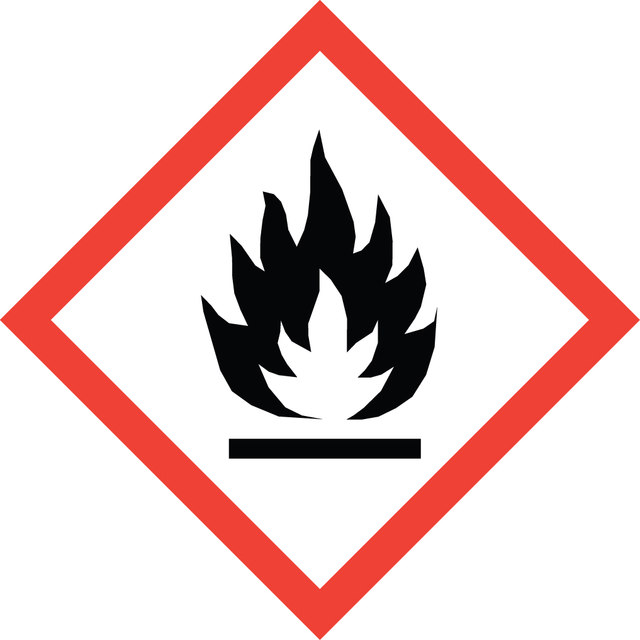
Acute Tox. 4 Inhalation - Eye Dam. 1 - Flam. Liq. 3 - Skin Irrit. 2 - STOT SE 3

target_organs

Respiratory system

Storage Class

3 - Flammable liquids

wgk

WGK 1

flash_point_f

120.2 °F - closed cup

flash_point_c

49 °C - closed cup

ppe

Eyeshields, Faceshields, Gloves, type ABEK (EN14387) respirator filter

Regulatory Information

危险化学品
This item has

Choose from one of the most recent versions:

Certificates of Analysis (COA)

Lot/Batch Number

Don't see the Right Version?

If you require a particular version, you can look up a specific certificate by the Lot or Batch number.

Already Own This Product?

Find documentation for the products that you have recently purchased in the Document Library.

Visit the Document Library

Comprehensive two-dimensional gas chromatography of complex samples by using a `reversed-type?column combination: application to food analysis
Adahchour M, et al.
Journal of Chromatography A, 1054(1-2), 47-55 (2004)
Experimental and detailed kinetic modeling study of 1-pentanol oxidation in a JSR and combustion in a bomb.
Togbe C, et al.
Proceedings of the Combustion Institute, 33(1), 367-374 (2011)
Volatile profiles of sparkling wines obtained by three extraction methods and gas chromatography?mass spectrometry (GC?MS) analysis.
Bosch-Fuste J, et al.
Food Chemistry, 105(1), 428-435 (2007)
Acid/base- and anion-controllable organogels formed from a urea-based molecular switch.
Sheng-Yao Hsueh et al.
Angewandte Chemie (International ed. in English), 49(48), 9170-9173 (2010-10-19)
Anthony F Cann et al.
Applied microbiology and biotechnology, 85(4), 893-899 (2009-10-28)
Pentanol isomers such as 2-methyl-1-butanol and 3-methyl-1-butanol are a useful class of chemicals with a potential application as biofuels. They are found as natural by-products of microbial fermentations from amino acid substrates. However, the production titer and yield of the

Our team of scientists has experience in all areas of research including Life Science, Material Science, Chemical Synthesis, Chromatography, Analytical and many others.

Contact Technical Service