Skip to Content
Merck
CN

56849

Fluorene

certified reference material, TraceCERT®

Sign In to View Organizational & Contract Pricing.

Select a Size


About This Item

Empirical Formula (Hill Notation):
C13H10
CAS Number:
Molecular Weight:
166.22
UNSPSC Code:
41116107
NACRES:
NA.24
PubChem Substance ID:
EC Number:
201-695-5
Beilstein/REAXYS Number:
1363491
MDL number:
Technical Service
Need help? Our team of experienced scientists is here for you.
Let Us Assist
Technical Service
Need help? Our team of experienced scientists is here for you.
Let Us Assist

InChI

1S/C13H10/c1-3-7-12-10(5-1)9-11-6-2-4-8-13(11)12/h1-8H,9H2

SMILES string

C1c2ccccc2-c3ccccc13

InChI key

NIHNNTQXNPWCJQ-UHFFFAOYSA-N

grade

certified reference material, TraceCERT®

product line

TraceCERT®

shelf life

limited shelf life, expiry date on the label

technique(s)

HPLC: suitable, gas chromatography (GC): suitable

bp

298 °C (lit.)

mp

111-114 °C (lit.)

application(s)

environmental

format

neat

Quality Level

Looking for similar products? Visit Product Comparison Guide

General description

This certified reference material (CRM) is produced and certified in accordance with ISO/IEC 17025 and ISO 17034. This CRM is traceable to primary material from an NMI, e.g. NIST or NMIJ.
Certified content by quantitative NMR incl. uncertainty and expiry date are given on the certificate.
Download your certificate at: http://www.sigma-aldrich.com.

Application

Refer to the product′s Certificate of Analysis for more information on a suitable instrument technique. Contact Technical Service for further support.

Packaging

Bottomless glass bottle. Contents are inside inserted fused cone.

Legal Information

TraceCERT is a registered trademark of Merck KGaA, Darmstadt, Germany

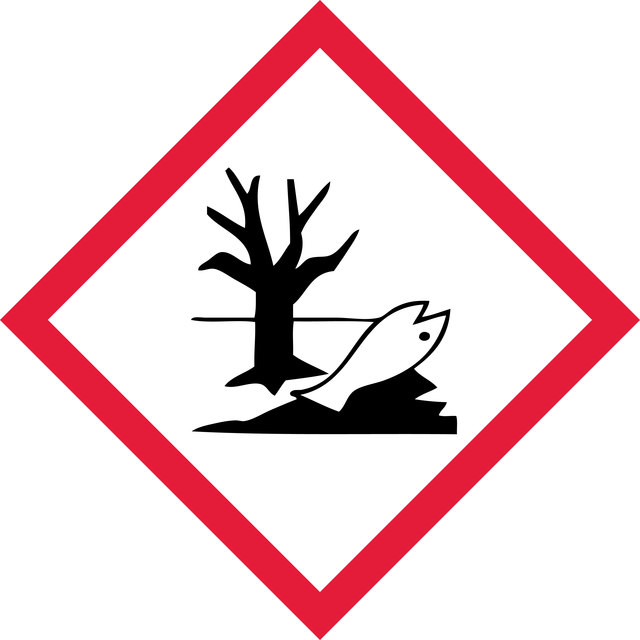
pictograms

Environment

signalword

Warning

hcodes

Hazard Classifications

Aquatic Acute 1 - Aquatic Chronic 1

Storage Class

11 - Combustible Solids

wgk

WGK 3

flash_point_f

303.8 °F - closed cup

flash_point_c

151.0 °C - closed cup


Certificates of Analysis (COA)

Search for Certificates of Analysis (COA) by entering the products Lot/Batch Number. Lot and Batch Numbers can be found on a product’s label following the words ‘Lot’ or ‘Batch’.

Already Own This Product?

Find documentation for the products that you have recently purchased in the Document Library.

Visit the Document Library

Michael Sommer et al.
Macromolecular rapid communications, 34(1), 57-62 (2012-11-22)
The first main-chain conjugated copolymers based on alternating spiropyran (SP) and 9,9-dioctylfluorene (F8) units synthesized via Suzuki polycondensation (SPC) are presented. The reaction conditions of SPC are optimized to obtain materials of type P(para-SP-F8) with appreciably high molecular weights up
Rui Lu et al.
Environmental science and pollution research international, 20(4), 2220-2225 (2012-07-18)
Polycyclic aromatic hydrocarbons (PAHs) are persistent, bioaccumulative, and toxic chemicals and are listed as priority pollutants by the US EPA. Although they are sparsely soluble in water, their solubility can be increased by binding to dissolved organic matter in natural
Fu-Lin Sun et al.
Ecotoxicology (London, England), 21(6), 1651-1660 (2012-06-16)
Polycyclic aromatic hydrocarbons (PAHs) are of great environmental and human health concerns due to their widespread occurrence, persistence and carcinogenic properties. There is now compelling evidence that the mangrove sediment microbial structure is susceptible to PAHs contamination. The study aimed
Qianling Cui et al.
ACS applied materials & interfaces, 5(1), 213-219 (2012-12-15)
In the present work, a facile one-pot method is designed to fabricate a core-shell fluorescent nanoparticle (NP) for cellular imaging based on a new cationic conjugated polymer, poly[9,9'-bis(6,6'-(N,N,N-trimethylaminium)fluorene-2,7-ylenevinylene-co-alt-2,5-dicyano-1,4-phenylene] (PFVCN). Gold nanoflowers (AuNFs) are prepared by a seedless method, in which
Pierre Lovera et al.
Journal of nanoscience and nanotechnology, 13(7), 5194-5202 (2013-08-02)
Organic nanowires based on a fluorene homopolymer and a copolymer, i.e., poly(9,9-dioctylfluorene), F8, and poly(9,9-dioctylfluorene-co-benzothiadiazole), F8BT, respectively, were synthesised by solution assisted wetting of porous anodic alumina templates. Nanowires ranged between 3 microm and 50 microm in length, and were

Our team of scientists has experience in all areas of research including Life Science, Material Science, Chemical Synthesis, Chromatography, Analytical and many others.

Contact Technical Service