Skip to Content
Merck
CN

56296

(−)-Δ9-Tetrahydrocannabinol solution

~1 mg/mL in ethanol, analytical standard, for drug analysis

Synonym(s):

Δ1-Tetrahydrocannabinol, Δ9-THC

Sign In to View Organizational & Contract Pricing.

Select a Size


About This Item

Empirical Formula (Hill Notation):
C21H30O2
CAS Number:
Molecular Weight:
314.46
UNSPSC Code:
41116107
PubChem Substance ID:
EC Number:
200-578-6
MDL number:
Technical Service
Need help? Our team of experienced scientists is here for you.
Let Us Assist
Technical Service
Need help? Our team of experienced scientists is here for you.
Let Us Assist

InChI key

CYQFCXCEBYINGO-IAGOWNOFSA-N

InChI

1S/C21H30O2/c1-5-6-7-8-15-12-18(22)20-16-11-14(2)9-10-17(16)21(3,4)23-19(20)13-15/h11-13,16-17,22H,5-10H2,1-4H3/t16-,17-/m1/s1

SMILES string

CCCCCC(C=C1O)=CC2=C1[C@@]3([H])[C@@](C(C)(C)O2)([H])CCC(C)=C3

assay

≥97% (HPLC)

shelf life

limited shelf life, expiry date on the label

drug control

USDEA Schedule I; regulated under CDSA - not available from Sigma-Aldrich Canada; psicótropo (Spain); Decreto Lei 15/93: Tabela IIB (Portugal), kontrollierte Droge in Deutschland

Quality Level

Gene Information

human ... CNR1(1268)

concentration

~1 mg/mL in ethanol

technique(s)

HPLC: suitable, gas chromatography (GC): suitable

suitability

corresponds for H-NMR

application(s)

food and beverages
pharmaceutical (small molecule)

format

single component solution

storage temp.

2-8°C

Looking for similar products? Visit Product Comparison Guide

Application

Refer to the product′s Certificate of Analysis for more information on a suitable instrument technique. Contact Technical Service for further support.

Packaging

ampoule contains 1.2mL solution

Legal Information

German
Dieses Produkt fällt unter das Betäubungsmittelgesetz (BtMG). Für eine Bestellung dieses Produktes ist eine Erlaubnis nach § 3 BtMG zwingend erforderlich, es sei denn, es greift eine Ausnahme von der Erlaubnispflicht nach § 4 oder § 26 BtMG.

English
This product is subject to the German Narcotics Act. A permit under Section 3 of the German Narcotics Act is mandatory for ordering this product unless an exemption from the permit requirement under Section 4 or Section 26 of the German Narcotics Act applies.
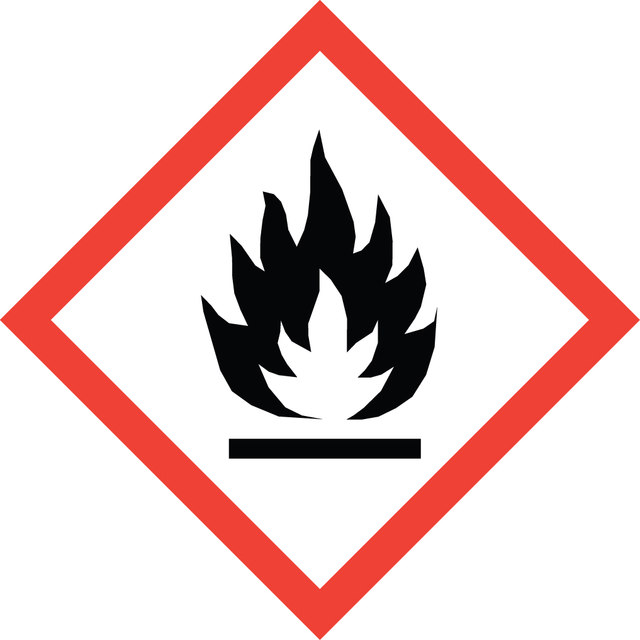

pictograms

FlameExclamation mark

signalword

Danger

hcodes

Hazard Classifications

Eye Irrit. 2 - Flam. Liq. 2

Storage Class

3 - Flammable liquids

wgk

WGK 2

flash_point_f

57.2 °F - closed cup

flash_point_c

14 °C - closed cup

ppe

Eyeshields, Faceshields, Gloves, type ABEK (EN14387) respirator filter

Regulatory Information

监管及禁止进口产品
This item has

Choose from one of the most recent versions:

Certificates of Analysis (COA)

Lot/Batch Number

Don't see the Right Version?

If you require a particular version, you can look up a specific certificate by the Lot or Batch number.

Already Own This Product?

Find documentation for the products that you have recently purchased in the Document Library.

Visit the Document Library

Wendy M Bosker et al.
PloS one, 8(1), e53127-e53127 (2013-01-10)
The present study assessed psychomotor function in chronic, daily cannabis smokers during 3 weeks continuously monitored abstinence on a secure research unit. We hypothesized that psychomotor performance would improve during abstinence of chronic, daily cannabis smokers. Performance on the critical
M Waldman et al.
Biochemical pharmacology, 85(11), 1626-1633 (2013-03-30)
Tetrahydrocannabinol (THC), the major psychoactive component of marijuana, is a cannabinoid agonist that exerts its effects by activating at least two specific receptors (CB1 and CB2) that belong to the seven transmembrane G-protein coupled receptor (GPCR) family. Both CB1 and
Suspected dronabinol withdrawal in an elderly cannabis-naive medically ill patient.
Russ S Muramatsu et al.
The American journal of psychiatry, 170(7), 804-804 (2013-07-04)
David R Maguire et al.
The Journal of pharmacology and experimental therapeutics, 345(3), 354-362 (2013-03-29)
Cannabinoid receptor agonists enhance the antinociceptive effects of μ-opioid receptor agonists, which suggests that combinations of these drugs might enhance therapeutic effectiveness (e.g., analgesia). However, it is not clear whether combinations of these drugs also enhance abuse or dependence liability.
Going to pot.
Roxanne Khamsi
Scientific American, 308(6), 34-34 (2013-06-05)

Our team of scientists has experience in all areas of research including Life Science, Material Science, Chemical Synthesis, Chromatography, Analytical and many others.

Contact Technical Service