Skip to Content
Merck
CN

49129

Carbon disulfide

puriss., low in benzene, ≥99.5% (GC)

Sign In to View Organizational & Contract Pricing.

Select a Size


About This Item

Empirical Formula (Hill Notation):
CS2
CAS Number:
Molecular Weight:
76.14
EC Number:
200-843-6
UNSPSC Code:
12352107
PubChem Substance ID:
Beilstein/REAXYS Number:
1098293
MDL number:
Assay:
≥99.5% (GC)
Technique(s):
GC/GC: suitable
Bp:
46 °C (lit.)
Vapor pressure:
5.83 psi
Technical Service
Need help? Our team of experienced scientists is here for you.
Let Us Assist
Technical Service
Need help? Our team of experienced scientists is here for you.
Let Us Assist

InChI key

QGJOPFRUJISHPQ-UHFFFAOYSA-N

InChI

1S/CS2/c2-1-3

SMILES string

S=C=S

vapor density

2.67 (vs air)

vapor pressure

5.83 psi

grade

puriss.

assay

≥99.5% (GC)

form

liquid

autoignition temp.

212 °F

quality

low in benzene

expl. lim.

50 %

technique(s)

GC/GC: suitable

impurities

≤1 ppm benzene, ≤1 ppm toluene

Quality Level

bp

46 °C (lit.)

mp

−112-−111 °C (lit.)

density

1.263 g/mL at 20 °C, 1.266 g/mL at 25 °C (lit.)

Looking for similar products? Visit Product Comparison Guide
signalword

Danger

Hazard Classifications

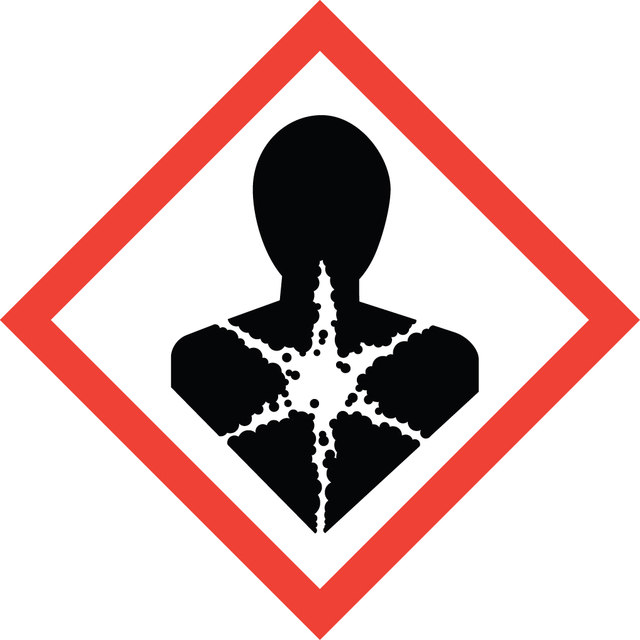
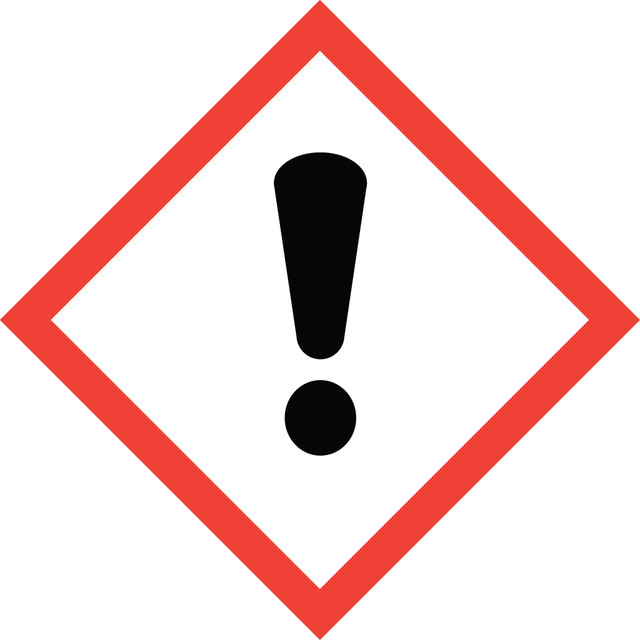
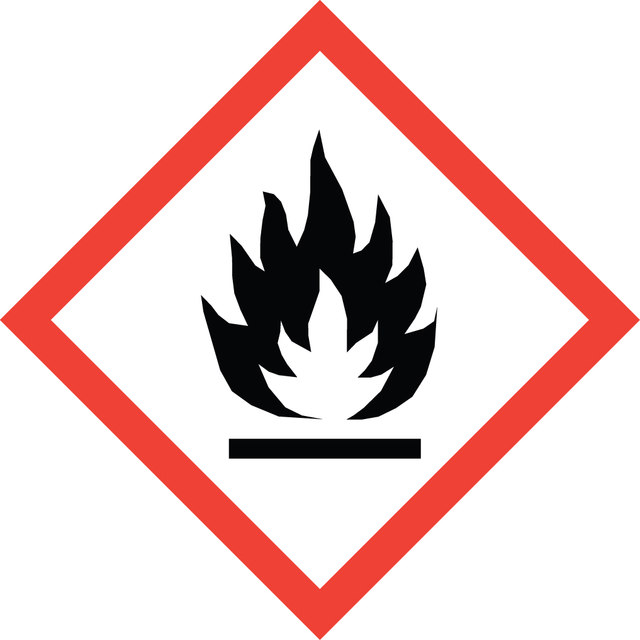
Acute Tox. 4 Inhalation - Eye Irrit. 2 - Flam. Liq. 2 - Repr. 2 - Skin Irrit. 2 - STOT RE 1

target_organs

Peripheral nervous system,Central nervous system,Cardio-vascular system,Eyes

Storage Class

3 - Flammable liquids

wgk

WGK 2

flash_point_f

-22.0 °F - closed cup

flash_point_c

-30 °C - closed cup

ppe

Eyeshields, Faceshields, Gloves

Regulatory Information

新产品
This item has

Choose from one of the most recent versions:

Certificates of Analysis (COA)

Lot/Batch Number

It looks like we've run into a problem, but you can still download Certificates of Analysis from our Documents section.

If you need assistance, please contact Customer Support

Already Own This Product?

Find documentation for the products that you have recently purchased in the Document Library.

Visit the Document Library

Margherita Maiuri et al.
Physical chemistry chemical physics : PCCP, 14(18), 6312-6319 (2012-02-15)
In carotenoids internal conversion between the allowed (S(2)) and forbidden (S(1)) excited states occurs on a sub-picosecond timescale; the involvement of an intermediate excited state(s) (S(x)) mediating the process is controversial. Here we use high time resolution (sub-20 fs) broadband
[11C]carbon disulfide: a versatile reagent for PET radiolabelling.
Philip W Miller et al.
Chemistry (Weinheim an der Bergstrasse, Germany), 18(2), 433-436 (2011-12-14)
Marjan J Smeulders et al.
Nature, 478(7369), 412-416 (2011-10-21)
Extremophilic organisms require specialized enzymes for their exotic metabolisms. Acid-loving thermophilic Archaea that live in the mudpots of volcanic solfataras obtain their energy from reduced sulphur compounds such as hydrogen sulphide (H(2)S) and carbon disulphide (CS(2)). The oxidation of these
A critical review of the literature on carbon disulfide toxicity.
R O Beauchamp et al.
Critical reviews in toxicology, 11(3), 169-278 (1983-01-01)
R Guillemin et al.
Nature communications, 6, 6166-6166 (2015-01-22)
Electronic core levels in molecules are highly localized around one atomic site. However, in single-photon ionization of symmetric molecules, the question of core-hole localization versus delocalization over two equivalent atoms has long been debated as the answer lies at the

Our team of scientists has experience in all areas of research including Life Science, Material Science, Chemical Synthesis, Chromatography, Analytical and many others.

Contact Technical Service