Skip to Content
Merck
CN

46426

S-Hydroprene

PESTANAL®, analytical standard

Synonym(s):

Ethyl 3,7,11-trimethyl-2,4-dodecadienoate

Sign In to View Organizational & Contract Pricing.

Select a Size


About This Item

Empirical Formula (Hill Notation):
C17H30O2
CAS Number:
Molecular Weight:
266.42
UNSPSC Code:
41116107
NACRES:
NA.24
PubChem Substance ID:
MDL number:
Beilstein/REAXYS Number:
5255711
Technical Service
Need help? Our team of experienced scientists is here for you.
Let Us Assist
Technical Service
Need help? Our team of experienced scientists is here for you.
Let Us Assist

InChI

1S/C17H30O2/c1-6-19-17(18)13-16(5)12-8-11-15(4)10-7-9-14(2)3/h8,12-15H,6-7,9-11H2,1-5H3/b12-8+,16-13+/t15-/m0/s1

SMILES string

CCOC(=O)\C=C(C)\C=C\C[C@@H](C)CCCC(C)C

InChI key

FYQGBXGJFWXIPP-OJROSNHMSA-N

grade

analytical standard

product line

PESTANAL®

shelf life

limited shelf life, expiry date on the label

technique(s)

HPLC: suitable, gas chromatography (GC): suitable

application(s)

agriculture
environmental

format

neat

Quality Level

Related Categories

Application

Refer to the product′s Certificate of Analysis for more information on a suitable instrument technique. Contact Technical Service for further support.

Other Notes

Find a digital Reference Material for this product available on our online platform ChemisTwin® for NMR. You can use this digital equivalent on ChemisTwin® for your sample identity confirmation and compound quantification (with digital external standard). An NMR spectrum of this substance can be viewed and an online comparison against your sample can be performed with a few mouseclicks. Learn more here and start your free trial.

Legal Information

PESTANAL is a registered trademark of Merck KGaA, Darmstadt, Germany

pictograms

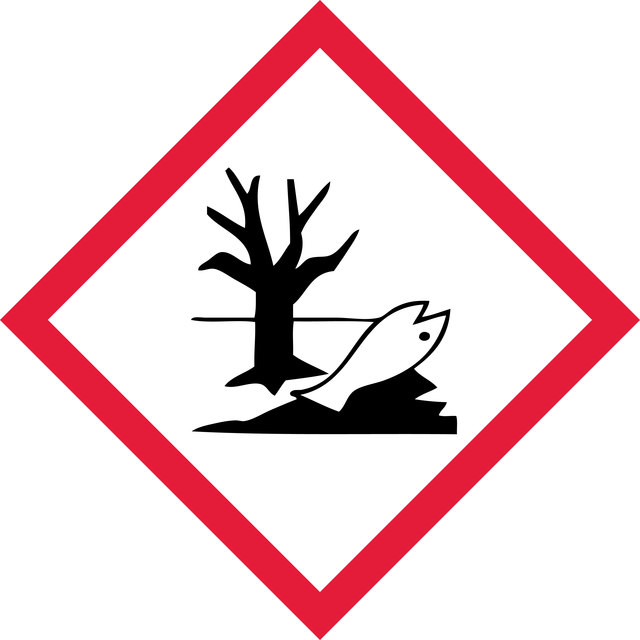
Skull and crossbonesEnvironment

signalword

Danger

hcodes

Hazard Classifications

Acute Tox. 3 Inhalation - Aquatic Acute 1 - Aquatic Chronic 1

Storage Class

6.1C - Combustible acute toxic Cat.3 / toxic compounds or compounds which causing chronic effects

wgk

WGK 2

flash_point_f

No data available

flash_point_c

No data available

ppe

Eyeshields, Gloves

Regulatory Information

农药列管产品
This item has

Choose from one of the most recent versions:

Certificates of Analysis (COA)

Lot/Batch Number

Don't see the Right Version?

If you require a particular version, you can look up a specific certificate by the Lot or Batch number.

Already Own This Product?

Find documentation for the products that you have recently purchased in the Document Library.

Visit the Document Library

Chloe Hawkings et al.
PloS one, 14(5), e0216800-e0216800 (2019-05-21)
The reproductive ground plan hypothesis proposes that gene networks regulating foraging behavior and reproductive female physiology in social insects emerged from ancestral gene and endocrine factor networks. Expression of storage proteins such as vitellogenins and hexamerins is an example of
A S Downing et al.
Journal of medical entomology, 30(3), 531-536 (1993-05-01)
Insect growth regulators are synthetic chemicals that mimic the function of hormones that occur naturally in arthropods. Two such insect growth regulators, methoprene and hydroprene, were tested to determine effects on growth of laboratory populations of the American house dust
Lars Skattebøl et al.
Pest management science, 62(7), 610-616 (2006-05-18)
Analogues of insect juvenile hormones (juvenoids) have been tested for settling inhibition of cyprids from three species of barnacle, Balanus balanoides (L.), Balanus improvisus Darwin and Balanus amphitrite Darwin. Some 3-alkoxypyridine derivatives exhibited strong activity at mg litre(-1) concentrations; 3,7-dimethyloctyl
R Rybczynski et al.
Molecular and cellular endocrinology, 141(1-2), 141-151 (1998-09-02)
A rapid increase in ecdysteroid hormone synthesis results when the insect prothoracic gland is stimulated with prothoracicotropic hormone (PTTH), a brain neuropeptide hormone. PTTH also stimulates the specific synthesis of several proteins, one of which is a beta tubulin. To
Said A M Mazyad et al.
Journal of the Egyptian Society of Parasitology, 36(3), 1101-1114 (2006-12-13)
Two insect growth regulators, Methorprene and Hydroprene were evaluated as growth hormones on the common house dust mite; Dermatophagoides farinae. The adults and immature stages were treated with 4 concentrations of each regulator as contact and as diet. The data

Our team of scientists has experience in all areas of research including Life Science, Material Science, Chemical Synthesis, Chromatography, Analytical and many others.

Contact Technical Service