Skip to Content
Merck
CN

46254

1,1,1,2-Tetrachloroethane

analytical standard

Sign In to View Organizational & Contract Pricing.

Select a Size


About This Item

Linear Formula:
ClCH2CCl3
CAS Number:
Molecular Weight:
167.85
EC Number:
211-135-1
UNSPSC Code:
41116107
PubChem Substance ID:
Beilstein/REAXYS Number:
1733216
MDL number:
Technical Service
Need help? Our team of experienced scientists is here for you.
Let Us Assist
Technical Service
Need help? Our team of experienced scientists is here for you.
Let Us Assist

InChI key

QVLAWKAXOMEXPM-UHFFFAOYSA-N

InChI

1S/C2H2Cl4/c3-1-2(4,5)6/h1H2

SMILES string

ClCC(Cl)(Cl)Cl

grade

analytical standard

shelf life

limited shelf life, expiry date on the label

technique(s)

HPLC: suitable, gas chromatography (GC): suitable

bp

138 °C (lit.)

density

1.598 g/mL at 25 °C (lit.)

application(s)

agriculture
environmental

format

neat

Looking for similar products? Visit Product Comparison Guide

Application

Refer to the product′s Certificate of Analysis for more information on a suitable instrument technique. Contact Technical Service for further support.

signalword

Danger

Hazard Classifications

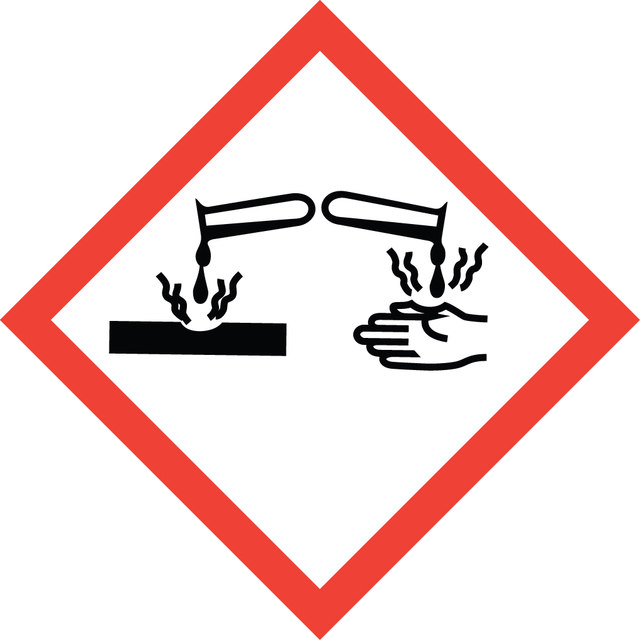
Acute Tox. 4 Inhalation - Acute Tox. 4 Oral - Aquatic Chronic 3 - Carc. 2 - Eye Dam. 1

Storage Class

6.1C - Combustible acute toxic Cat.3 / toxic compounds or compounds which causing chronic effects

wgk

WGK 2

flash_point_f

Not applicable

flash_point_c

Not applicable

ppe

Eyeshields, Faceshields, Gloves, type ABEK (EN14387) respirator filter


Choose from one of the most recent versions:

Certificates of Analysis (COA)

Lot/Batch Number

It looks like we've run into a problem, but you can still download Certificates of Analysis from our Documents section.

If you need assistance, please contact Customer Support

Already Own This Product?

Find documentation for the products that you have recently purchased in the Document Library.

Visit the Document Library

1,1,1,2-Tetrachloroethane.
IARC monographs on the evaluation of the carcinogenic risk of chemicals to humans, 41, 87-97 (1986-01-01)
Federico Aulenta et al.
Biodegradation, 17(3), 193-206 (2006-05-23)
This study investigated the biotransformation pathways of 1,1,2,2-tetrachloroethane (1,1,2,2-TeCA) in the presence of chloroethenes (i.e. tetrachloroethene, PCE; trichloroethene, TCE) in anaerobic microcosms constructed with subsurface soil and groundwater from a contaminated site. When amended with yeast extract, lactate, butyrate, or
J A Thompson et al.
Chemico-biological interactions, 51(3), 321-333 (1984-10-01)
The susceptibility of polychlorinated ethanes to reductive metabolism was evaluated by measuring the amount of each compound consumed during anaerobic incubations with rat live microsomes; 1,1,1,2-tetrachloroethane, pentachloroethane and hexachloroethane were metabolized extensively, 1,1,1,2-tetrachloroethane and the trichloroethanes were metabolized very slowly
D L Story et al.
Toxicology and industrial health, 2(4), 351-362 (1986-12-01)
Nine chlorinated aliphatics (CAs)--1,1-dichloroethane, 1,2-dichloroethane, 1,1,1-trichloroethane, 1,1,2-trichloroethane, trichloroethylene, tetrachloroethylene, 1,1,1,2-tetrachloroethane, 1,1,2,2-tetrachloroethane, and hexachloroethane--were examined in a rat liver foci assay for evidence of initiating and promoting potential. Young adult male Osborne-Mendel rats (ten/group) were given partial hepatectomies, followed 24 hr
L O Svaasand et al.
Lasers in surgery and medicine, 32(2), 137-142 (2003-02-01)
Cryogen spray cooling (CSC) is used extensively for epidermal protection during laser-induced photothermolysis of port wine stains and other vascular skin lesions. The efficacy of CSC depends critically on the heat transfer coefficient (H) at the skin surface for which

Our team of scientists has experience in all areas of research including Life Science, Material Science, Chemical Synthesis, Chromatography, Analytical and many others.

Contact Technical Service