Skip to Content
Merck
CN

45305

Dicrotophos

PESTANAL®, analytical standard

Sign In to View Organizational & Contract Pricing.

Select a Size


About This Item

Empirical Formula (Hill Notation):
C8H16NO5P
CAS Number:
Molecular Weight:
237.19
UNSPSC Code:
41116107
NACRES:
NA.24
PubChem Substance ID:
EC Number:
205-494-3
Beilstein/REAXYS Number:
1880084
MDL number:
Technical Service
Need help? Our team of experienced scientists is here for you.
Let Us Assist
Technical Service
Need help? Our team of experienced scientists is here for you.
Let Us Assist

InChI key

VEENJGZXVHKXNB-VOTSOKGWSA-N

InChI

1S/C8H16NO5P/c1-7(6-8(10)9(2)3)14-15(11,12-4)13-5/h6H,1-5H3/b7-6+

SMILES string

COP(=O)(OC)O\C(C)=C\C(=O)N(C)C

grade

analytical standard

product line

PESTANAL®

shelf life

limited shelf life, expiry date on the label

technique(s)

HPLC: suitable, gas chromatography (GC): suitable

application(s)

agriculture
environmental

format

neat

storage temp.

2-8°C

Quality Level

Related Categories

Application

Refer to the product′s Certificate of Analysis for more information on a suitable instrument technique. Contact Technical Service for further support.

Other Notes

Find a digital Reference Material for this product available on our online platform ChemisTwin® for NMR. You can use this digital equivalent on ChemisTwin® for your sample identity confirmation and compound quantification (with digital external standard). An NMR spectrum of this substance can be viewed and an online comparison against your sample can be performed with a few mouseclicks. Learn more here and start your free trial.

Legal Information

PESTANAL is a registered trademark of Merck KGaA, Darmstadt, Germany

pictograms

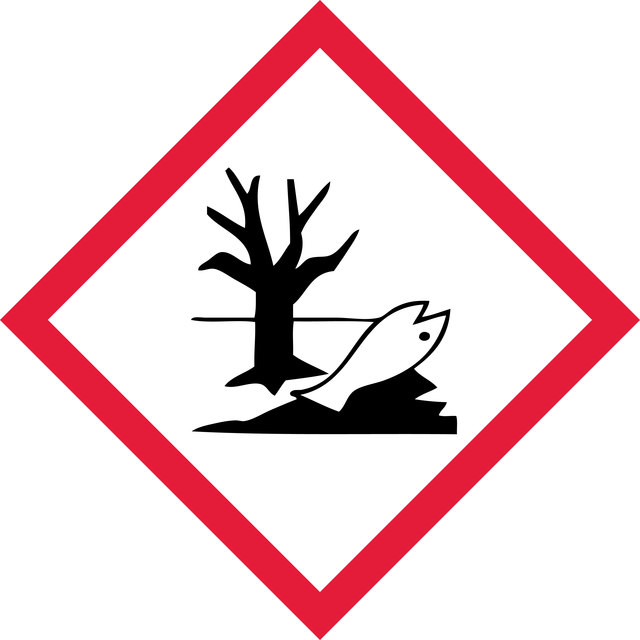
Skull and crossbonesEnvironment

signalword

Danger

Hazard Classifications

Acute Tox. 1 Inhalation - Acute Tox. 2 Dermal - Acute Tox. 2 Oral - Aquatic Acute 1 - Aquatic Chronic 1

Storage Class

6.1A - Combustible, acute toxic Cat. 1 and 2 / very toxic hazardous materials

wgk

WGK 3

flash_point_f

Not applicable

flash_point_c

Not applicable

ppe

Eyeshields, Faceshields, Gloves, type ABEK (EN14387) respirator filter

Regulatory Information

剧毒化学品
危险化学品
农药列管产品
This item has

Choose from one of the most recent versions:

Certificates of Analysis (COA)

Lot/Batch Number

Don't see the Right Version?

If you require a particular version, you can look up a specific certificate by the Lot or Batch number.

Already Own This Product?

Find documentation for the products that you have recently purchased in the Document Library.

Visit the Document Library

Dietrich E Lorke et al.
Current pharmaceutical design, 23(23), 3432-3439 (2016-11-02)
Reversible cholinesterase inhibitors, when given prophylactically before exposure to organophosphates, are able to decrease organophosphate-induced mortality. However, the efficacy of pyridostigmine, the only pre-treatment substance approved by the US Federal Drug Administration, is unsatisfactory. In search of a better prophylactic
Jong-C Wu et al.
Environmental toxicology, 27(5), 307-315 (2012-04-14)
Dicrotophos is a systemic insecticide with a wide range of applications. We investigated the genotoxicity of dicrotophos using the Ames test, the chromosome aberration test in CHO-K1 cells, and the comet assay in the Hep G2 cells, while this chemicals'
Response of common grackles to dietary concentrations of four organophosphate pesticides.
C E Grue
Archives of environmental contamination and toxicology, 11(5), 617-626 (1982-09-01)
E F Hill
Journal of wildlife diseases, 25(4), 580-585 (1989-10-01)
Blood plasma cholinesterase (ChE) activity is a sensitive indicator of exposure to organophosphorus and carbamate insecticides. Effects of sex and storage of samples were studied as sources of variability by treating breeding Japanese quail (Coturnix japonica) with 3 mg of
V S Poovala et al.
Journal of the American Society of Nephrology : JASN, 10(8), 1746-1752 (1999-08-14)
Due to low toxicity to nontarget species and rapid degradation after its application, organophosphate (OP) remains a widely used class of pesticide. Suicidal or accidental overdose of OP can result in acute tubular necrosis. Experimental evidence shows little correlation between

Our team of scientists has experience in all areas of research including Life Science, Material Science, Chemical Synthesis, Chromatography, Analytical and many others.

Contact Technical Service