Skip to Content
Merck
CN

430749

Pyrocatechol

≥99.5%, purified by sublimation

Synonym(s):

1,2-Benzenediol, 1,2-Dihydroxybenzene, 2-Hydroxyphenol, Catechol

Sign In to View Organizational & Contract Pricing.

Select a Size


About This Item

Linear Formula:
C6H4-1,2-(OH)2
CAS Number:
Molecular Weight:
110.11
NACRES:
NA.21
PubChem Substance ID:
UNSPSC Code:
12352100
EC Number:
204-427-5
MDL number:
Beilstein/REAXYS Number:
471401
Technical Service
Need help? Our team of experienced scientists is here for you.
Let Us Assist
Technical Service
Need help? Our team of experienced scientists is here for you.
Let Us Assist

Product Name

Pyrocatechol, purified by sublimation, ≥99.5%

InChI key

YCIMNLLNPGFGHC-UHFFFAOYSA-N

InChI

1S/C6H6O2/c7-5-3-1-2-4-6(5)8/h1-4,7-8H

SMILES string

Oc1ccccc1O

material

white

vapor density

3.8 (vs air)

vapor pressure

1 mmHg ( 75 °C)
10 mmHg ( 118.3 °C)

assay

≥99.5%

purified by

sublimation

bp

245 °C (lit.)

mp

100-103 °C (lit.)

Quality Level

Looking for similar products? Visit Product Comparison Guide

Application

Pyrocatechol may be used in the synthesis of micro-mesoporous carbon aerogels.

signalword

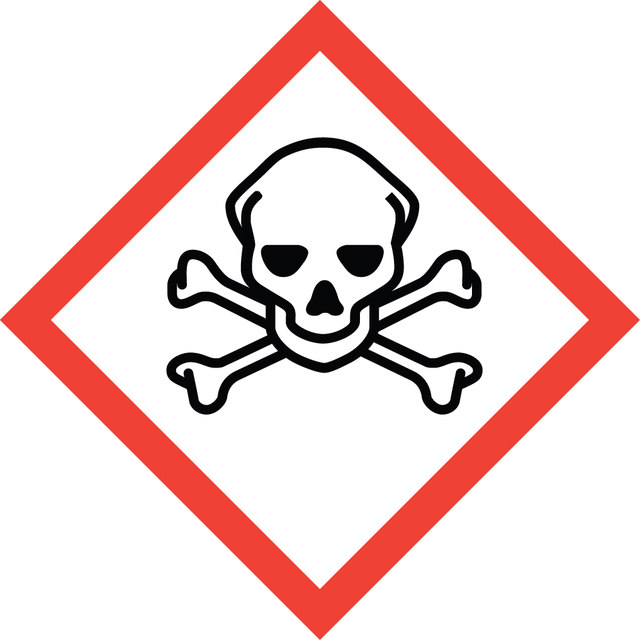
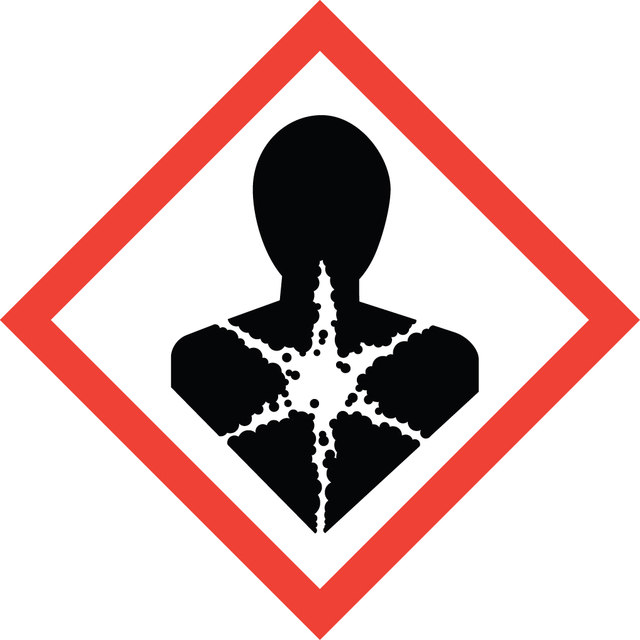
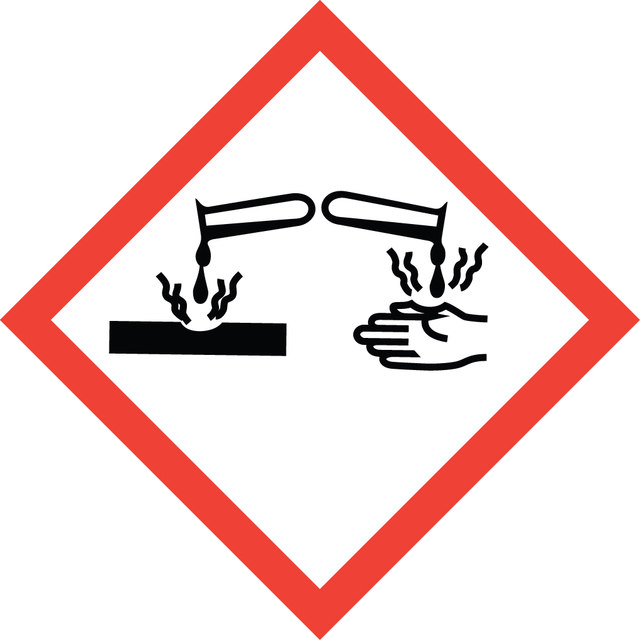
Danger

Hazard Classifications

Acute Tox. 3 Dermal - Acute Tox. 3 Oral - Carc. 1B - Eye Dam. 1 - Muta. 2 - Skin Irrit. 2 - Skin Sens. 1

Storage Class

6.1C - Combustible acute toxic Cat.3 / toxic compounds or compounds which causing chronic effects

wgk

WGK 3

flash_point_f

260.6 °F - closed cup

flash_point_c

127 °C - closed cup

ppe

dust mask type N95 (US), Eyeshields, Faceshields, Gloves

Regulatory Information

危险化学品
This item has

Choose from one of the most recent versions:

Certificates of Analysis (COA)

Lot/Batch Number

Don't see the Right Version?

If you require a particular version, you can look up a specific certificate by the Lot or Batch number.

Already Own This Product?

Find documentation for the products that you have recently purchased in the Document Library.

Visit the Document Library

Adsorbate-induced modification of surface electronic structure: pyrocatechol adsorption on the anatase TiO2 (101) and rutile TiO2 (110) surfaces.
Syres KL, et al.
The Journal of Physical Chemistry C, 116(44), 23515-23525 (2012)
Eagleson M.
Concise Encyclopedia Chemistry, 915-915 (1994)
Surface characteristics and electrochemical capacitances of carbon aerogels obtained from resorcinol and pyrocatechol using boric and oxalic acids as polymerization catalysts.
Moreno-Castilla C, et al.
Carbon, 49(12), 3808-3819 (2011)
Myung-Hyun Ryou et al.
Advanced materials (Deerfield Beach, Fla.), 25(11), 1571-1576 (2013-01-03)
Conjugation of mussel-inspired catechol groups to various polymer backbones results in materials suitable as silicon anode binders. The unique wetness-resistant adhesion provided by the catechol groups allows the silicon nanoparticle electrodes to maintain their structure throughout the repeated volume expansion
Ying Qu et al.
Biosensors & bioelectronics, 44, 85-88 (2013-02-12)
New graphene-silk peptide (Gr-SP) nanosheets were prepared and successfully fabricated with tyrosinase (Tyr) as a novel biosensor for the determination of phenolic compounds. The Gr-SP nanosheets were fully characterized with transmission electron microscopy, x-ray diffraction, x-ray photoelectron spectroscopy, UV/Vis and

Our team of scientists has experience in all areas of research including Life Science, Material Science, Chemical Synthesis, Chromatography, Analytical and many others.

Contact Technical Service