
40870

1,2-Dimethyl-3-nitrobenzene
Selectophore™, ≥99.0%
Synonym(s):
3-Nitro-o-xylene
Sign In to View Organizational & Contract Pricing.
Select a Size
About This Item
Linear Formula:
(CH3)2C6H3NO2
CAS Number:
Molecular Weight:
151.16
UNSPSC Code:
26111700
NACRES:
NB.61
PubChem Substance ID:
EC Number:
201-474-3
Beilstein/REAXYS Number:
2045105
MDL number:
Assay:
≥99.0% (GC), ≥99.0%
Form:
liquid
InChI key
FVHAWXWFPBPFOS-UHFFFAOYSA-N
InChI
1S/C8H9NO2/c1-6-4-3-5-8(7(6)2)9(10)11/h3-5H,1-2H3
SMILES string
Cc1cccc(c1C)[N+]([O-])=O
description
for ion-selective electrodes
product line
Selectophore™
assay
≥99.0% (GC), ≥99.0%
Quality Level
form
liquid
refractive index
n20/D 1.543 (lit.)
bp
245 °C (lit.)
mp
7-9 °C (lit.)
density
1.129 g/mL at 25 °C (lit.)
General description
1,2,-dimethyl-3-nitrobenzene (DNB) is a plasticizer.
Visit our Sensor Applications portal to learn more.
Application
It was used as plasticizer in preparing K+ sensor cocktail which was used as K+ selective microelectrodes, to study nitrate interference with the sensor. It was used as internal standard for GC-MS analysis of 2,4-dichlorophenol, 2,4,6-trichlorophenol, and pentachlorophenol.
Other Notes
Additive for preparing K+-selective electrodes
Legal Information
Selectophore is a trademark of Merck KGaA, Darmstadt, Germany
hcodes
pcodes
Hazard Classifications
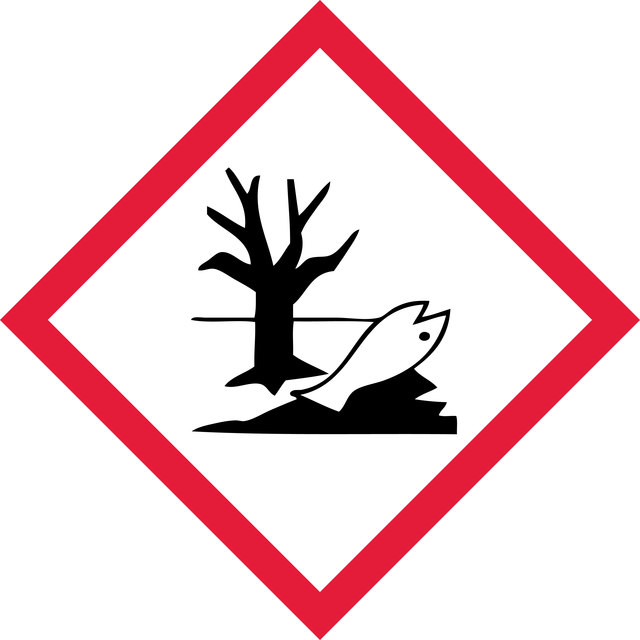
Aquatic Chronic 2
Storage Class
6.1A - Combustible acute toxic Cat. 1 and 2 / very toxic hazardous materials
wgk
WGK 2
flash_point_f
224.6 °F - closed cup
flash_point_c
107 °C - closed cup
ppe
Eyeshields, Gloves
Regulatory Information
危险化学品
This item has
Choose from one of the most recent versions:
Already Own This Product?
Find documentation for the products that you have recently purchased in the Document Library.
Nitrate interference with potassium-selective microelectrodes.
Cuin, Tracey Ann, et al.
Journal of Experimental Botany, 50, 1709-1712 (1999)
Oehme, M. and Simon, W.
Analytica Chimica Acta, 86, 21-21 (1976)
Jijun Gao et al.
Chemosphere, 71(6), 1181-1187 (2007-11-27)
The chlorophenol pollutants (CPs) have been reported to occur at relatively high concentrations in some Chinese waters. To map the distribution of CPs in the surface water throughout China, samples were collected from over 600 sites in the seven major
Brian Roland Larsen et al.
Glia, 62(4), 608-622 (2014-02-01)
Network activity in the brain is associated with a transient increase in extracellular K(+) concentration. The excess K(+) is removed from the extracellular space by mechanisms proposed to involve Kir4.1-mediated spatial buffering, the Na(+)/K(+)/2Cl(-) cotransporter 1 (NKCC1), and/or Na(+)/K(+)-ATPase activity.
P Wuhrmann et al.
Proceedings of the National Academy of Sciences of the United States of America, 76(2), 806-808 (1979-02-01)
Changes in nuclear K+ electrochemical activity and total nuclear K+ content in salivary glands of Chironomus tentans were measured with ion-selective microelectrodes based on valinomycin and with flameless atomic absorption spectrometry, respectively. The K+ activity increased by a factor of
Our team of scientists has experience in all areas of research including Life Science, Material Science, Chemical Synthesis, Chromatography, Analytical and many others.
Contact Technical Service