Skip to Content
Merck
CN

38292

Diisopropylamine

analytical standard

Synonym(s):

DIPA

Sign In to View Organizational & Contract Pricing.

Select a Size


About This Item

Linear Formula:
(CH3)2CHNHCH(CH3)2
CAS Number:
Molecular Weight:
101.19
UNSPSC Code:
41116107
NACRES:
NA.24
PubChem Substance ID:
EC Number:
203-558-5
Beilstein/REAXYS Number:
605284
MDL number:
Technical Service
Need help? Our team of experienced scientists is here for you.
Let Us Assist
Technical Service
Need help? Our team of experienced scientists is here for you.
Let Us Assist

Product Name

Diisopropylamine, analytical standard

InChI key

UAOMVDZJSHZZME-UHFFFAOYSA-N

InChI

1S/C6H15N/c1-5(2)7-6(3)4/h5-7H,1-4H3

SMILES string

CC(C)NC(C)C

grade

analytical standard

vapor density

3.5 (vs air)

vapor pressure

50 mmHg ( 20 °C)

assay

≥99.5% (GC)

autoignition temp.

599 °F

shelf life

limited shelf life, expiry date on the label

expl. lim.

8.5 %

technique(s)

HPLC: suitable
gas chromatography (GC): suitable

refractive index

n20/D 1.392 (lit.)
n20/D 1.392

bp

84 °C (lit.)

mp

−61 °C (lit.)

solubility

H2O: soluble 110 g/L at 25 °C (completely)

density

0.722 g/mL at 25 °C (lit.)

application(s)

environmental

format

neat

Quality Level

Looking for similar products? Visit Product Comparison Guide

Application

Diisopropylamine may be used as an analytical standard for the determination of the analyte in air samples by high performance liquid chromatography (HPLC) technique.
Refer to the product′s Certificate of Analysis for more information on a suitable instrument technique. Contact Technical Service for further support.

General description

Diisopropylamine, an aliphatic secondary amine, is a well-known precursor of lithium diisopropylamide (LDA), which is a hindered, strong, non-nucleophilic base utilized in various organic reactions.

Other Notes

Find a digital Reference Material for this product available on our online platform ChemisTwin® for NMR. You can use this digital equivalent on ChemisTwin® for your sample identity confirmation and compound quantification (with digital external standard). An NMR spectrum of this substance can be viewed and an online comparison against your sample can be performed with a few mouseclicks. Learn more here and start your free trial.

signalword

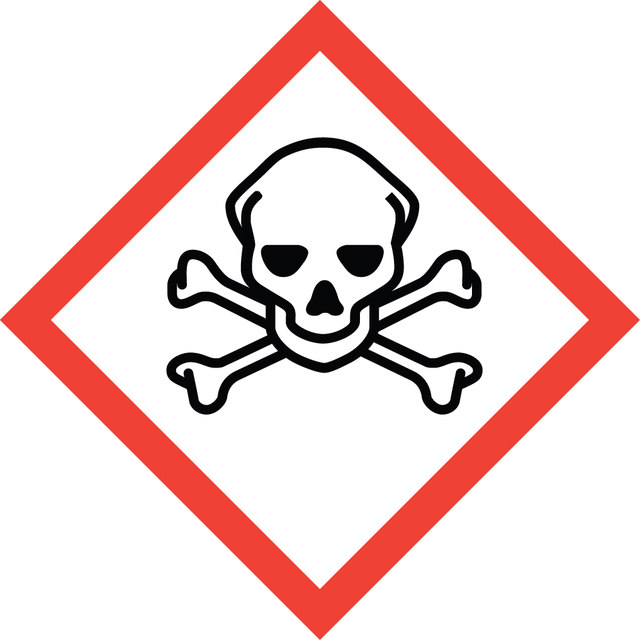
Danger

Hazard Classifications

Acute Tox. 3 Inhalation - Acute Tox. 4 Oral - Aquatic Chronic 3 - Eye Dam. 1 - Flam. Liq. 2 - Skin Corr. 1B - STOT SE 3

target_organs

Respiratory system

Storage Class

3 - Flammable liquids

wgk

WGK 2

flash_point_f

7.8 °F - closed cup

flash_point_c

-13.45 °C - closed cup

ppe

Faceshields, Gloves, Goggles, type ABEK (EN14387) respirator filter

Regulatory Information

危险化学品
This item has

Choose from one of the most recent versions:

Certificates of Analysis (COA)

Lot/Batch Number

Don't see the Right Version?

If you require a particular version, you can look up a specific certificate by the Lot or Batch number.

Already Own This Product?

Find documentation for the products that you have recently purchased in the Document Library.

Visit the Document Library

Reductions of. alpha.-substituted ketones by lithium diisopropylamide
Kowalski C, et al.
The Journal of Organic Chemistry, 43(13), 2601-2608 (1978)
Determination of aliphatic primary and secondary amines and polyamines in air by high-performance liquid chromatography
Simon P and Lemacon C
Analytical Chemistry, 59(3), 480-484 (1987)
Songping Liao et al.
Journal of the American Chemical Society, 125(49), 15114-15127 (2003-12-05)
Lithium diisopropylamide-mediated lithiations of N-alkyl ketimines derived from cyclohexanones reveal that simple substitutions on the N-alkyl side chain and the 2-position of the cyclohexyl moiety afford a 60,000-fold range of rates. Detailed rate studies implicate monosolvated monomers at the rate-limiting
Alexander C Hoepker et al.
The Journal of organic chemistry, 76(19), 7985-7993 (2011-09-06)
Density functional theory computations [MP2/6-31G(d)//B3LYP/6-31G(d)] on the deaggregation of lithium diisopropylamide (LDA) dimer solvated by two tetrahydrofuran ligands to give the corresponding trisolvated monomer show eight structurally distinct minima. The barriers to exchange are comparable to those expected from experimental
Liyan Qiu et al.
Molecular pharmaceutics, 9(5), 1109-1117 (2012-04-13)
pH-responsive drug carriers derived from polymers containing weak base groups have been shown to improve the antitumor effect of chemotherapeutics. The common interpretation is that a "proton sponge effect" caused by pH-responsive polymers facilitates endosomal membrane destruction and accelerates cytoplasmic

Our team of scientists has experience in all areas of research including Life Science, Material Science, Chemical Synthesis, Chromatography, Analytical and many others.

Contact Technical Service