Skip to Content
Merck
CN

36158

Methidathion

PESTANAL®, analytical standard

Synonym(s):

S-2,3-Dihydro-5-methoxy-2-oxo-1,3,4-thiodiazol-3-yl-methyl-O,O-dimethyl-phosphodithioate

Sign In to View Organizational & Contract Pricing.

Select a Size


About This Item

Empirical Formula (Hill Notation):
C6H11N2O4PS3
CAS Number:
Molecular Weight:
302.33
UNSPSC Code:
41116107
NACRES:
NA.24
PubChem Substance ID:
EC Number:
213-449-4
Beilstein/REAXYS Number:
619915
MDL number:
Technical Service
Need help? Our team of experienced scientists is here for you.
Let Us Assist
Technical Service
Need help? Our team of experienced scientists is here for you.
Let Us Assist

Product Name

Methidathion, PESTANAL®, analytical standard

InChI key

MEBQXILRKZHVCX-UHFFFAOYSA-N

InChI

1S/C6H11N2O4PS3/c1-10-5-7-8(6(9)16-5)4-15-13(14,11-2)12-3/h4H2,1-3H3

SMILES string

COC1=NN(CSP(=S)(OC)OC)C(=O)S1

grade

analytical standard

product line

PESTANAL®

shelf life

limited shelf life, expiry date on the label

technique(s)

HPLC: suitable
gas chromatography (GC): suitable

application(s)

agriculture
environmental

format

neat

storage temp.

2-8°C

Quality Level

Looking for similar products? Visit Product Comparison Guide

Application

Methidathion may be used as a reference standard for the determination of methidathion in serum and urine samples of acute poisoning by high-performance liquid chromatography with diode-array detector.
Refer to the product′s Certificate of Analysis for more information on a suitable instrument technique. Contact Technical Service for further support.

General description

Methidathion is a dimethoxyorganic phosphorus pesticide and cholinesterase inhibitor.

Legal Information

PESTANAL is a registered trademark of Merck KGaA, Darmstadt, Germany

signalword

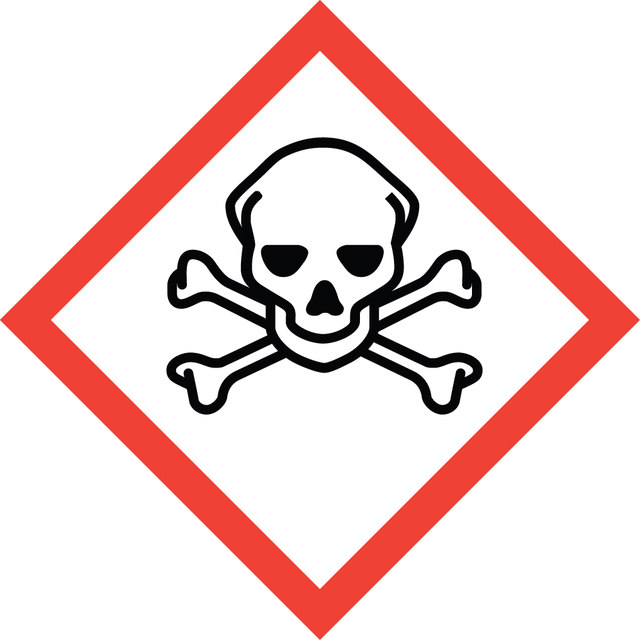
Danger

Hazard Classifications

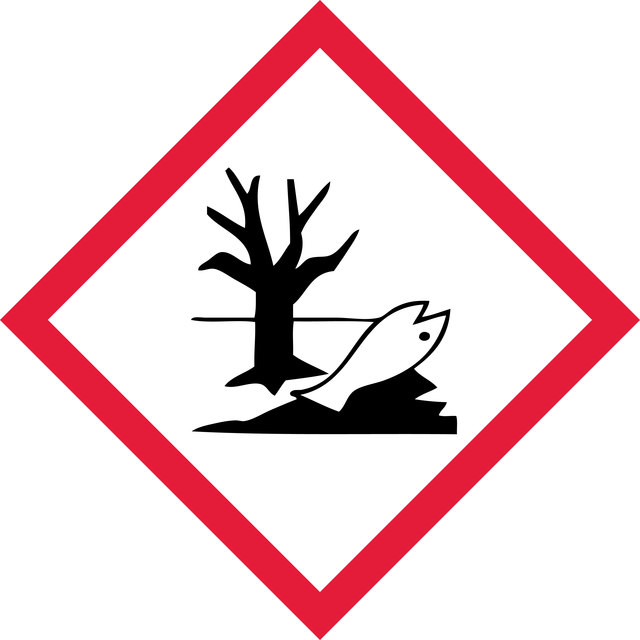
Acute Tox. 1 Inhalation - Acute Tox. 2 Dermal - Acute Tox. 2 Oral - Aquatic Acute 1 - Aquatic Chronic 1 - Eye Dam. 1

Storage Class

6.1A - Combustible acute toxic Cat. 1 and 2 / very toxic hazardous materials

wgk

WGK 3

flash_point_f

212.0 °F - closed cup

flash_point_c

100 °C - closed cup

ppe

dust mask type N95 (US), Eyeshields, Faceshields, Gloves, type P2 (EN 143) respirator cartridges

Regulatory Information

农药列管产品
危险化学品
非剧毒-急性毒性1
This item has

Choose from one of the most recent versions:

Certificates of Analysis (COA)

Lot/Batch Number

Don't see the Right Version?

If you require a particular version, you can look up a specific certificate by the Lot or Batch number.

Already Own This Product?

Find documentation for the products that you have recently purchased in the Document Library.

Visit the Document Library

Determination of organophosphorus pesticides in biological samples of acute poisoning by HPLC with diode-array detector.
Cho Y, et al.
Chemical & Pharmaceutical Bulletin, 45(4), 737-740 (1997)
Evaluation of the carcinogenic potential of pesticides: 2. Methidathion.
Quest J A, et al.
Regulatory Toxicology and Pharmacology, 12(2), 117-126 (1990)
Thai-Hoang Le et al.
Chemosphere, 79(1), 67-71 (2010-01-26)
In this study, the expression of five stress responsive genes was quantified and analyzed using a semi-quantitative RT-PCR to study the changes in their expression in Daphnia magna after exposure to known pesticides, glyphosate and methidathion. Hemoglobin (Dhb), which was
R Sutcu et al.
Cell biology and toxicology, 22(3), 221-227 (2006-04-04)
Methidathion (MD) phosphorodithioic acid S-[(5-methoxy-2-oxo-1,3,4-thiadiazol-3(2H)-yl)methyl] O,O-dimethyl ester is the organophosphate insecticide (OPI) most commonly used worldwide in the pest control of crops. Subchronic MD exposure was evaluated for its effects on lipid peroxidation, the serum activities of cholinesterase (ChE), and
Mariana González et al.
Environmental science and pollution research international, 15(1), 8-14 (2008-03-01)
Pesticides are often found in soil as a result of their application to control pests. They can be transported on soil particles to surface waters or they can lixiviate and reach other environmental compartments. Soil modification with amendments, such as

Protocols

Test your food for fipronil contamination using our analytical standards, certified reference materials, solvents, and columns for analysis.

Our team of scientists has experience in all areas of research including Life Science, Material Science, Chemical Synthesis, Chromatography, Analytical and many others.

Contact Technical Service