Skip to Content
Merck
CN

360066

2,2,4-Trimethylpentane

anhydrous, 99.8%

Synonym(s):

TMP, Isooctane

Sign In to View Organizational & Contract Pricing.

Select a Size


About This Item

Linear Formula:
(CH3)2CHCH2C(CH3)3
CAS Number:
Molecular Weight:
114.23
UNSPSC Code:
12352001
NACRES:
NA.21
PubChem Substance ID:
EC Number:
208-759-1
Beilstein/REAXYS Number:
1696876
MDL number:
Grade:
anhydrous
Assay:
99.8%
Technique(s):
UV/Vis spectroscopy: suitable
Bp:
98-99 °C (lit.)
Vapor pressure:
41 mmHg ( 21 °C)
Technical Service
Need help? Our team of experienced scientists is here for you.
Let Us Assist
Technical Service
Need help? Our team of experienced scientists is here for you.
Let Us Assist

Product Name

2,2,4-Trimethylpentane, anhydrous, 99.8%

InChI key

NHTMVDHEPJAVLT-UHFFFAOYSA-N

InChI

1S/C8H18/c1-7(2)6-8(3,4)5/h7H,6H2,1-5H3

SMILES string

CC(C)CC(C)(C)C

grade

anhydrous

vapor density

3.9 (vs air)

vapor pressure

41 mmHg ( 21 °C)

assay

99.8%

form

liquid

autoignition temp.

745 °F

expl. lim.

6 %

technique(s)

UV/Vis spectroscopy: suitable

impurities

<0.003% water
<0.005% water (100 mL pkg)

evapn. residue

<0.0003%

refractive index

n20/D 1.391 (lit.)

bp

98-99 °C (lit.)

mp

−107 °C (lit.)

density

0.692 g/mL at 25 °C (lit.)

Quality Level

Looking for similar products? Visit Product Comparison Guide

Application

2,2,4-Trimethylpentane has been used for the calibration of densimeter and for baseline correction in UV-Visible spectrophotometer.

General description

2,2,4-Trimethylpentane is a primary reference fuel with an arbitrary octane number of 100 as it burns smoothly without resulting in any knocking. It is mainly used to improve the octane rating of combustion fuels.

Other Notes

The article number 360066-6X1L will be discontinued. Please order the single bottle 360066-1L which is physically identical with the same exact specifications.

signalword

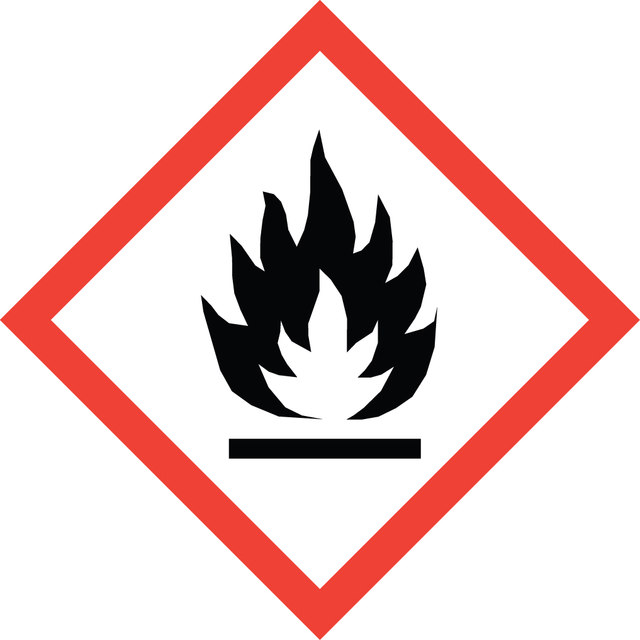
Danger

Hazard Classifications

Aquatic Acute 1 - Aquatic Chronic 1 - Asp. Tox. 1 - Flam. Liq. 2 - Skin Irrit. 2 - STOT SE 3

target_organs

Central nervous system

Storage Class

3 - Flammable liquids

wgk

WGK 2

flash_point_f

10.4 °F - closed cup

flash_point_c

-12 °C - closed cup

ppe

Eyeshields, Faceshields, Gloves, type ABEK (EN14387) respirator filter

Regulatory Information

危险化学品
This item has

Choose from one of the most recent versions:

Certificates of Analysis (COA)

Lot/Batch Number

Don't see the Right Version?

If you require a particular version, you can look up a specific certificate by the Lot or Batch number.

Already Own This Product?

Find documentation for the products that you have recently purchased in the Document Library.

Visit the Document Library

Density, viscosity and specific heat capacity of diesel blends with rapeseed and soybean oil methyl ester
Albo PAG, et al.
Biomass and Bioenergy, 96, 87-95 (2017)
Molecular structure of photosynthetic microbial biofuels for improved engine combustion and emissions characteristics
Hellier P, et al.
Frontiers in Bioengineering and Biotechnology, 3 (2015)
Confinement of DNA in water-in-oil microemulsions
Swami A, et al.
Langmuir, 24(20), 11828-11833 (2008)
Aram Kang et al.
Molecular bioSystems, 8(4), 1350-1358 (2012-02-14)
Microbial tolerance to hydrocarbons has been studied in an effort to improve the productivity of biochemical processes and to enhance the efficiency of hydrocarbon bioremediation. Despite these studies, few attempts have been made to design rational strategies to improve microbial
Kyung Min Park et al.
Food chemistry, 138(2-3), 733-738 (2013-02-16)
In this study, we investigated the possibility of reversed micelles, widely used as an enzyme reactor for lipases, for the determination of lipoxygenase activity. Although it is rapid and simple, reversed micelles have some limitations, such as interference by UV-absorbing

Our team of scientists has experience in all areas of research including Life Science, Material Science, Chemical Synthesis, Chromatography, Analytical and many others.

Contact Technical Service