Skip to Content
Merck
CN

35485

2,4′-DDD

PESTANAL®, analytical standard

Synonym(s):

1-(2-Chlorophenyl)-1-(4-chlorophenyl)-2,2-dichloroethane, (2,4′-Dichlorodiphenyl)dichloroethane, o,p′-DDD, Mitotane

Sign In to View Organizational & Contract Pricing.

Select a Size


About This Item

Linear Formula:
(ClC6H4)2CHCHCl2
CAS Number:
Molecular Weight:
320.04
PubChem Substance ID:
UNSPSC Code:
41116107
MDL number:
NACRES:
NA.24
EC Number:
200-166-6
Beilstein/REAXYS Number:
2056007
Technical Service
Need help? Our team of experienced scientists is here for you.
Let Us Assist
Technical Service
Need help? Our team of experienced scientists is here for you.
Let Us Assist

Product Name

2,4′-DDD, PESTANAL®, analytical standard

InChI key

JWBOIMRXGHLCPP-UHFFFAOYSA-N

InChI

1S/C14H10Cl4/c15-10-7-5-9(6-8-10)13(14(17)18)11-3-1-2-4-12(11)16/h1-8,13-14H

SMILES string

ClC(Cl)C(c1ccc(Cl)cc1)c2ccccc2Cl

grade

analytical standard

product line

PESTANAL®

shelf life

limited shelf life, expiry date on the label

technique(s)

HPLC: suitable
gas chromatography (GC): suitable

application(s)

agriculture
environmental

format

neat

Quality Level

Gene Information

Looking for similar products? Visit Product Comparison Guide

Application

Refer to the product′s Certificate of Analysis for more information on a suitable instrument technique. Contact Technical Service for further support.

General description

2,4′-DDD is generally used to reduce the endogenous CORT neuropeptide, which might mask the total population of intracellular corticosteroid receptors in sparrows. It is an adrenal specific agent, which can find potent applications in the treatment of adrenocortical carcinoma (ACC).

Legal Information

PESTANAL is a registered trademark of Merck KGaA, Darmstadt, Germany

pictograms

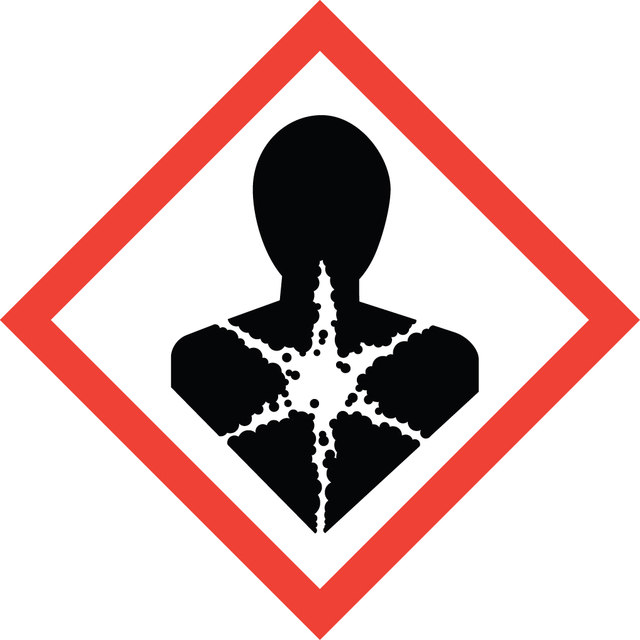
Health hazard

signalword

Warning

hcodes

Hazard Classifications

Carc. 2

Storage Class

11 - Combustible Solids

wgk

WGK 3

flash_point_f

Not applicable

flash_point_c

Not applicable

ppe

dust mask type N95 (US), Eyeshields, Gloves


Choose from one of the most recent versions:

Certificates of Analysis (COA)

Lot/Batch Number

Don't see the Right Version?

If you require a particular version, you can look up a specific certificate by the Lot or Batch number.

Already Own This Product?

Find documentation for the products that you have recently purchased in the Document Library.

Visit the Document Library

Optimal treatment of adrenocortical carcinoma with mitotane: results in a consecutive series of 96 patients
Haak.R.H, et al.
British Journal of Cancer, 69(5), 947-951 (1994)
Pharmacological characterization of intracellular, membrane, and plasma binding sites for corticosterone in house sparrows
Breuner.WC and Orchinik M
General and Comparative Endocrinology, 163(1), 214-224 (2009)
Mitotane for adrenocortical carcinoma treatment
SH and MF
Current Opinion in Investigational Drugs, 6(4), 386-394 (2005)
M Terzolo et al.
European journal of endocrinology, 169(3), 263-270 (2013-05-25)
Mitotane plasma concentrations ≥ 14 mg/l have been shown to predict tumor response and better survival in patients with advanced adrenocortical carcinoma (ACC). A correlation between mitotane concentrations and patient outcome has not been demonstrated in an adjuvant setting. To
Vasileios Chortis et al.
The Journal of clinical endocrinology and metabolism, 98(1), 161-171 (2012-11-20)
Mitotane [1-(2-chlorophenyl)-1-(4-chlorophenyl)-2,2-dichloroethane] is the first-line treatment for metastatic adrenocortical carcinoma (ACC) and is also regularly used in the adjuvant setting after presumed complete removal of the primary tumor. Mitotane is considered an adrenolytic substance, but there is limited information on

Our team of scientists has experience in all areas of research including Life Science, Material Science, Chemical Synthesis, Chromatography, Analytical and many others.

Contact Technical Service