Skip to Content
Merck
CN

33372

Nitrapyrin

PESTANAL®, analytical standard

Synonym(s):

CP, 2-Chloro-6-(trichloromethyl)pyridine

Sign In to View Organizational & Contract Pricing.

Select a Size


About This Item

Empirical Formula (Hill Notation):
C6H3Cl4N
CAS Number:
Molecular Weight:
230.91
UNSPSC Code:
41116107
NACRES:
NA.24
PubChem Substance ID:
EC Number:
217-682-2
Beilstein/REAXYS Number:
1618997
MDL number:
Technical Service
Need help? Our team of experienced scientists is here for you.
Let Us Assist
Technical Service
Need help? Our team of experienced scientists is here for you.
Let Us Assist

Product Name

Nitrapyrin, PESTANAL®, analytical standard

InChI key

DCUJJWWUNKIJPH-UHFFFAOYSA-N

InChI

1S/C6H3Cl4N/c7-5-3-1-2-4(11-5)6(8,9)10/h1-3H

SMILES string

Clc1cccc(n1)C(Cl)(Cl)Cl

grade

analytical standard

product line

PESTANAL®

shelf life

limited shelf life, expiry date on the label

technique(s)

HPLC: suitable
NMR: suitable
gas chromatography (GC): suitable

mp

61-65 °C

suitability

passes test for identity (NMR)

application(s)

agriculture
environmental

format

neat

Quality Level

Looking for similar products? Visit Product Comparison Guide

Application

Refer to the product′s Certificate of Analysis for more information on a suitable instrument technique. Contact Technical Service for further support.

General description

Nitrapyrin is a nitrification inhibitor, which can also undergo hydrolysis to form 6-chloropicolinic acid, that can inhibit methane oxidation by M. trichosporium OB3b.

Other Notes

Find a digital Reference Material for this product available on our online platform ChemisTwin® for NMR. You can use this digital equivalent on ChemisTwin® for your sample identity confirmation and compound quantification (with digital external standard). An NMR spectrum of this substance can be viewed and an online comparison against your sample can be performed with a few mouseclicks. Learn more here and start your free trial.

Legal Information

PESTANAL is a registered trademark of Merck KGaA, Darmstadt, Germany

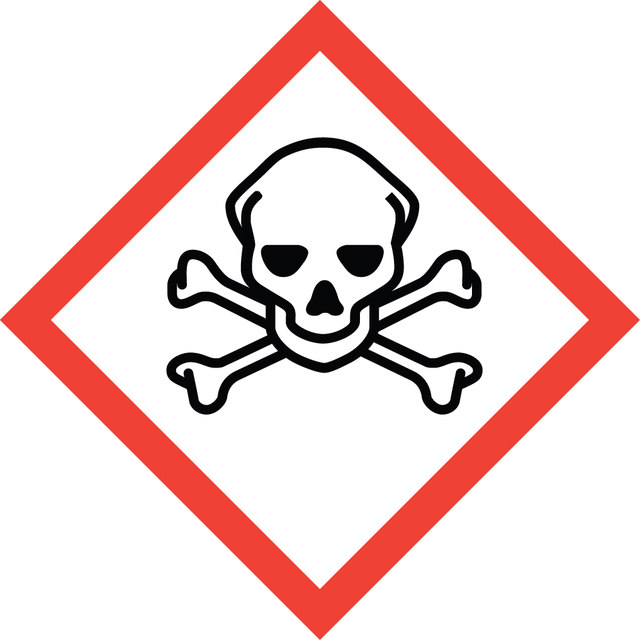
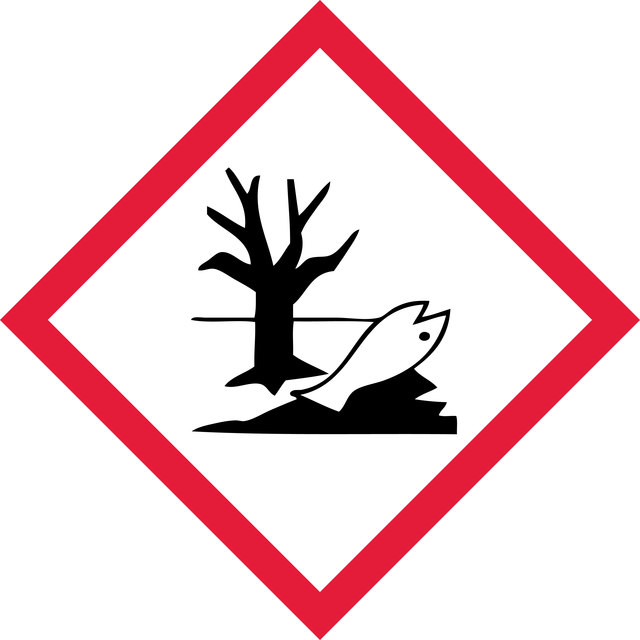
pictograms

Skull and crossbonesEnvironment

signalword

Danger

Hazard Classifications

Acute Tox. 3 Dermal - Acute Tox. 4 Oral - Aquatic Chronic 2

Storage Class

6.1C - Combustible acute toxic Cat.3 / toxic compounds or compounds which causing chronic effects

wgk

WGK 2

flash_point_f

212.0 °F - closed cup

flash_point_c

100 °C - closed cup

ppe

dust mask type N95 (US), Eyeshields, Faceshields, Gloves

Regulatory Information

农药列管产品
This item has

Choose from one of the most recent versions:

Certificates of Analysis (COA)

Lot/Batch Number

Don't see the Right Version?

If you require a particular version, you can look up a specific certificate by the Lot or Batch number.

Already Own This Product?

Find documentation for the products that you have recently purchased in the Document Library.

Visit the Document Library

The effect of nitrapyrin and chloropicolinic acid on ammonium oxidation by Nitrosomonas europaea
Powell, S.J.; JProsser, J.I.;
FEMS Microbiology Letters, 28, 51-54 (1985)
S J Powell et al.
Journal of general microbiology, 137(8), 1923-1929 (1991-08-01)
Nitrate production by Nitrosomonas europaea in inorganic liquid medium containing ammonium was limited by reduction in pH. In the presence of montmorillonite and vermiculite, expanding clays with high cation-exchange-capacity (CEC), nitrite yield was increased, ammonia oxidation continued at pH values
Kristina Bayer et al.
Environmental microbiology, 10(11), 2942-2955 (2008-03-28)
The potential for nitrification in the Mediterranean sponge Aplysina aerophoba was assessed using a combined physiological and molecular approach. Nitrate excretion rates in whole sponges reached values of up to 344 nmol g(-1) dry weight (wt) h(-1) (unstimulated) and 1325
J A Zahn et al.
FEBS letters, 397(1), 35-38 (1996-11-11)
Binding of the ligand, nitric oxide, in the presence of reductant was used to identify a ferrous S = 3/2 signal, characteristic of a ferrous nitrosyl complex, and a g= 2.03 copper or iron signal in membranes of the ammonia-oxidizing
R L Mancinelli et al.
Advances in space research : the official journal of the Committee on Space Research (COSPAR), 26(12), 2041-2046 (2002-06-01)
It has been shown that UV-A (lambda=320-400 nm) and UV-B (lambda=280-320 nm) inhibit photosynthesis, nitrogen fixation and nitrification. The purpose of this study was to determine the effects, if any, on denitrification in a microbial community inhabiting the intertidal. The

Our team of scientists has experience in all areas of research including Life Science, Material Science, Chemical Synthesis, Chromatography, Analytical and many others.

Contact Technical Service