Skip to Content
Merck
CN

296325

m-Xylene

anhydrous, ≥99%

Synonym(s):

1,3-Dimethylbenzene

Sign In to View Organizational & Contract Pricing.

Select a Size


About This Item

Linear Formula:
C6H4(CH3)2
CAS Number:
Molecular Weight:
106.17
EC Number:
203-576-3
UNSPSC Code:
12352002
PubChem Substance ID:
Beilstein/REAXYS Number:
605441
MDL number:
Grade:
anhydrous
Assay:
≥99%
Bp:
138-139 °C (lit.)
Vapor pressure:
16 mmHg ( 37.7 °C)
Technical Service
Need help? Our team of experienced scientists is here for you.
Let Us Assist
Technical Service
Need help? Our team of experienced scientists is here for you.
Let Us Assist

Product Name

m-Xylene, anhydrous, ≥99%

InChI key

IVSZLXZYQVIEFR-UHFFFAOYSA-N

InChI

1S/C8H10/c1-7-4-3-5-8(2)6-7/h3-6H,1-2H3

SMILES string

Cc1cccc(C)c1

grade

anhydrous

vapor density

3.7 (vs air)

vapor pressure

16 mmHg ( 37.7 °C)

assay

≥99%

form

liquid

autoignition temp.

982 °F

expl. lim.

7 %

impurities

<0.002% water
<0.005% water (100 mL pkg)

evapn. residue

<0.0003%

refractive index

n20/D 1.497 (lit.)

bp

138-139 °C (lit.)

mp

−48 °C (lit.)

density

0.868 g/mL at 25 °C (lit.)

Quality Level

Looking for similar products? Visit Product Comparison Guide

Application

m-Xylene may be used in the synthesis of 2,4-dimethylbenzophenone via Friedel–Craft acylation with benzoyl chloride over iron-modified tungstophosphoric acid supported on titania. It may also undergo chloromethylation in the presence of organic acids under organic-aqueous biphasic conditions to form a mixture of chloromethyl-2,4-dimethylbenzene and 1,3-bis(chloromethyl)-4,6-dimethylbenzene.

signalword

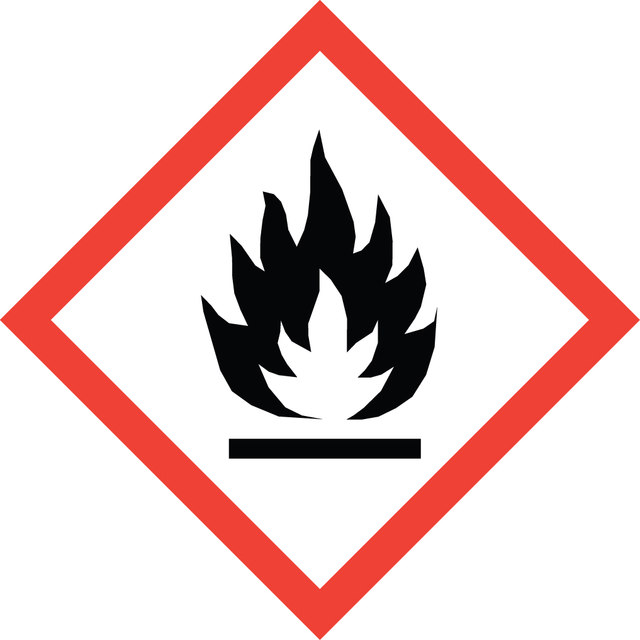
Danger

Hazard Classifications

Acute Tox. 4 Dermal - Acute Tox. 4 Inhalation - Aquatic Chronic 3 - Asp. Tox. 1 - Eye Irrit. 2 - Flam. Liq. 3 - Skin Irrit. 2 - STOT SE 3

target_organs

Respiratory system

Storage Class

3 - Flammable liquids

wgk

WGK 2

flash_point_f

80.6 °F - closed cup

flash_point_c

27 °C - closed cup

ppe

Eyeshields, Faceshields, Gloves, type ABEK (EN14387) respirator filter

Regulatory Information

危险化学品
This item has

Choose from one of the most recent versions:

Certificates of Analysis (COA)

Lot/Batch Number

Don't see the Right Version?

If you require a particular version, you can look up a specific certificate by the Lot or Batch number.

Already Own This Product?

Find documentation for the products that you have recently purchased in the Document Library.

Visit the Document Library

Strong organic acids as efficient catalysts for the chloromethylation of m-xylene: the synthesis of 1, 3-bis (chloromethyl)-4, 6-dimethylbenzene.
Kishida T, et al.
Industrial & Engineering Chemistry Research, 48(4), 1831-1839 (2009)
Iron (III)-Modified Tungstophosphoric Acid Supported on Titania Catalyst: Synthesis, Characterization, and Friedel?Craft Acylation of m-Xylene.
Mu M, et al.
Industrial & Engineering Chemistry Research, 54(36), 8893-8899 (2015)
Influence of alkyl group and temperature on excess thermodynamic properties of diethyl carbonate and their binary mixtures at 0.1 MPa.
Srilakshmi M, et al.
Journal of Molecular Liquids, 211, 854-867 (2015)
Dragana Bozinovski et al.
FEMS microbiology ecology, 81(1), 134-144 (2012-03-01)
A sulfate-reducing consortium maintained for several years in the laboratory with m-xylene as sole source of carbon and energy was characterized by terminal restriction fragment length polymorphism (T-RFLP) fingerprinting of PCR-amplified 16S rRNA genes and stable isotope probing of proteins
Sulak Sumitsawan et al.
Environmental science & technology, 45(16), 6970-6977 (2011-07-19)
Titanium dioxide (TiO(2)) is a preferred catalyst for photocatalytic oxidation of many air pollutants. In an effort to enhance its photocatalytic activity, TiO(2) was modified by pulsed plasma treatment. In this work, TiO(2) nanoparticles, coated on a glass plate, were

Our team of scientists has experience in all areas of research including Life Science, Material Science, Chemical Synthesis, Chromatography, Analytical and many others.

Contact Technical Service