
258121

Nitric acid
ACS reagent, ≥90.0%
Select a Size
About This Item
InChI key
GRYLNZFGIOXLOG-UHFFFAOYSA-N
InChI
1S/HNO3/c2-1(3)4/h(H,2,3,4)
grade
ACS reagent
vapor density
1.3 (vs air)
vapor pressure
6.6 mmHg ( 20 °C), 8 mmHg ( 20 °C)
description
dilution test passes test
assay
≥90.0%
form
liquid
ign. residue
≤0.002%
bp
120.5 °C (lit.)
density
1.48 g/mL at 20 °C (lit.)
anion traces
chloride (Cl-): ≤0.7 ppm, dissolved oxides: ≤0.1% (as N2O3), sulfate (SO42-): ≤5 ppm
cation traces
As: ≤0.3 ppm, Fe: ≤2 ppm, heavy metals (as Pb): ≤5 ppm
Quality Level
Looking for similar products? Visit Product Comparison Guide
Packaging
Other Notes
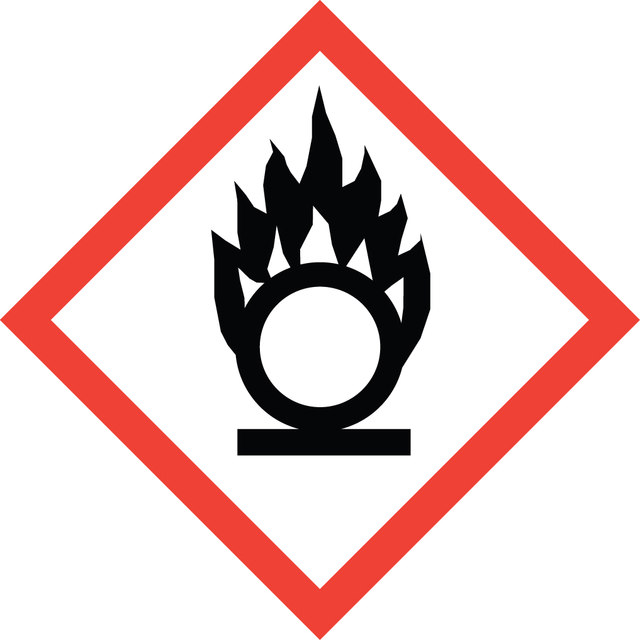
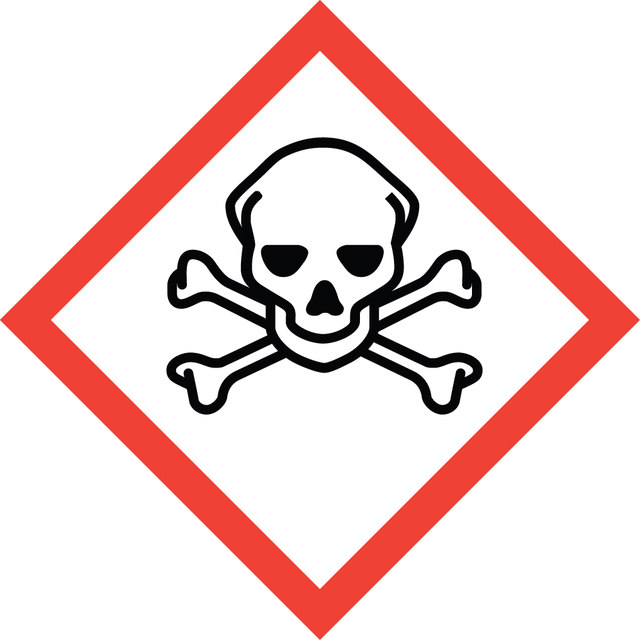
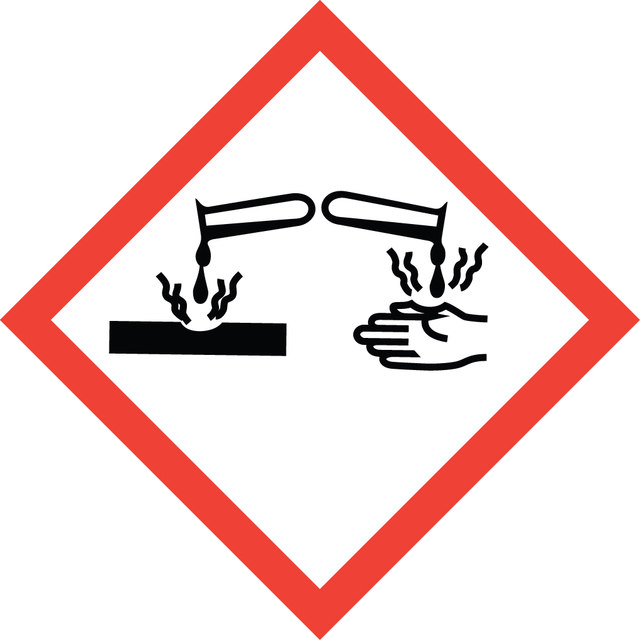
signalword
Danger
hcodes
Hazard Classifications
Acute Tox. 3 Inhalation - Eye Dam. 1 - Met. Corr. 1 - Ox. Liq. 3 - Skin Corr. 1A
supp_hazards
Storage Class
5.1A - Strongly oxidizing hazardous materials
wgk
WGK 2
flash_point_f
Not applicable
flash_point_c
Not applicable
ppe
Faceshields, Gloves, Goggles, type ABEK (EN14387) respirator filter
Regulatory Information
Choose from one of the most recent versions:
Already Own This Product?
Find documentation for the products that you have recently purchased in the Document Library.
Which document(s) contains shelf-life or expiration date information for a given product?
If available for a given product, the recommended re-test date or the expiration date can be found on the Certificate of Analysis.
How do I get lot-specific information or a Certificate of Analysis?
The lot specific COA document can be found by entering the lot number above under the "Documents" section.
What is the molarity of this 90% nitric acid, Product 258121?
Using the density of 1.50 g/mL and the molecular weight of 63.01 g/mol, we can convert the 90% (wt/wt) to a molarity of about 21.4 M.
What is the difference between Product 258121 and the 90% red, fuming nitric acid (Product No. 309079)?
Product 258121 is a colorless to yellow solution of nitric acid that has at least 90% as HNO3 and less than 0.1% dissolved oxides. Product 309079 appears red because it can contain 5-10% of dissolved nitrogen oxide (as N2O3 ).
What is the pH of Nitric acid, Product 258121?
As a 1% solution in water, 90% nitric acid is expected to have a pH that is less than 1.
How do I find price and availability?
There are several ways to find pricing and availability for our products. Once you log onto our website, you will find the price and availability displayed on the product detail page. You can contact any of our Customer Sales and Service offices to receive a quote. USA customers: 1-800-325-3010 or view local office numbers.
What is the Department of Transportation shipping information for this product?
Transportation information can be found in Section 14 of the product's (M)SDS.To access the shipping information for this material, use the link on the product detail page for the product.
My question is not addressed here, how can I contact Technical Service for assistance?
Ask a Scientist here.
Our team of scientists has experience in all areas of research including Life Science, Material Science, Chemical Synthesis, Chromatography, Analytical and many others.
Contact Technical Service