
Sign In to View Organizational & Contract Pricing.
Select a Size
About This Item
Empirical Formula (Hill Notation):
Zn
CAS Number:
Molecular Weight:
65.39
NACRES:
NA.22
PubChem Substance ID:
UNSPSC Code:
11101719
EC Number:
231-175-3
MDL number:
Product Name
Zinc, granular, 20-30 mesh, ACS reagent, ≥99.8%
InChI key
HCHKCACWOHOZIP-UHFFFAOYSA-N
InChI
1S/Zn
SMILES string
[Zn]
grade
ACS reagent
vapor pressure
1 mmHg ( 487 °C)
assay
≥99.8%
form
granular
reaction suitability
core: zinc
reagent type: catalyst
resistivity
5.8 μΩ-cm, 20°C
particle size
20-30 mesh
bp
907 °C (lit.)
mp
420 °C (lit.)
density
7.133 g/mL at 25 °C (lit.)
cation traces
Fe: ≤0.01%
Pb: ≤0.01%
suitability
passes application test for determination of arsenic (As)
Quality Level
Application
Zinc granules can be used to prepare:
- organozinc reagents commonly used in Negishi or Fukuyama couplings
- Reformatsky reagents
- Simmons-Smith reagents
General description
Zinc granules are pure metallic zinc in a granular form, they provide a high surface area for increased reactivity. They serve as a reducing agent, catalyst, or precursor for various chemical reactions. Zinc granules are commonly used for synthesis of organometallic compounds. It reacts with organic halides to form alkyl or aryl zinc compounds, which serve as powerful nucleophiles in carbon-carbon bond formations. This reaction, known as the Barbier reaction, enables the introduction of diverse functional groups into organic molecules.Zinc granules also find application in the synthesis of pharmaceuticals and fine chemicals. They can be employed in the reduction of functional groups like nitro, nitrile, or azide to their corresponding amines. Additionally, zinc granules are involved in other carbon-carbon bond forming reactions, such as the Reformatsky reaction and the Simmons-Smith reaction.
signalword
Warning
hcodes
pcodes
Hazard Classifications
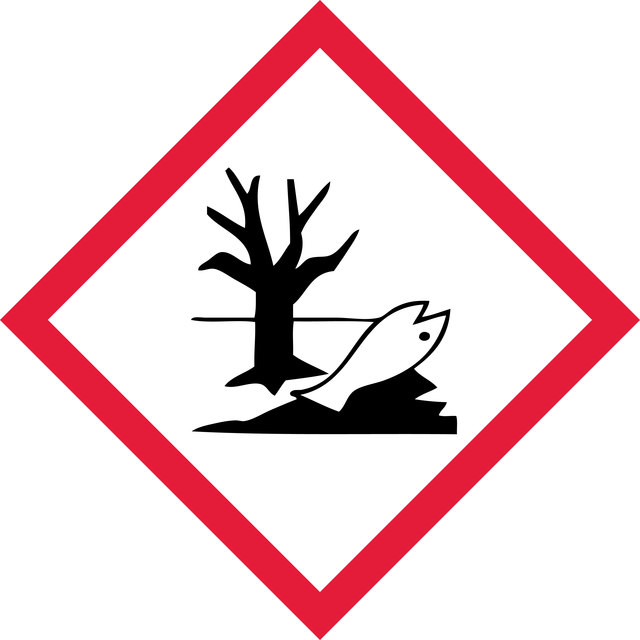
Aquatic Acute 1 - Aquatic Chronic 1
Storage Class
11 - Combustible Solids
wgk
WGK 2
flash_point_f
Not applicable
flash_point_c
Not applicable
ppe
Eyeshields, Gloves, type N95 (US)
Regulatory Information
监管及禁止进口产品
This item has
Choose from one of the most recent versions:
Already Own This Product?
Find documentation for the products that you have recently purchased in the Document Library.
Reagents for Organic Synthesis
L. F. Fieser and M. Fieser
Reagents for Organic Synthesis, 1 (1967)
Advanced Organic Chemistry: Reactions, Mechanisms, and Structure
March, J
Advanced Organic Chemistry (2007)
Use of activation methods for organozinc reagents.
Erdik E
Tetrahedron, 43(10), 2203-2212 (1987)
A Convenient Procedure for the Preparation of Reactive Zinc for the Reformatsky Reaction.
Bouhel E
Synthetic Communications, 21(1), 133-136 (1991)
A scalable zinc activation procedure using dibal-h in a reformatsky reaction.
Girgis M J
Organic Process Research & Development, 13(6), 1094-1099 (2009)
Our team of scientists has experience in all areas of research including Life Science, Material Science, Chemical Synthesis, Chromatography, Analytical and many others.
Contact Technical Service