Skip to Content
Merck
CN

24204

Ethylene glycol

puriss., ≥99.5% (GC)

Synonym(s):

1,2-Ethanediol

Sign In to View Organizational & Contract Pricing.

Select a Size


About This Item

Linear Formula:
HOCH2CH2OH
CAS Number:
Molecular Weight:
62.07
EC Number:
203-473-3
UNSPSC Code:
12352137
PubChem Substance ID:
Beilstein/REAXYS Number:
505945
MDL number:
Technical Service
Need help? Our team of experienced scientists is here for you.
Let Us Assist
Technical Service
Need help? Our team of experienced scientists is here for you.
Let Us Assist

InChI key

LYCAIKOWRPUZTN-UHFFFAOYSA-N

InChI

1S/C2H6O2/c3-1-2-4/h3-4H,1-2H2

vapor density

2.1 (vs air)

vapor pressure

0.08 mmHg ( 20 °C)

grade

puriss.

assay

≥99.5% (GC)

autoignition temp.

752 °F

expl. lim.

15.3 %

impurities

≤0.2% water (Karl Fischer)

bp

195-198 °C

mp

−13 °C (lit.)

density

1.113 g/mL at 25 °C (lit.)

anion traces

chloride (Cl-): ≤2 mg/kg

cation traces

Fe: ≤2 mg/kg

Looking for similar products? Visit Product Comparison Guide

pictograms

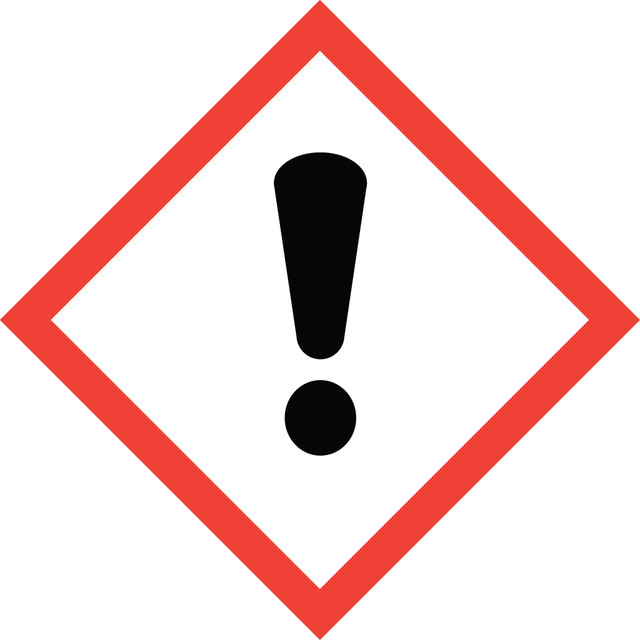
Health hazardExclamation mark

signalword

Warning

hcodes

Hazard Classifications

Acute Tox. 4 Oral - STOT RE 2 Oral

target_organs

Kidney

Storage Class

10 - Combustible liquids

wgk

WGK 1

flash_point_f

239.0 °F - open cup

flash_point_c

115 °C - open cup

ppe

Eyeshields, Faceshields, Gloves, type ABEK (EN14387) respirator filter

Regulatory Information

新产品
This item has

Choose from one of the most recent versions:

Certificates of Analysis (COA)

Lot/Batch Number

It looks like we've run into a problem, but you can still download Certificates of Analysis from our Documents section.

If you need assistance, please contact Customer Support

Already Own This Product?

Find documentation for the products that you have recently purchased in the Document Library.

Visit the Document Library

NTP CERHR MON, (11)(11), 1-III36-1-III36 (2005-07-15)
The National Toxicology Program (NTP) Center for the Evaluation of Risks to Human Reproduction (CERHR) conducted an evaluation of the potential for ethylene glycol (EG) to cause adverse effects on reproduction and development in humans. EG was selected for evaluation
Anomalously increased effective thermal conductivities of ethylene glycol-based nanofluids containing copper nanoparticles.
Eastman JA, et al.
Applied Physics Letters, 78(6), 718-720 (2001)
Lennart Treuel et al.
Chemphyschem : a European journal of chemical physics and physical chemistry, 11(14), 3093-3099 (2010-09-04)
Interactions between differently functionalised silver and gold nanoparticles (NPs) as well as polystyrene nanoparticles with bovine serum albumin (BSA) are studied using circular dichroism (CD) spectroscopy. It is found that the addition of NPs to the protein solution destroys part
Synthesis and characterization of yttrium iron garnet nanoparticles.
Vaqueiro P, et al.
Journal of Solid State Chemistry, 126(2), 161-168 (1996)
Brian J Hales
Biochemistry, 54(27), 4208-4215 (2015-06-20)
Most hydrophilic organic solvents inhibit enzymatic activity. Nitrogenase is shown to be approximately 3 times more sensitive to organic inhibition than most other soluble enzymes. Ethylene glycol (EG) is demonstrated to rapidly inhibit nitrogenase activity without uncoupling ATP hydrolysis. Our

Our team of scientists has experience in all areas of research including Life Science, Material Science, Chemical Synthesis, Chromatography, Analytical and many others.

Contact Technical Service