Skip to Content
Merck
CN

142387

2,4,6-Trimethylpyridine

99%, liquid, ReagentPlus®

Synonym(s):

2,4,6-Collidine, sym-Collidine

Sign In to View Organizational & Contract Pricing.

Select a Size


About This Item

Empirical Formula (Hill Notation):
C8H11N
CAS Number:
Molecular Weight:
121.18
NACRES:
NA.21
PubChem Substance ID:
UNSPSC Code:
12352100
EC Number:
203-613-3
MDL number:
Beilstein/REAXYS Number:
107283
Technical Service
Need help? Our team of experienced scientists is here for you.
Let Us Assist
Technical Service
Need help? Our team of experienced scientists is here for you.
Let Us Assist

Product Name

2,4,6-Trimethylpyridine, ReagentPlus®, 99%

InChI key

BWZVCCNYKMEVEX-UHFFFAOYSA-N

InChI

1S/C8H11N/c1-6-4-7(2)9-8(3)5-6/h4-5H,1-3H3

SMILES string

Cc1cc(C)nc(C)c1

product line

ReagentPlus®

assay

99%

form

liquid

refractive index

n20/D 1.498 (lit.)

bp

171-172 °C (lit.)

mp

−43 °C (lit.)

density

0.917 g/mL at 25 °C (lit.)

Quality Level

Looking for similar products? Visit Product Comparison Guide

Application

2,4,6-Trimethylpyridine (collidine, s-collidine, 2,4,6-collidine) has been used in the preparation of a library of N-acyl aminocoumarins bearing low-molecular-weight N-acyl groups.
Tissue fixative for electron microscopy.
Useful solvent for the cleavage of hindered esters by anhydrous lithium iodide.

General description

2,4,6-Trimethylpyridine is a pyridine derivative. It has a pK of 7.4. The product can react with trifluoroiodomethane in cyclopentane solution to afford 1:1 complex. This complex was investigated by NMR (Nuclear Magnetic Resonance) spectroscopy. Collidine-buffered osmium tetroxide solutions have been prepared by adding osmium tetroxide solution to it. These solutions have been used as fixative for electron microscopic studies.
2,4,6-Trimethylpyridine can undergo oxidation with potassium permanganate to form 2,4,6-pyridinetricarboxylic acid.
Hindered base.

Legal Information

ReagentPlus is a registered trademark of Merck KGaA, Darmstadt, Germany

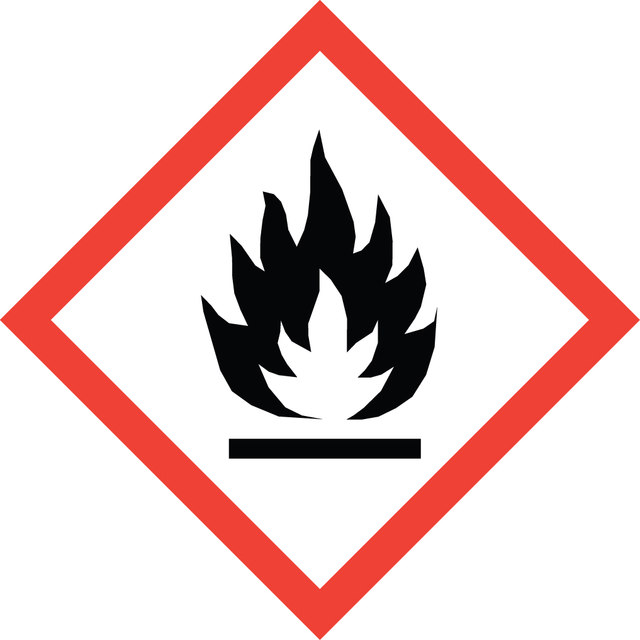
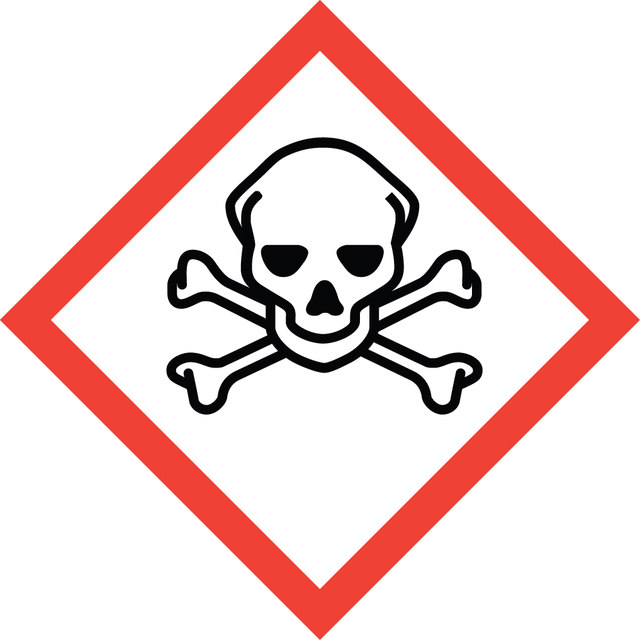
pictograms

FlameSkull and crossbones

signalword

Danger

Hazard Classifications

Acute Tox. 3 Dermal - Acute Tox. 4 Oral - Aquatic Chronic 3 - Eye Irrit. 2 - Flam. Liq. 3 - Skin Irrit. 2 - STOT SE 3

target_organs

Respiratory system

Storage Class

3 - Flammable liquids

wgk

WGK 3

flash_point_f

131.0 °F - closed cup

flash_point_c

55 °C - closed cup

ppe

Eyeshields, Faceshields, Gloves, type ABEK (EN14387) respirator filter

Regulatory Information

危险化学品
This item has

Choose from one of the most recent versions:

Certificates of Analysis (COA)

Lot/Batch Number

Don't see the Right Version?

If you require a particular version, you can look up a specific certificate by the Lot or Batch number.

Already Own This Product?

Find documentation for the products that you have recently purchased in the Document Library.

Visit the Document Library

Synthesis, structure, photoluminescence and magnetic properties of new 3-D lanthanide-pyridine-2, 4, 6-tricarboxylate frameworks
Li C-J, et al.
CrystEngComm, 10(11), 1645-1652 (2008)
Stephen M Baumler et al.
Journal of electroanalytical chemistry (Lausanne, Switzerland), 812, 159-165 (2018-03-06)
Understanding the thermodynamics and kinetics of interactions between model lipid bilayers and planar supports is of critical importance in the furtherance of biosensing and the creation of biomimetic devices. Evaluating these properties can be accomplished through understanding the diffusional properties
Halogen complexes. III. The association of 2, 4, 6-trimethylpyridine and trifluoroiodomethane.
Larsen DW and Allred AL.
The Journal of Physical Chemistry, 69(7), 2400-2401 (1965)
Andrew W Patterson et al.
Nature protocols, 2(2), 424-433 (2007-04-05)
Substrate activity screening (SAS) is a fragment-based method for the rapid development of novel substrates and their conversion into non-peptidic inhibitors of Cys and Ser proteases. The method consists of three steps: (i) a library of N-acyl aminocoumarins with diverse
J Hasegawa et al.
Journal of pharmaceutical sciences, 73(4), 442-445 (1984-04-01)
The pKa of verapamil was determined by measuring the partition coefficient of verapamil between n-heptane and aqueous buffer solution at various pH values. The magnitude of the effects of ionic strength or temperature on the pKa of verapamil was in

Our team of scientists has experience in all areas of research including Life Science, Material Science, Chemical Synthesis, Chromatography, Analytical and many others.

Contact Technical Service