Skip to Content
Merck
CN

122777

Alizarin

Dye content 97 %

Synonym(s):

1,2-Dihydroxyanthraquinone, Mordant Red 11

Sign In to View Organizational & Contract Pricing.

Select a Size


About This Item

Empirical Formula (Hill Notation):
C14H8O4
CAS Number:
Molecular Weight:
240.21
EC Number:
200-782-5
UNSPSC Code:
12171500
NACRES:
NA.47
PubChem Substance ID:
MDL number:
Colour Index Number:
58000
Beilstein/REAXYS Number:
1914037
Technical Service
Need help? Our team of experienced scientists is here for you.
Let Us Assist
Technical Service
Need help? Our team of experienced scientists is here for you.
Let Us Assist

Product Name

Alizarin, Dye content 97 %

InChI key

RGCKGOZRHPZPFP-UHFFFAOYSA-N

InChI

1S/C14H8O4/c15-10-6-5-9-11(14(10)18)13(17)8-4-2-1-3-7(8)12(9)16/h1-6,15,18H

SMILES string

Oc1ccc2C(=O)c3ccccc3C(=O)c2c1O

form

solid

composition

Dye content, 97%

color

yellow

visual transition interval

10.1-12.1, red to violet(alkaline)
5.5-6.8, yellow to red(acid)

mp

279-283 °C (lit.)

solubility

0.1 M NaOH: 0.01 g/L

λmax

567 nm (2nd)
609 nm

ε (extinction coefficient)

13000 at 227-233 nm in 0.1 M NaOH at 0.01 g/L
26000 at 268-274 nm in 0.1 M NaOH at 0.01 g/L

application(s)

diagnostic assay manufacturing
hematology
histology

storage temp.

room temp

Quality Level

Looking for similar products? Visit Product Comparison Guide

Application

Alizarin has been used as a biological stain to dye cotton fabrics and is used as standard in UV-visible spectrophotometer.

Biochem/physiol Actions

Alizarin (1, 2-dihydroxyanthraquinone) is an anthraquinone dye and acts as a main chromophore of madder dye. It is used as a dye in the production of lake pigments. Alizarin is a key constituent in extracts of roots of various members of Rubiaceae, Morinda, Gallium, Oldenlandia families.

signalword

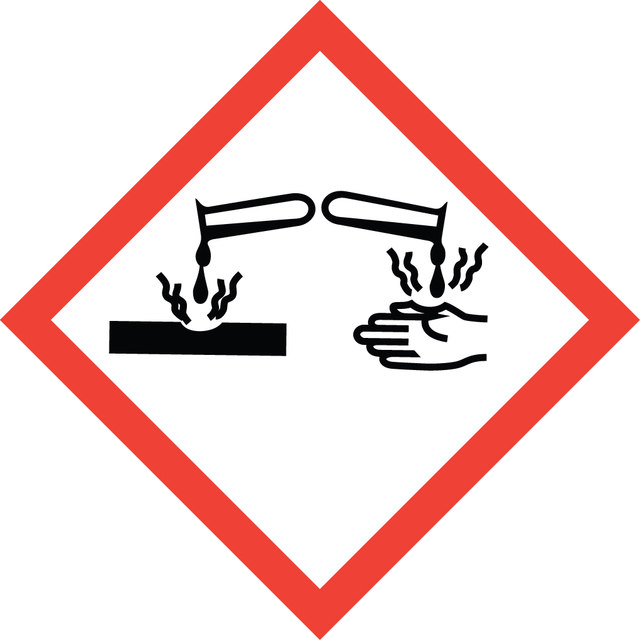
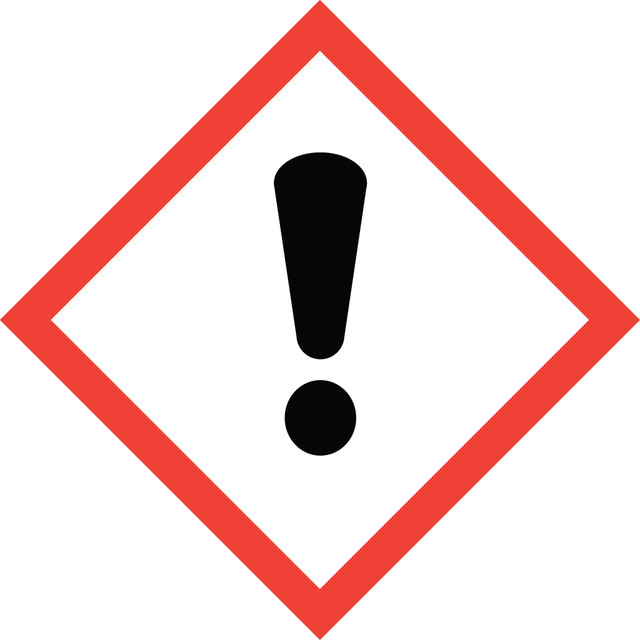
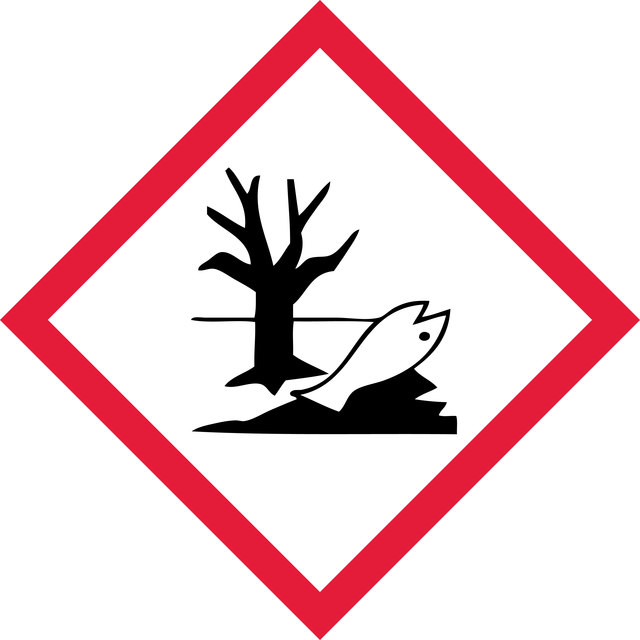
Danger

Hazard Classifications

Aquatic Chronic 1 - Eye Dam. 1 - Skin Sens. 1A

Storage Class

11 - Combustible Solids

wgk

WGK 2

flash_point_f

Not applicable

flash_point_c

Not applicable

ppe

Eyeshields, Faceshields, Gloves, type N95 (US)


Choose from one of the most recent versions:

Certificates of Analysis (COA)

Lot/Batch Number

Don't see the Right Version?

If you require a particular version, you can look up a specific certificate by the Lot or Batch number.

Already Own This Product?

Find documentation for the products that you have recently purchased in the Document Library.

Visit the Document Library

Paola De Luca et al.
Journal of clinical medicine, 8(4) (2019-03-31)
osteoarthritic human articular cartilage (AC)-derived cartilage cells (CCs) with same-donor bone marrow (BMSCs) and adipose tissue (ASCs)-derived mesenchymal stem cells were compared, in terms of stemness features, and secretory and immunomodulatory responses to inflammation. proteoglycan 4 (PRG4) presence was evaluated
Aeration Volume and Photosynthetic Photon Flux Affect Cell Growth
and Secondary Metabolite Contents in Bioreactor Cultures
of Morinda citrifolia
Ahmed S
Journal of Plant Biology, 51 (3), 209-212 (2008)
Nicholas Eastaugh, Valentine Walsh, Tracey Chaplin, Ruth Siddall
Pigment Compendium: A Dictionary and Optical Microscopy of Historical Pigments, By Nicholas Eastaugh, Valentine Walsh, Tracey Chaplin (2007)
SERS detection of red organic dyes inAg-agar gel.
Lofrumento C
Journal of Raman Spectroscopy, 44, 47-54 (2013)
Tom Geerinckx et al.
Physiological and biochemical zoology : PBZ, 85(5), 481-490 (2012-08-21)
Teeth are generally used for actions in which they experience mainly compressive forces acting toward the base. The ordered tooth enamel(oid) and dentin structures contribute to the high compressive strength but also to the minor shear and tensile strengths. Some

Our team of scientists has experience in all areas of research including Life Science, Material Science, Chemical Synthesis, Chromatography, Analytical and many others.

Contact Technical Service