
Skip to Content
Merck
CN

114510

Methyl Orange

ACS reagent, Dye content 85 %

Synonym(s):

4-[4-(Dimethylamino)phenylazo]benzenesulfonic acid sodium salt, Acid Orange 52, Helianthin, Orange III

Sign In to View Organizational & Contract Pricing.

Select a Size


About This Item

Empirical Formula (Hill Notation):
C14H14N3NaO3S
CAS Number:
Molecular Weight:
327.33
Colour Index Number:
13025
NACRES:
NA.47
PubChem Substance ID:
UNSPSC Code:
12171500
EC Number:
208-925-3
MDL number:
Beilstein/REAXYS Number:
4732884
Technical Service
Need help? Our team of experienced scientists is here for you.
Let Us Assist
Technical Service
Need help? Our team of experienced scientists is here for you.
Let Us Assist

Product Name

Methyl Orange, ACS reagent, Dye content 85 %

InChI key

STZCRXQWRGQSJD-GEEYTBSJSA-M

InChI

1S/C14H15N3O3S.Na/c1-17(2)13-7-3-11(4-8-13)15-16-12-5-9-14(10-6-12)21(18,19)20;/h3-10H,1-2H3,(H,18,19,20);/q;+1/p-1/b16-15+;

SMILES string

[Na+].CN(C)c1ccc(cc1)\N=N\c2ccc(cc2)S([O-])(=O)=O

grade

ACS reagent

form

powder

composition

Dye content, 85%

technique(s)

titration: suitable

color

orange

pH

3.0-4.4, pink to yellow

visual transition interval

3.2-4.4, red to yellow

mp

>300 °C

λmax

505 nm

application(s)

diagnostic assay manufacturing
hematology
histology

storage temp.

room temp

Quality Level

Looking for similar products? Visit Product Comparison Guide

Application

Methyl orange is used as a-
  • pH indicator in the cell sap
  • counterstain to crystal violet in staining pollen tubes
  • component of a polychrome histological stain
  • solution indicator, such as in assays of oxalic and malonic acids
  • in other biomedical applications that include use in film dosimeters and as a reagent for the assay of bromide ions.

Biochem/physiol Actions
Methyl Orange is an azo dye which works as a pH indicator.

General description

Methyl orange (C.I. 13025) is the sodium salt of p-dimethylaminoazobenzenesulfonic acid.It is an orange-colored synthetic dye, which changes color depending on the pH of the solution. It develops a red color in acidic solution and yellow color in basic solution.

pictograms

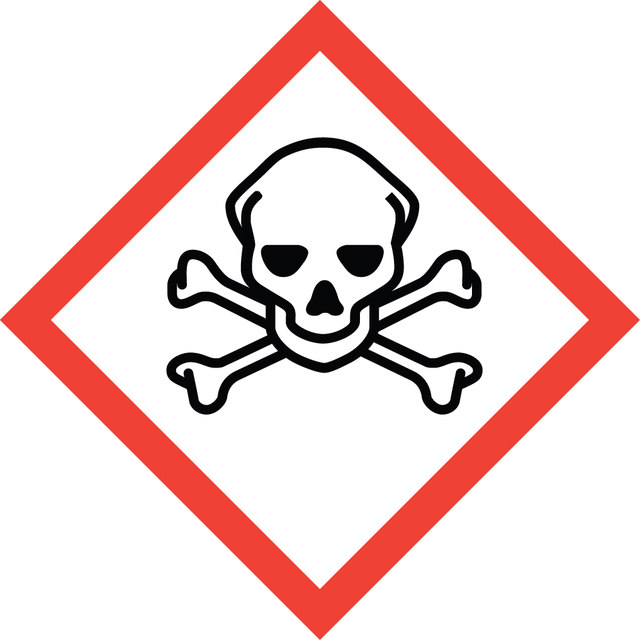
Skull and crossbones

signalword

Danger

hcodes

Hazard Classifications

Acute Tox. 3 Oral

Storage Class

6.1C - Combustible acute toxic Cat.3 / toxic compounds or compounds which causing chronic effects

wgk

WGK 3

flash_point_f

Not applicable

flash_point_c

Not applicable

ppe

Eyeshields, Faceshields, Gloves, type P2 (EN 143) respirator cartridges


Choose from one of the most recent versions:

Certificates of Analysis (COA)

Lot/Batch Number

Don't see the Right Version?

If you require a particular version, you can look up a specific certificate by the Lot or Batch number.

Already Own This Product?

Find documentation for the products that you have recently purchased in the Document Library.

Visit the Document Library

Characterization of methyl orange and its photocatalytic degradation products by HPLC/UV?VIS diode array and atmospheric pressure ionization quadrupole ion trap mass spectrometry.
Baiocchi C, et al.
International Journal of Mass Spectrometry, 214, 247-256 (2002)
Somayeh Mirsadeghi et al.
Journal of environmental management, 270, 110831-110831 (2020-06-09)
A simple biogenic approach for synthesis of Fe3O4/Au nanocomposite with 31 nm size using aqueous extract of Carum carvi L. seeds has been reported. Phytochemicals of Carum carvi L. seeds extract play three roles, including reducing, capping, and stabilizing agents during
Encapsulation of methyl orange pH-indicator into a sol-gel matrix.
Zaggout FR, et al.
Materials Letters, 59, 2928-2931 (2005)
Dan Chen et al.
Journal of hazardous materials, 243, 152-160 (2012-11-06)
A novel magnetic Fe(3)O(4)/ZnCr-layered double hydroxide adsorbent was produced from electroplating wastewater and pickling waste liquor via a two-step microwave hydrothermal method. Adsorption of methyl orange (MO) from water was studied using this material. The effects of three variables have
Maria Visa et al.
Journal of hazardous materials, 244-245, 773-779 (2012-12-04)
Wastewaters resulting from the textile and dye finishing industries need complex treatment for efficient removal of colour and other compounds existent in the dyeing and rising baths (heavy metals, surfactants, equalizers, etc.). Modified fly ash (FA) mixed with TiO(2) photocatalyst

Our team of scientists has experience in all areas of research including Life Science, Material Science, Chemical Synthesis, Chromatography, Analytical and many others.

Contact Technical Service