Skip to Content
Merck
CN

09651

1-Chlorobutane

biotech. grade, ≥99.8%

Synonym(s):

Butyl chloride

Sign In to View Organizational & Contract Pricing.

Select a Size


About This Item

Linear Formula:
CH3(CH2)3Cl
CAS Number:
Molecular Weight:
92.57
UNSPSC Code:
12352100
NACRES:
NA.22
PubChem Substance ID:
EC Number:
203-696-6
Beilstein/REAXYS Number:
1730909
MDL number:
Assay:
≥99.8%
Form:
liquid
Technical Service
Need help? Our team of experienced scientists is here for you.
Let Us Assist
Technical Service
Need help? Our team of experienced scientists is here for you.
Let Us Assist

InChI key

VFWCMGCRMGJXDK-UHFFFAOYSA-N

InChI

1S/C4H9Cl/c1-2-3-4-5/h2-4H2,1H3

SMILES string

CCCCCl

grade

biotech. grade

vapor density

3.2 (vs air)

vapor pressure

80.1 mmHg ( 78.4 °C)

assay

≥99.8%

form

liquid

autoignition temp.

860 °F

expl. lim.

10.1 %

impurities

≤0.01% water (Karl Fischer)

evapn. residue

≤0.0003%

Quality Level

mp

−123 °C (lit.)

density

0.886 g/mL at 25 °C (lit.)

suitability

corresponds for Infrared spectrum, in accordance for sequence analysis test

functional group

alkyl halide, chloro

storage temp.

2-8°C

Looking for similar products? Visit Product Comparison Guide

Packaging

Special packaging for direct use in common sequencers; contains 200 ml.

pictograms

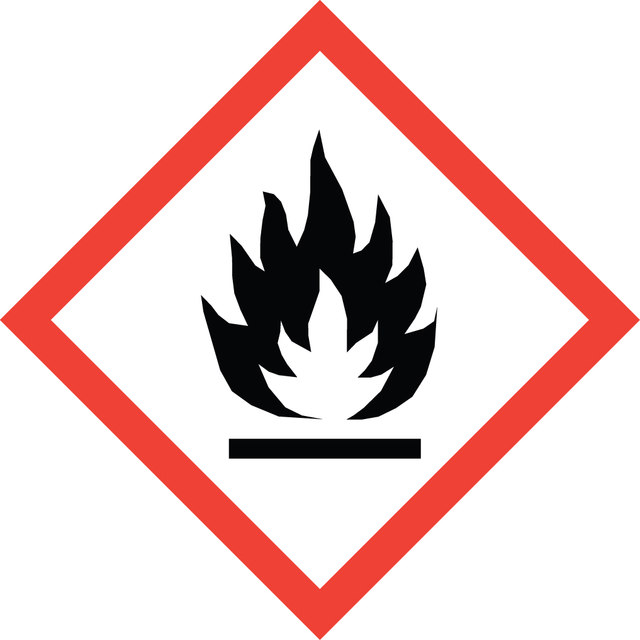
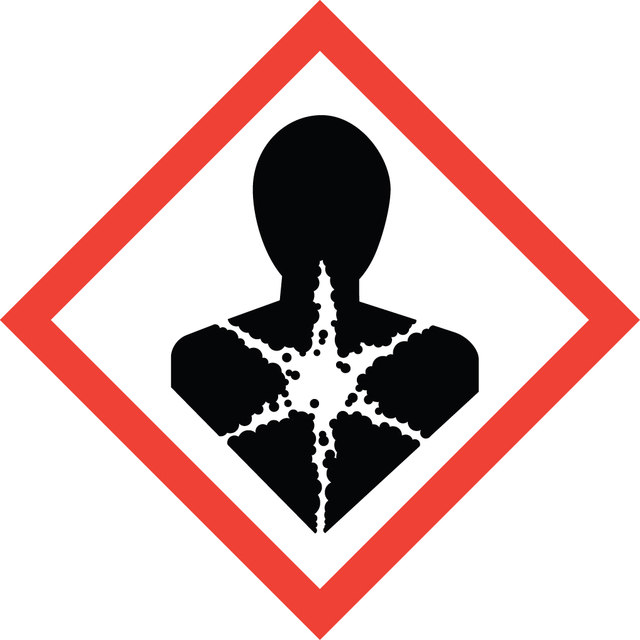
FlameHealth hazard

signalword

Danger

Hazard Classifications

Aquatic Chronic 3 - Asp. Tox. 1 - Flam. Liq. 2

Storage Class

3 - Flammable liquids

wgk

WGK 2

flash_point_f

10.4 °F - closed cup

flash_point_c

-12 °C - closed cup

ppe

Eyeshields, Faceshields, Gloves, type ABEK (EN14387) respirator filter

Regulatory Information

危险化学品
This item has

Choose from one of the most recent versions:

Certificates of Analysis (COA)

Lot/Batch Number

Don't see the Right Version?

If you require a particular version, you can look up a specific certificate by the Lot or Batch number.

Already Own This Product?

Find documentation for the products that you have recently purchased in the Document Library.

Visit the Document Library

Benjamin Erable et al.
Chemosphere, 65(7), 1146-1152 (2006-05-26)
Five bacterial strains were compared for halogenated compounds conversion in aqueous media. Depending on the strain, the optimal temperature for dehalogenase activity of resting cells varied from 30 to 45 degrees C, while optimal pH raised from 8.4 to 9.0.
M E Alburges et al.
Journal of analytical toxicology, 19(6), 381-386 (1995-10-01)
Ibogaine, an indolamine derivative, is currently being investigated as a potential agent in the treatment of stimulant and opiate addiction. We developed a rapid, sensitive, and specific method for the analysis of ibogaine and its putative active metabolite, 12-hydroxy-ibogamine (12-OH-ibogamine).
J M Czuczwa et al.
Journal - Association of Official Analytical Chemists, 72(5), 752-759 (1989-09-01)
A gel permeation chromatographic (GPC) method, used by the U.S. Environmental Protection Agency (USEPA), was modified for cleanup of soil, sediments, wastes, and oily wastes before determination of semivolatile organic pollutants. The modifications included new calibration procedures and control of
A Lewandowicz et al.
Journal of the American Chemical Society, 123(19), 4550-4555 (2001-07-18)
We have found chlorine kinetic isotope effects on the dehalogenation catalyzed by haloalkane dehalogenase from Xanthobacter autotrophicus GJ10 to be 1.0045 +/- 0.0004 for 1,2-dichloroethane and 1.0066 +/- 0.0004 for 1-chlorobutane. The latter isotope effect approaches the intrinsic chlorine kinetic
C Chebli et al.
Pharmaceutical research, 16(9), 1436-1440 (1999-09-25)
Amylose derivatives form an important group of polymers, and many of them can be used as drug sustained-release systems. Substituted amylose can be prepared in a 1-step reaction with substituent(s) in a basic medium. The substituents can be represented as

Our team of scientists has experience in all areas of research including Life Science, Material Science, Chemical Synthesis, Chromatography, Analytical and many others.

Contact Technical Service