Skip to Content
Merck
CN

08515

Melamine

pharmaceutical impurity standard, ≥95.0% (HPLC)

Synonym(s):

Metformin impurity D (Ph Eur), 2,4,6-Triamino-1,3,5-triazine, sym-Triaminotriazine

Sign In to View Organizational & Contract Pricing.

Select a Size


About This Item

Empirical Formula (Hill Notation):
C3H6N6
CAS Number:
Molecular Weight:
126.12
EC Number:
203-615-4
UNSPSC Code:
41116107
PubChem Substance ID:
Beilstein/REAXYS Number:
124341
MDL number:
Technical Service
Need help? Our team of experienced scientists is here for you.
Let Us Assist
Technical Service
Need help? Our team of experienced scientists is here for you.
Let Us Assist

InChI

1S/C3H6N6/c4-1-7-2(5)9-3(6)8-1/h(H6,4,5,6,7,8,9)

InChI key

JDSHMPZPIAZGSV-UHFFFAOYSA-N

SMILES string

Nc1nc(N)nc(N)n1

grade

analytical standard

assay

≥95.0% (HPLC)

form

solid

shelf life

limited shelf life, expiry date on the label

impurities

≤10% related substances, ≤5.0% solvents, ≤5.0% water

mp

>300 °C (lit.)

application(s)

pharmaceutical (small molecule)

storage temp.

2-8°C

Looking for similar products? Visit Product Comparison Guide
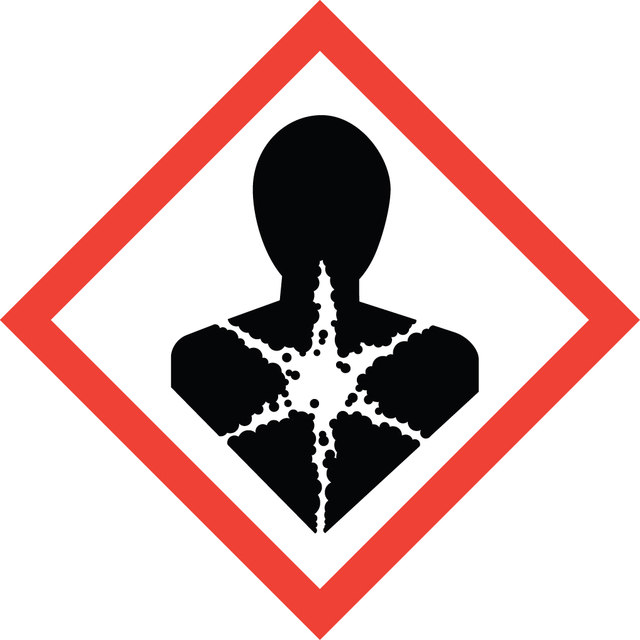
pictograms

Health hazard

signalword

Warning

Hazard Classifications

Carc. 2 - Repr. 2 - STOT RE 2

target_organs

Urinary tract

Storage Class

11 - Combustible Solids

wgk

WGK 1

flash_point_f

572.0 °F - closed cup

flash_point_c

300 °C - closed cup


Choose from one of the most recent versions:

Certificates of Analysis (COA)

Lot/Batch Number

Don't see the Right Version?

If you require a particular version, you can look up a specific certificate by the Lot or Batch number.

Already Own This Product?

Find documentation for the products that you have recently purchased in the Document Library.

Visit the Document Library

Hui Yang et al.
Nano letters, 15(3), 1730-1735 (2015-02-11)
We detect by optical microscopy Au and fluorescent nanoparticles (NPs) during their motion in water-based medium, using an array of dielectric microspheres that are patterned in a microwell array template. The microspheres act as lenses focusing the light originating from
Ana Paula Craig et al.
Annual review of food science and technology, 4, 369-380 (2013-01-10)
Surface-enhanced Raman spectroscopy (SERS) is an advanced Raman technique that enhances the vibrational spectrum of molecules adsorbed on or in the vicinity of metal particles and/or surfaces. Because of its readiness, sensitivity, and minimum sample preparation requirements, SERS is being
D Frösch et al.
Electron microscopy reviews, 2(2), 231-255 (1989-01-01)
Melamine resins are derived from the heterocyclic compound triaminotriazine, C3H6N6. Similar to proteins in structure and reactivity, water-soluble melamine resins can be used as water-embedding media for electron microscopy (Bachhuber and Frösch, 1983). The idea behind this approach was to
Lingjie Kong et al.
Optics letters, 38(2), 145-147 (2013-03-05)
Stimulated Raman scattering (SRS) microscopy allows label-free chemical imaging based on vibrational spectroscopy. Narrowband excitation with picosecond lasers creates the highest signal levels and enables imaging speeds up to video-rate, but it sacrifices chemical specificity in samples with overlapping bands
Yanhua Zhao et al.
Talanta, 113, 7-13 (2013-05-28)
Silver nanoparticles coated amino modified polystyrene microspheres (PS-NH2/Ag NPs) with extremely high surface enhanced Raman scattering (SERS) activity and uniform surface morphology were created by precise controlling of deposition time. Nanojets that were formed underneath the individual microspheres could be

Our team of scientists has experience in all areas of research including Life Science, Material Science, Chemical Synthesis, Chromatography, Analytical and many others.

Contact Technical Service