Skip to Content
Merck
CN

01110

Ammonium hydrogen difluoride

puriss., ≥97.5%

Synonym(s):

Ammonium bifluoride, Etching powder

Sign In to View Organizational & Contract Pricing.

Select a Size


About This Item

Linear Formula:
NH4HF2
CAS Number:
Molecular Weight:
57.04
UNSPSC Code:
12352302
PubChem Substance ID:
EC Number:
215-676-4
MDL number:
Assay:
≥97.5%
Technical Service
Need help? Our team of experienced scientists is here for you.
Let Us Assist
Technical Service
Need help? Our team of experienced scientists is here for you.
Let Us Assist

InChI key

KVBCYCWRDBDGBG-UHFFFAOYSA-N

InChI

1S/2FH.H3N/h2*1H;1H3

SMILES string

N.F.F

grade

puriss.

assay

≥97.5%

impurities

≤0.001% heavy metals (as Pb), ≤0.03% hexafluorosilicate (as (NH4)2SiF6)

mp

125 °C (lit.)

anion traces

chloride (Cl-): ≤50 mg/kg, sulfate (SO42-): ≤50 mg/kg, sulfite (SO32-): ≤50 mg/kg

cation traces

Ca: ≤50 mg/kg, Fe: ≤100 mg/kg, K: ≤50 mg/kg, Mg: ≤50 mg/kg

Looking for similar products? Visit Product Comparison Guide
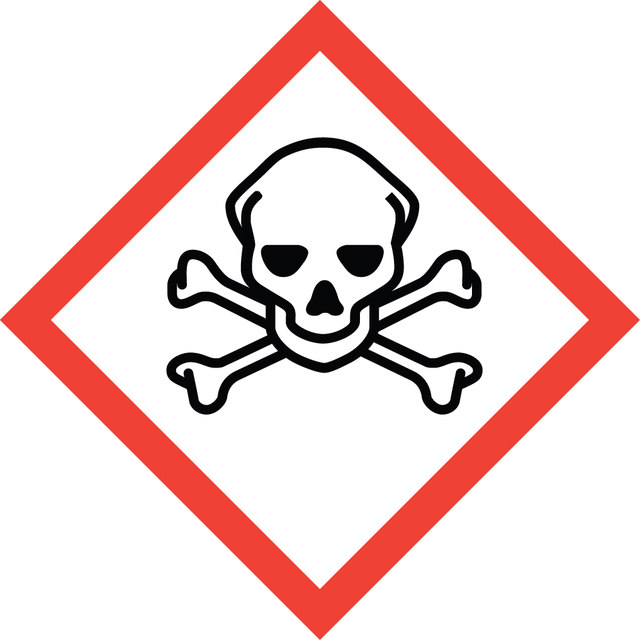
pictograms

Skull and crossbonesCorrosion

signalword

Danger

hcodes

Hazard Classifications

Acute Tox. 3 Oral - Eye Dam. 1 - Skin Corr. 1B

Storage Class

6.1D - Non-combustible acute toxic Cat.3 / toxic hazardous materials or hazardous materials causing chronic effects

wgk

WGK 1

flash_point_f

Not applicable

flash_point_c

Not applicable

ppe

Eyeshields, Faceshields, Gloves, type P2 (EN 143) respirator cartridges, type P3 (EN 143) respirator cartridges

Regulatory Information

新产品
This item has

Choose from one of the most recent versions:

Certificates of Analysis (COA)

Lot/Batch Number

Don't see the Right Version?

If you require a particular version, you can look up a specific certificate by the Lot or Batch number.

Already Own This Product?

Find documentation for the products that you have recently purchased in the Document Library.

Visit the Document Library

David W Cescon et al.
Clinical cancer research : an official journal of the American Association for Cancer Research, 21(11), 2499-2505 (2015-03-06)
Genomic profiling of lung squamous cell carcinomas (SCC) has identified NRF2 pathway alterations, which activate oxidative response pathways, in one third of tumors. Preclinical data suggest these tumors may be resistant to platinum-based chemotherapy. We evaluated the clinical relevance of
Na-Yu Chia et al.
Gut, 64(5), 707-719 (2014-07-24)
Gastric cancer (GC) is a deadly malignancy for which new therapeutic strategies are needed. Three transcription factors, KLF5, GATA4 and GATA6, have been previously reported to exhibit genomic amplification in GC. We sought to validate these findings, investigate how these
Kevin R Bushell et al.
Blood, 125(6), 999-1005 (2014-12-04)
Non-Hodgkin lymphomas (NHLs) are the most common cancer to affect pet dogs. In contrast to the many genes whose mutation contributes to lymphomagenesis in humans, relatively little is known about the acquired genetic alterations that lead to canine B-cell lymphomas
L Touahir et al.
Bioelectrochemistry (Amsterdam, Netherlands), 80(1), 17-25 (2010-05-18)
(111) silicon surfaces can be controlled down to atomic level and offer a remarkable starting point for elaborating nanostructures. Hydrogenated surfaces are obtained by oxide dissolution in hydrofluoric acid or ammonium fluoride solution. Organic species are grafted onto the hydrogenated
Sebastian Ribi et al.
Oncotarget, 6(10), 7727-7740 (2015-03-13)
Somatic mutations of TP53 are among the most common in cancer and germline mutations of TP53 (usually missense) can cause Li-Fraumeni syndrome (LFS). Recently, recurrent genomic rearrangements in intron 1 of TP53 have been described in osteosarcoma (OS), a highly

Our team of scientists has experience in all areas of research including Life Science, Material Science, Chemical Synthesis, Chromatography, Analytical and many others.

Contact Technical Service