Skip to Content
Merck
CN

19-2380

Methyl acrylate

SAJ first grade, ≥99.0%

Sign In to View Organizational & Contract Pricing.

Select a Size


About This Item

Linear Formula:
CH2=CHCOOCH3
CAS Number:
Molecular Weight:
86.09
EC Number:
202-500-6
UNSPSC Code:
12352108
PubChem Substance ID:
Beilstein/REAXYS Number:
605396
MDL number:
Grade:
SAJ first grade
Assay:
≥99.0%
Bp:
80 °C (lit.)
Vapor pressure:
67.5 mmHg ( 20 °C)
Technical Service
Need help? Our team of experienced scientists is here for you.
Let Us Assist
Technical Service
Need help? Our team of experienced scientists is here for you.
Let Us Assist

Product Name

Methyl acrylate, SAJ first grade, ≥99.0%

InChI key

BAPJBEWLBFYGME-UHFFFAOYSA-N

InChI

1S/C4H6O2/c1-3-4(5)6-2/h3H,1H2,2H3

SMILES string

COC(=O)C=C

grade

SAJ first grade

vapor density

3 (vs air)

vapor pressure

67.5 mmHg ( 20 °C)

assay

≥99.0%

form

liquid

autoignition temp.

874 °F

expl. lim.

14.5 %

availability

available only in Japan

dilution

(for analytical testing)

refractive index

n20/D 1.402 (lit.)

bp

80 °C (lit.)

mp

−75 °C (lit.)

density

0.956 g/mL at 25 °C (lit.)

Looking for similar products? Visit Product Comparison Guide
pictograms

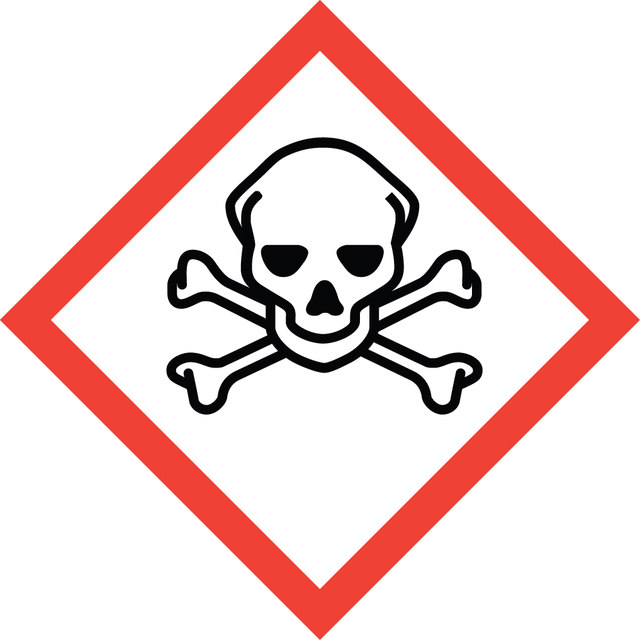
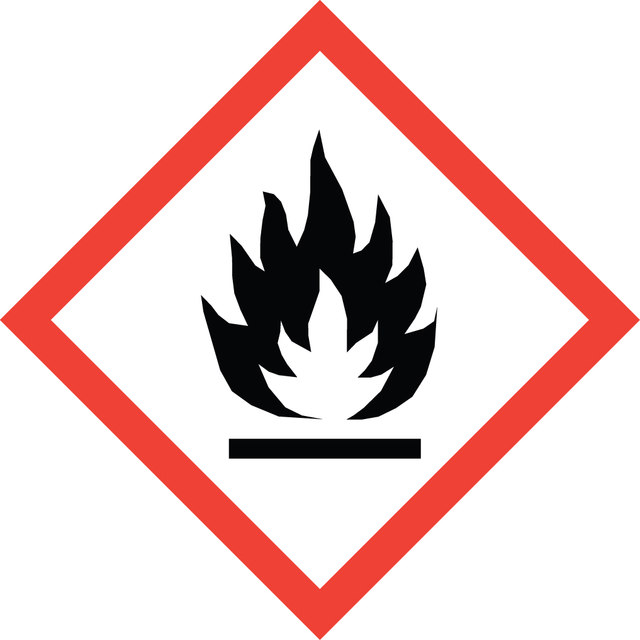
FlameSkull and crossbones

signalword

Danger

Hazard Classifications

Acute Tox. 3 Inhalation - Acute Tox. 4 Dermal - Acute Tox. 4 Oral - Aquatic Chronic 3 - Eye Irrit. 2 - Flam. Liq. 2 - Skin Irrit. 2 - Skin Sens. 1 - STOT SE 3

target_organs

Respiratory system

Storage Class

3 - Flammable liquids

wgk

WGK 2

flash_point_f

27.0 °F - closed cup

flash_point_c

-2.8 °C - closed cup

ppe

Eyeshields, Faceshields, Gloves, type ABEK (EN14387) respirator filter

Regulatory Information

新产品
This item has

Choose from one of the most recent versions:

Certificates of Analysis (COA)

Lot/Batch Number

Don't see the Right Version?

If you require a particular version, you can look up a specific certificate by the Lot or Batch number.

Already Own This Product?

Find documentation for the products that you have recently purchased in the Document Library.

Visit the Document Library

Nicky Chan et al.
Macromolecular rapid communications, 32(7), 604-609 (2011-03-26)
The use of copper tubing as both the reactor and as a catalyst source is demonstrated for continuous controlled radical polymerization of methyl acrylate at ambient temperature and at low solvent content of 30%. The high surface area provided by
Transformation of nickelalactones to methyl acrylate: on the way to a catalytic conversion of carbon dioxide.
S Y Tina Lee et al.
ChemSusChem, 4(9), 1275-1279 (2011-09-17)
Xin Liu et al.
Journal of hazardous materials, 175(1-3), 1014-1021 (2009-11-27)
Porous acrylonitrile (AN)/methyl acrylate (MA) copolymer beads were prepared by suspended emulsion polymerization. The cyano groups in AN/MA copolymer beads were converted to amidoxime (AO) groups by reaction with hydroxylamine hydrochloride (NH(2)OH.HCl) to remove metal ions in aqueous solution. The
Cyril Cook et al.
The Journal of organic chemistry, 77(16), 6728-6742 (2012-08-02)
In this article, we disclose the various routes and strategies we had to explore before finally achieving the total synthesis of (-)-exiguolide ((-)-1). Two first types of approaches were set, both relying on the Trost's domino ene-yne coupling/oxa-Michael reaction that
María B Blanco et al.
Environmental science & technology, 44(18), 7031-7036 (2010-08-24)
A product study is reported on the gas-phase reactions of OH radicals and Cl atoms with methyl acrylate. The experiments were performed in a 1080-L quartz-glass chamber in synthetic air at 298 ± 2 K and 760 ± 10 Torr

Our team of scientists has experience in all areas of research including Life Science, Material Science, Chemical Synthesis, Chromatography, Analytical and many others.

Contact Technical Service