
Skip to Content
Merck
CN

01-2690

Aluminum chloride

SAJ first grade, ≥98.0%

Sign In to View Organizational & Contract Pricing.

Select a Size


About This Item

Linear Formula:
AlCl3
CAS Number:
Molecular Weight:
133.34
UNSPSC Code:
12352302
PubChem Substance ID:
EC Number:
231-208-1
MDL number:
Technical Service
Need help? Our team of experienced scientists is here for you.
Let Us Assist
Technical Service
Need help? Our team of experienced scientists is here for you.
Let Us Assist

assay

≥98.0%

form

solid

vapor pressure

1 mmHg ( 100 °C)

InChI key

VSCWAEJMTAWNJL-UHFFFAOYSA-K

InChI

1S/Al.3ClH/h;3*1H/q+3;;;/p-3

SMILES string

Cl[Al](Cl)Cl

grade

SAJ first grade

reaction suitability

reagent type: catalyst
core: aluminum

availability

available only in Japan

pH

2.4 (20 °C, 100 g/L)

mp

190 °C (lit.)

Looking for similar products? Visit Product Comparison Guide

Features and Benefits
The vapor-phase co-reductions with other metal halides by hydrogen results in finely divided intermetallics with applications as structural materials or compounds with useful thermoelectric, magnetic, and oxidation-resistance properties. Aluminum nitride can be synthesized from the elemnts with AlCl3 added to help facilitate crystallization.

pictograms

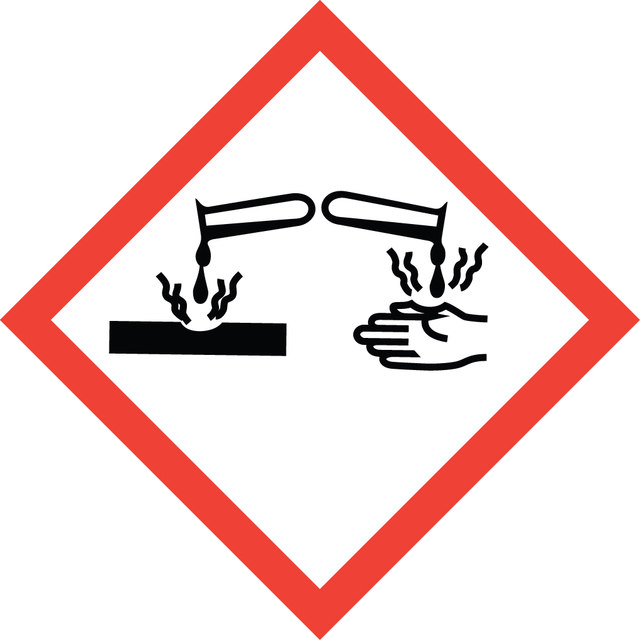
Corrosion

signalword

Danger

hcodes

Hazard Classifications

Eye Dam. 1 - Skin Corr. 1B

supp_hazards

Storage Class

8B - Non-combustible corrosive hazardous materials

wgk

WGK 1

flash_point_f

Not applicable

flash_point_c

Not applicable

ppe

Eyeshields, Faceshields, Gloves, type P3 (EN 143) respirator cartridges

Regulatory Information

新产品
This item has

Choose from one of the most recent versions:

Certificates of Analysis (COA)

Lot/Batch Number

Don't see the Right Version?

If you require a particular version, you can look up a specific certificate by the Lot or Batch number.

Already Own This Product?

Find documentation for the products that you have recently purchased in the Document Library.

Visit the Document Library

Diagnosis and management of hyperhidrosis.
R A Benson et al.
BMJ (Clinical research ed.), 347, f6800-f6800 (2013-11-28)
Hai-hua Zhao et al.
Behavioural brain research, 241, 228-234 (2012-12-12)
Environmental agent aluminum, a well-known neurotoxin, has been proposed to play a role in the development of Alzheimer's disease (AD), and produced clinical and pathological features which were strikingly similar to those seen in AD brain, such as neurofibrillary tangles.
Bagineni Prasad et al.
Chemical communications (Cambridge, England), 48(84), 10434-10436 (2012-09-20)
A conceptually new and straightforward introduction of sulfonyl groups at the C-7 position of an indole ring has been achieved via AlCl(3) mediated unexpected regioselective sulfonyl group migration for N-alkyl/aryl/heteroarylsulfonyl indoles affording potential inhibitors of Mycobacterium tuberculosis H37Rv chorismate mutase.
Dharmalingam Prakash et al.
Neuromolecular medicine, 15(1), 192-208 (2013-01-15)
Aluminum (Al) is an environmental neurotoxin that affects cerebral functions and causes health complications. However, the role of Al in arbitrating glia homeostasis and pathophysiology remains obscure. Astrocyte, microglia activation (reactive gliosis), and associated inflammatory events play a decisive role
Haytham Abdallah Ali et al.
Journal of molecular neuroscience : MN, 53(4), 654-660 (2014-02-04)
Exposure to high levels of aluminum (Al) leads to neurodegeneration, which may be mediated through over-generation of free radicals. So, in the present study, we investigated the ability of both quercetin and omega 3 to ameliorate adverse effects of Al

Our team of scientists has experience in all areas of research including Life Science, Material Science, Chemical Synthesis, Chromatography, Analytical and many others.

Contact Technical Service