Skip to Content
Merck
CN

S-019

Salicylic acid

1.0 mg/mL in acetonitrile, ampule of 1 mL, certified reference material, Cerilliant®

Synonym(s):

2-Hydroxybenzoic acid

Sign In to View Organizational & Contract Pricing

Select a Size


About This Item

Linear Formula:
2-(HO)C6H4CO2H
CAS Number:
Molecular Weight:
138.12
Beilstein:
774890
EC Number:
MDL number:
UNSPSC Code:
41116107
PubChem Substance ID:
NACRES:
NA.24
Technical Service
Need help? Our team of experienced scientists is here for you.
Let Us Assist
Technical Service
Need help? Our team of experienced scientists is here for you.
Let Us Assist

grade

certified reference material

Quality Level

vapor density

4.8 (vs air)

vapor pressure

1 mmHg ( 114 °C)

form

liquid

feature

Snap-N-Spike®/Snap-N-Shoot®

packaging

ampule of 1 mL

manufacturer/tradename

Cerilliant®

concentration

1.0 mg/mL in acetonitrile

technique(s)

GC/MS: suitable
gas chromatography (GC): suitable
liquid chromatography (LC): suitable

bp

211 °C (lit.)

mp

158-161 °C (lit.)

density

0.782 g/cm3 at 20 °C

application(s)

forensics and toxicology
pharmaceutical (small molecule)

format

single component solution

storage temp.

−20°C

SMILES string

OC(=O)c1ccccc1O

InChI

1S/C7H6O3/c8-6-4-2-1-3-5(6)7(9)10/h1-4,8H,(H,9,10)

InChI key

YGSDEFSMJLZEOE-UHFFFAOYSA-N

Looking for similar products? Visit Product Comparison Guide

General description

Salicylic acid, the major metabolite of aspirin, is also a phytohormone found in plants with roles in plant growth and development, photosynthesis, transpiration, ion uptake, and transport. This certified solution standard is suitable for numerous LC/MS and GC/MS applications including clinical and diagnostic testing, pharmaceutical research and phytochemical testing.

Legal Information

CERILLIANT is a registered trademark of Merck KGaA, Darmstadt, Germany
Snap-N-Shoot is a registered trademark of Cerilliant Corporation
Snap-N-Spike is a registered trademark of Merck KGaA, Darmstadt, Germany

Pictograms

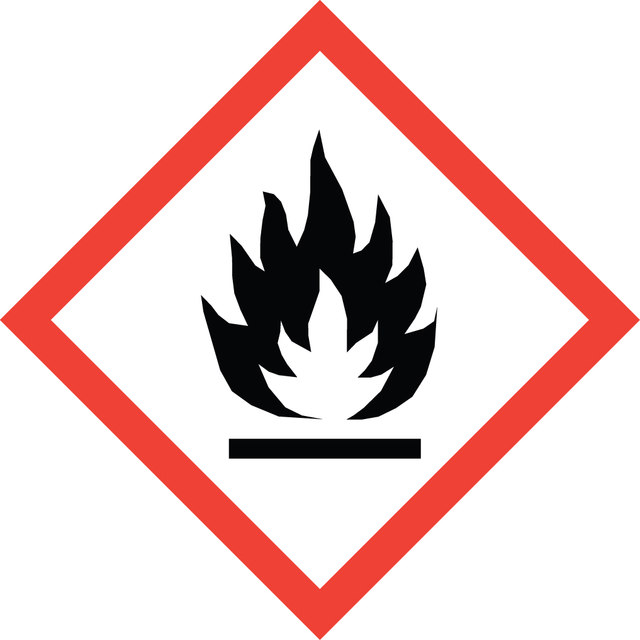
FlameExclamation mark

Signal Word

Danger

Hazard Classifications

Acute Tox. 4 Dermal - Acute Tox. 4 Inhalation - Acute Tox. 4 Oral - Eye Irrit. 2 - Flam. Liq. 2

Storage Class Code

3 - Flammable liquids

WGK

WGK 2

Flash Point(F)

35.6 °F - closed cup

Flash Point(C)

2 °C - closed cup

Regulatory Information

危险化学品
This item has

Certificates of Analysis (COA)

Search for Certificates of Analysis (COA) by entering the products Lot/Batch Number. Lot and Batch Numbers can be found on a product’s label following the words ‘Lot’ or ‘Batch’.

Already Own This Product?

Find documentation for the products that you have recently purchased in the Document Library.

Visit the Document Library

S G Owen et al.
British journal of clinical pharmacology, 38(4), 349-355 (1994-10-01)
1. Five rheumatoid patients with a knee joint effusion participated in the study. An aqueous solution (0.1 to 0.2 ml) containing paracetamol, salicylate, diclofenac and [125I]-albumin was injected into a given joint to yield target concentrations of approximately 20 micrograms
Shifeng Cao et al.
Food chemistry, 134(4), 1715-1718 (2013-02-28)
The effect of elicitors associated with host defence on betacyanin accumulation in Amaranthus mangostanus seedlings was investigated. Under the conditions of the experiments, betacyanin accumulation was generally enhanced by light. Methyl jasmonate (MeJA) treatment increased betacyanin synthesis in a concentration-dependent
Limor Poraty-Gavra et al.
Plant physiology, 161(3), 1172-1188 (2013-01-16)
How plants coordinate developmental processes and environmental stress responses is a pressing question. Here, we show that Arabidopsis (Arabidopsis thaliana) Rho of Plants6 (AtROP6) integrates developmental and pathogen response signaling. AtROP6 expression is induced by auxin and detected in the
A Corina Vlot et al.
Annual review of phytopathology, 47, 177-206 (2009-04-30)
For more than 200 years, the plant hormone salicylic acid (SA) has been studied for its medicinal use in humans. However, its extensive signaling role in plants, particularly in defense against pathogens, has only become evident during the past 20
Ganesan Karthikeyan et al.
British journal of haematology, 146(2), 142-149 (2009-05-15)
Guidelines differ on whether acetyl salicylic acid (ASA, aspirin) should be used for prophylaxis in patients at high-risk of venous thromboembolism (VTE), principally because of differences in perceptions of its efficacy. ASA is an attractive therapeutic option because it is

Our team of scientists has experience in all areas of research including Life Science, Material Science, Chemical Synthesis, Chromatography, Analytical and many others.

Contact Technical Service