Skip to Content
Merck
CN

W519308

3-Methyl-3-buten-1-ol

≥97%

Sign In to View Organizational & Contract Pricing.

Select a Size


About This Item

Linear Formula:
CH2=C(CH3)CH2CH2OH
CAS Number:
Molecular Weight:
86.13
NACRES:
NA.21
Flavis number:
2.176
PubChem Substance ID:
UNSPSC Code:
12164502
EC Number:
212-110-8
MDL number:
Beilstein/REAXYS Number:
1071239
Organoleptic:
fruity
Biological source:
synthetic
Food allergen:
no known allergens
Technical Service
Need help? Our team of experienced scientists is here for you.
Let Us Assist
Technical Service
Need help? Our team of experienced scientists is here for you.
Let Us Assist

Product Name

3-Methyl-3-buten-1-ol, ≥97%

InChI key

CPJRRXSHAYUTGL-UHFFFAOYSA-N

InChI

1S/C5H10O/c1-5(2)3-4-6/h6H,1,3-4H2,2H3

SMILES string

CC(=C)CCO

biological source

synthetic

assay

≥97%

refractive index

n20/D 1.433 (lit.)

bp

130-132 °C (lit.)

density

0.853 g/mL at 25 °C (lit.)

application(s)

flavors and fragrances

documentation

see Safety & Documentation for available documents

food allergen

no known allergens

organoleptic

fruity

Quality Level

Looking for similar products? Visit Product Comparison Guide

General description

3-Methyl-3-buten-1-ol is a volatile aliphatic alcohol found in the extracts of basil and thyme leaves, immature mangaba fruits and some honey samples.

pictograms

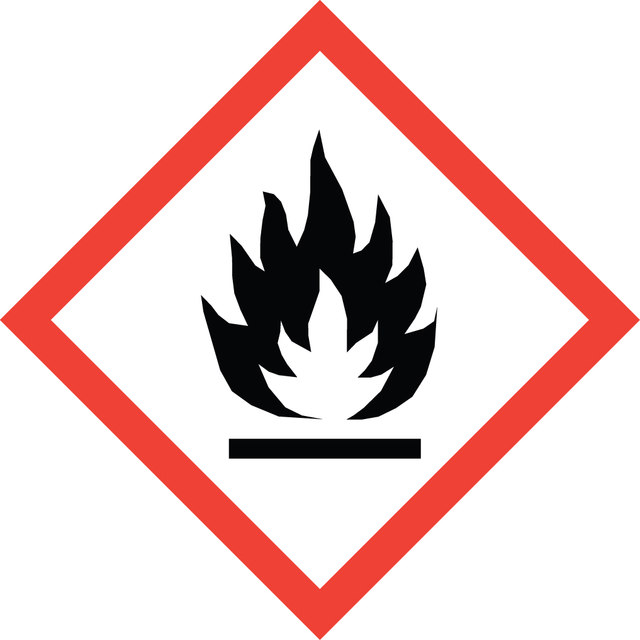
FlameCorrosion

signalword

Danger

hcodes

Hazard Classifications

Eye Dam. 1 - Flam. Liq. 3

Storage Class

3 - Flammable liquids

wgk

WGK 1

flash_point_f

107.6 °F - closed cup

flash_point_c

42 °C - closed cup

ppe

Eyeshields, Faceshields, Gloves, type ABEK (EN14387) respirator filter

Regulatory Information

新产品
This item has

Choose from one of the most recent versions:

Certificates of Analysis (COA)

Lot/Batch Number

Don't see the Right Version?

If you require a particular version, you can look up a specific certificate by the Lot or Batch number.

Already Own This Product?

Find documentation for the products that you have recently purchased in the Document Library.

Visit the Document Library

Volatile components of mangaba fruit (Hancornia speciosa Gomes) at three stages of maturity
Sampaio TS and Nogueira PCL
Food Chemistry, 95(4), 606-610 (2006)
Identification of volatile components in basil (Ocimum basilicum L.) and thyme leaves (Thymus vulgaris L.) and their antioxidant properties.
Lee SJ, et al.
Food Chemistry, 91(1), 131-137 (2005)
[Penetration of primary and tertiary alcohol isomers through rubber and isolated skin].
A L Mikhaleva et al.
Gigiena truda i professional'nye zabolevaniia, (11)(11), 46-47 (1982-01-01)
Rosa A Pérez et al.
Journal of agricultural and food chemistry, 50(9), 2633-2637 (2002-04-18)
Headspace solid-phase microextraction (SPME), followed by gas chromatography (GC)-mass spectrometry (MS) determination, has been used for the analysis of honey volatiles. Two SPME fibers were employed to study the composition of volatiles from various types of Spanish honeys. The best

Our team of scientists has experience in all areas of research including Life Science, Material Science, Chemical Synthesis, Chromatography, Analytical and many others.

Contact Technical Service