
W508101

1-Methyl-1,4-cyclohexadiene
≥96%, stabilized
Sign In to View Organizational & Contract Pricing.
Select a Size
About This Item
Empirical Formula (Hill Notation):
C7H10
CAS Number:
Molecular Weight:
94.15
NACRES:
NA.21
PubChem Substance ID:
UNSPSC Code:
12164502
EC Number:
224-329-6
MDL number:
Organoleptic:
faint
Biological source:
synthetic
Food allergen:
no known allergens
Quality Level
InChI key
QDXQAOGNBCOEQX-UHFFFAOYSA-N
InChI
1S/C7H10/c1-7-5-3-2-4-6-7/h2-3,6H,4-5H2,1H3
SMILES string
CC1=CCC=CC1
biological source
synthetic
assay
≥96%
contains
BHT as stabilizer
refractive index
n20/D 1.471 (lit.)
bp
114-115 °C (lit.)
density
0.838 g/mL at 25 °C (lit.)
application(s)
flavors and fragrances
documentation
see Safety & Documentation for available documents
food allergen
no known allergens
organoleptic
faint
General description
1-Methyl-1,4-cyclohexadiene is reported to be produced by some Nodulosporium species along with other volatile organic compounds (VOCs).
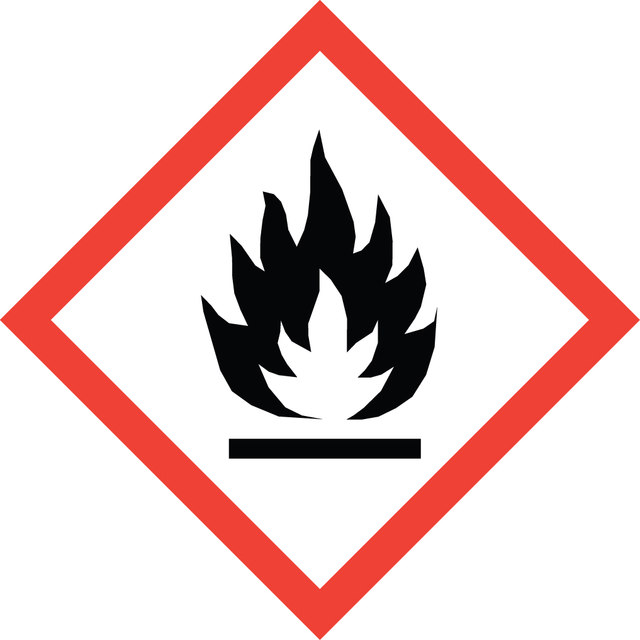

signalword
Danger
hcodes
Hazard Classifications
Eye Irrit. 2 - Flam. Liq. 2
Storage Class
3 - Flammable liquids
flash_point_f
51.8 °F - closed cup
flash_point_c
11 °C - closed cup
Regulatory Information
新产品
This item has
Choose from one of the most recent versions:
Already Own This Product?
Find documentation for the products that you have recently purchased in the Document Library.
An endophytic Nodulisporium sp. producing volatile organic compounds having bioactivity and fuel potential.
Mends MT, et al.
Journal of Petroleum & Environmental Biotechnology, 3(3) (2012)
János P Mészáros et al.
Dalton transactions (Cambridge, England : 2003), 49(23), 7977-7992 (2020-06-06)
Herein the design and synthesis of a new 8-hydroxyquinoline derivative, (S)-5-chloro-7-((proline-1-yl)methyl)8-hydroxyquinoline (HQCl-Pro), with good water solubility and multidrug resistance reversal activity are reported. In this work the proton dissociation processes of HQCl-Pro and its complex formation with [Rh(η5-C5Me5)(H2O)3]2+, [Ru(η6-p-cymene)(H2O)3]2+ and
Hypoxylon sp., an endophyte of Persea indica, producing 1, 8-cineole and other bioactive volatiles with fuel potential.
Tomsheck AR, et al.
Microbial Ecology, 60(4), 903-914 (2010)
Our team of scientists has experience in all areas of research including Life Science, Material Science, Chemical Synthesis, Chromatography, Analytical and many others.
Contact Technical Service