Skip to Content
Merck
CN

W429300

1-Octene

98%

Synonym(s):

1-caprylene, Hexylethylene, Oct-1-ene, 1-octylene

Sign In to View Organizational & Contract Pricing.

Select a Size


About This Item

Linear Formula:
CH3(CH2)5CH=CH2
CAS Number:
Molecular Weight:
112.21
NACRES:
NA.21
PubChem Substance ID:
UNSPSC Code:
12164502
FEMA Number:
4293
Flavis number:
1.070
EC Number:
203-893-7
MDL number:
Beilstein/REAXYS Number:
1734497
Organoleptic:
camphoraceous
Biological source:
synthetic
Food allergen:
no known allergens
Technical Service
Need help? Our team of experienced scientists is here for you.
Let Us Assist
Technical Service
Need help? Our team of experienced scientists is here for you.
Let Us Assist

Product Name

1-Octene, 98%

SMILES string

CCCCCCC=C

InChI

1S/C8H16/c1-3-5-7-8-6-4-2/h3H,1,4-8H2,2H3

InChI key

KWKAKUADMBZCLK-UHFFFAOYSA-N

biological source

synthetic

vapor density

3.9 (vs air)

vapor pressure

36 mmHg ( 38 °C)

assay

98%

form

liquid

autoignition temp.

446 °F

expl. lim.

3.9 %

refractive index

n20/D 1.408 (lit.)
n20/D 1.409 (lit.)

bp

122-123 °C (lit.)

mp

−101 °C (lit.)

density

0.715 g/mL at 25 °C (lit.)

application(s)

flavors and fragrances

documentation

see Safety & Documentation for available documents

food allergen

no known allergens

organoleptic

camphoraceous

Quality Level

Looking for similar products? Visit Product Comparison Guide

Related Categories

Disclaimer

For R&D or non-EU Food use. Not for retail sale.

General description

1-Octene is an unsaturated compound that is not directly used as a food additive but may be used as an indirect food additive in the production of food contact materials such as packaging, containers, and other materials that encounter food during processing, packaging, transportation, and storage .

signalword

Danger

Hazard Classifications

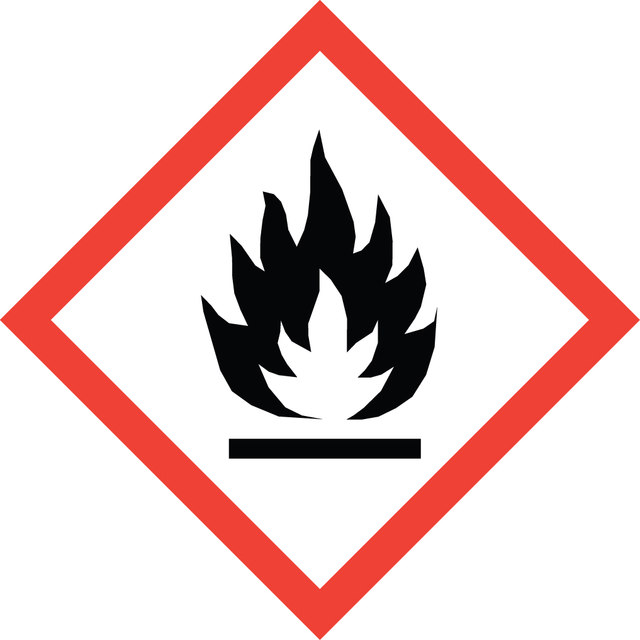
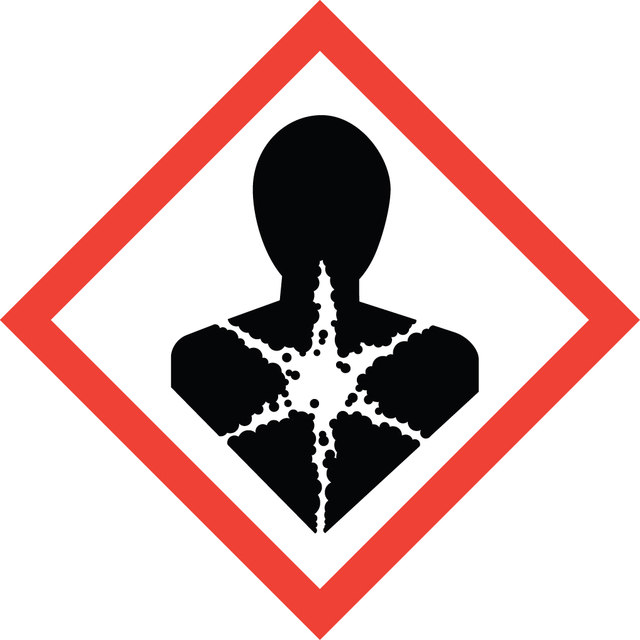
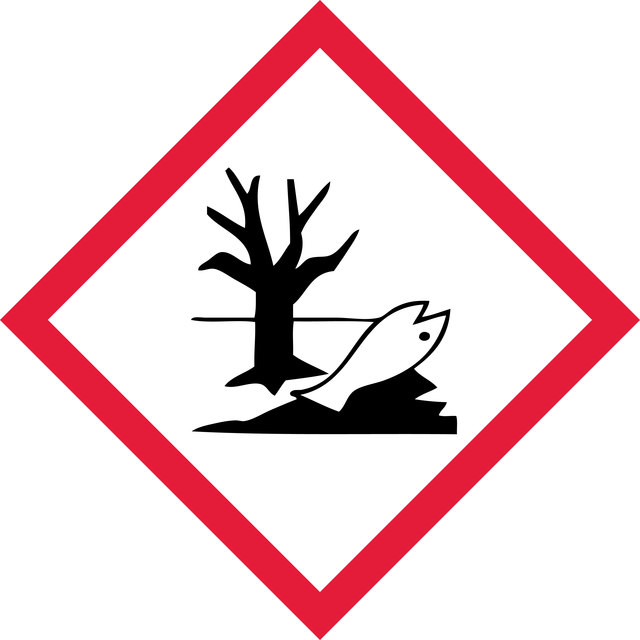
Aquatic Acute 1 - Aquatic Chronic 1 - Asp. Tox. 1 - Flam. Liq. 2

supp_hazards

Storage Class

3 - Flammable liquids

wgk

WGK 3

flash_point_f

50.0 °F - closed cup

flash_point_c

10 °C - closed cup

ppe

Eyeshields, Faceshields, Gloves, type ABEK (EN14387) respirator filter

Regulatory Information

新产品
This item has

Choose from one of the most recent versions:

Certificates of Analysis (COA)

Lot/Batch Number

Don't see the Right Version?

If you require a particular version, you can look up a specific certificate by the Lot or Batch number.

Already Own This Product?

Find documentation for the products that you have recently purchased in the Document Library.

Visit the Document Library

Linear low density polyethylene: Microstructure and sealing properties correlation
Simanke A, et al.
Polymer Testing, 32(2), 279-290 (2013)
Dennis Shusterman et al.
Inhalation toxicology, 18(7), 457-471 (2006-04-11)
Irritation of the eyes, nose, and throat by airborne chemicals--also referred to as "sensory irritation"--is an important endpoint in both occupational and environmental toxicology. Modeling of human sensory irritation relies on knowledge of the physical chemistry of the compound(s) involved
Cristina Nerín et al.
Journal of agricultural and food chemistry, 50(25), 7488-7492 (2002-11-28)
The behavior of two synthetic adsorbents, Tenax and Porapak, as food simulants in contact with some plastic containers commercially available, recommended to be used for heating food in microwave ovens, has been studied. Containers of polycarbonate (PC), polypropylene (PP), polypropylene
A Hempel-Jørgensen et al.
Archives of environmental health, 54(2), 86-94 (1999-03-27)
In this study, we investigated the time course effect of sensory eye irritation in 16 subjects exposed (i.e., eye only) to n-butanol and 1-octene. Half the subjects were exposed to n-butanol, and the remaining subjects were exposed to 1-octene. Each
Frans T I Marx et al.
Journal of molecular modeling, 15(11), 1371-1381 (2009-06-02)
The productive self-metathesis reaction of 1-octene in the presence of the Phobcat precatalyst [RuCl(2)(Phoban-Cy)(2)(=CHPh)] using density functional theory was investigated and compared to the Grubbs 1 precatalyst [RuCl(2)(PCy(3))(2)(=CHPh)]. At the GGA-PW91/DNP level, the geometry optimization of all the participating species

Our team of scientists has experience in all areas of research including Life Science, Material Science, Chemical Synthesis, Chromatography, Analytical and many others.

Contact Technical Service