Skip to Content
Merck
CN

W364703

3-Methyl-2-buten-1-ol

≥98%, FG

Synonym(s):

3,3-Dimethylallyl alcohol, Prenol

Sign In to View Organizational & Contract Pricing.

Select a Size


About This Item

Linear Formula:
(CH3)2C=CHCH2OH
CAS Number:
Molecular Weight:
86.13
FEMA Number:
3647
Council of Europe no.:
4163
UNSPSC Code:
12164502
PubChem Substance ID:
Flavis number:
2.109
EC Number:
209-141-4
NACRES:
NA.21
MDL number:
Beilstein/REAXYS Number:
1633479
Organoleptic:
green; fruity
Grade:
FG
Kosher
Biological source:
synthetic
Food allergen:
no known allergens
Technical Service
Need help? Our team of experienced scientists is here for you.
Let Us Assist
Technical Service
Need help? Our team of experienced scientists is here for you.
Let Us Assist

Product Name

3-Methyl-2-buten-1-ol, ≥98%, FG

SMILES string

C\C(C)=C\CO

InChI

1S/C5H10O/c1-5(2)3-4-6/h3,6H,4H2,1-2H3

InChI key

ASUAYTHWZCLXAN-UHFFFAOYSA-N

biological source

synthetic

grade

FG
Kosher

reg. compliance

EU Regulation 1334/2008 & 872/2012

vapor pressure

1.4 mmHg ( 20 °C)

assay

≥98%

expl. lim.

16.3 %

refractive index

n20/D 1.443 (lit.)

bp

140 °C (lit.)

density

0.848 g/mL at 25 °C (lit.)

application(s)

flavors and fragrances

documentation

see Safety & Documentation for available documents

food allergen

no known allergens

organoleptic

green; fruity

Quality Level

Looking for similar products? Visit Product Comparison Guide

Related Categories

General description

Methyl-2-buten-1-ol is one of the key volatile aroma components of pepino fruit and daffodil flowers. It is used as a fragrance ingredient in fragrances cosmetics, and household cleaners and detergents.

signalword

Danger

Hazard Classifications

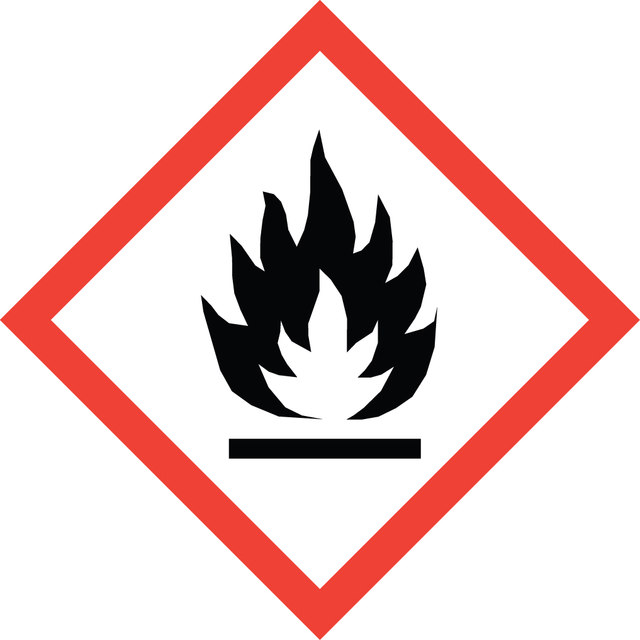
Acute Tox. 4 Inhalation - Acute Tox. 4 Oral - Eye Dam. 1 - Flam. Liq. 3 - Skin Corr. 1B - STOT SE 3

target_organs

Respiratory system

Storage Class

3 - Flammable liquids

wgk

WGK 1

flash_point_f

124.7 °F - closed cup

flash_point_c

51.5 °C - closed cup

ppe

Eyeshields, Faceshields, Gloves, type ABEK (EN14387) respirator filter

Regulatory Information

危险化学品
This item has

Choose from one of the most recent versions:

Certificates of Analysis (COA)

Lot/Batch Number

Don't see the Right Version?

If you require a particular version, you can look up a specific certificate by the Lot or Batch number.

Already Own This Product?

Find documentation for the products that you have recently purchased in the Document Library.

Visit the Document Library

Quantitative analysis of the volatile aroma components of pepino fruit by purge?and?trap and gas chromatography.
Ruiz?Bevia F, et al.
Journal of the Science of Food and Agriculture, 82(10), 1182-1188 (2002)
Fragrance material review on 3-methyl-2-buten-1-ol.
McGinty D, et al.
Food And Chemical Toxicology, 48, S64-S69 (2010)
Use of solid-phase microextraction as a sampling technique for the characterization of volatile compounds emitted from Chinese daffodil flowers.
Song G, et al.
Journal of Analytical Chemistry, 62(7), 674-679 (2007)
Geetu Singh et al.
Phytomedicine : international journal of phytotherapy and phytopharmacology, 14(12), 792-798 (2007-08-11)
Ethanol extract of Coccinia grandis (L.) Voigt showed significant triglyceride (TG) and cholesterol-lowering effects in dyslipidemic hamster model. Ethanolic extract was fractionated into chloroform, n-butanol and water-soluble fractions and were evaluated. Activity was proved to be concentrated in chloroform-soluble fraction.
Yi-Fan Chang et al.
The Journal of organic chemistry, 73(18), 7197-7203 (2008-08-19)
Solid-phase organic synthesis of polyprenols with a traceless sulfone linker is described. The polymer-bound benezenesulfinate is first linked with the "tail" building blocks of isoprenyl chlorides via S-alkylation. With use of dimsyl anion as an appropriate base, the polymer-bound alpha-sulfonyl

Related Content

Our team of scientists has experience in all areas of research including Life Science, Material Science, Chemical Synthesis, Chromatography, Analytical and many others.

Contact Technical Service