Skip to Content
Merck
CN

W300500

Sandalwood oil

natural

Sign In to View Organizational & Contract Pricing.

Select a Size


About This Item

CAS Number:
FEMA Number:
3005
UNSPSC Code:
12164502
NACRES:
NA.21
MDL number:
Organoleptic:
woody; spicy; herbaceous; balsamic
Grade:
Halal, Kosher, natural
Biological source:
Santalum album l.
Food allergen:
no known allergens
Technical Service
Need help? Our team of experienced scientists is here for you.
Let Us Assist
Technical Service
Need help? Our team of experienced scientists is here for you.
Let Us Assist

biological source

Santalum album l.

grade

Halal, Kosher, natural

optical activity

[α]20/D −15°, neat

refractive index

n20/D 1.507 (lit.)

bp

276 °C (lit.)

density

0.974 g/mL at 25 °C (lit.)

application(s)

flavors and fragrances

documentation

see Safety & Documentation for available documents

food allergen

no known allergens

organoleptic

woody; spicy; herbaceous; balsamic

Quality Level

Related Categories

Preparation Note

Extraction method: steam distillation

Disclaimer

For R&D or non-EU Food use. Not for retail sale.

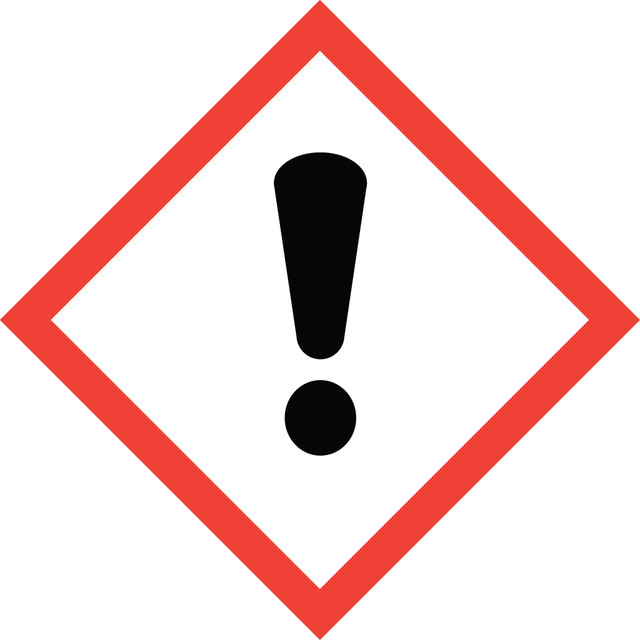
pictograms

Exclamation mark

signalword

Warning

Hazard Classifications

Eye Irrit. 2 - Skin Irrit. 2 - Skin Sens. 1 - STOT SE 3

target_organs

Respiratory system

Storage Class

10 - Combustible liquids

wgk

WGK 2

flash_point_f

Not applicable

flash_point_c

Not applicable

ppe

Eyeshields, Faceshields, Gloves, type ABEK (EN14387) respirator filter

Regulatory Information

新产品
This item has

Choose from one of the most recent versions:

Certificates of Analysis (COA)

Lot/Batch Number

Don't see the Right Version?

If you require a particular version, you can look up a specific certificate by the Lot or Batch number.

Already Own This Product?

Find documentation for the products that you have recently purchased in the Document Library.

Visit the Document Library

Manjinder Kaur et al.
Carcinogenesis, 26(2), 369-380 (2004-11-06)
alpha-Santalol, an active component of sandalwood oil, has been studied in detail in recent years for its skin cancer preventive efficacy in murine models of skin carcinogenesis; however, the mechanism of its efficacy is not defined. Two major biological events
Manickam Paulpandi et al.
Phytomedicine : international journal of phytotherapy and phytopharmacology, 19(3-4), 231-235 (2011-12-24)
The anti-influenza A/HK (H3N2) virus activity of β-santalol was evaluated in MDCK cells and investigated the effect of β-santalol on synthesis of viral mRNAs. β-Santalol was investigated for its antiviral activity against influenza A/HK (H3N2) virus using a cytopathic effect
Xiaoying Zhang et al.
Frontiers in bioscience (Scholar edition), 3, 777-787 (2011-01-05)
Alpha-santalol, a naturally occurring terpenoid, has been shown to have chemopreventive effects on both 7, 12-dimethylbenz(a)anthracene (DMBA)-initiated and 12-O- tetradecanoylphorbol-13-acetate (TPA)-promoted skin cancer development in CD-1 and SENCAR mice, and UVB-induced skin cancer developments in SKH-1 hairless mice in a
Biswapriya B Misra et al.
Phytomedicine : international journal of phytotherapy and phytopharmacology, 20(5), 409-416 (2013-02-02)
Sandalwood finds numerous mentions across diverse traditional medicinal systems in use worldwide. The objective of this study was to evaluate the in vivo anti-hyperglycemic and antioxidant potential of sandalwood oil and its major constituent α-santalol. The in vivo anti-hyperglycemic experiment
C Dwivedi et al.
European journal of cancer prevention : the official journal of the European Cancer Prevention Organisation (ECP), 6(4), 399-401 (1997-08-01)
The essential oil, emulsion or paste of sandalwood (Santalum album L) has been used in India as an ayurvedic medicinal agent for the treatment of inflammatory and eruptive skin diseases. In this investigation, the chemopreventive effects of sandalwood oil (5%

Our team of scientists has experience in all areas of research including Life Science, Material Science, Chemical Synthesis, Chromatography, Analytical and many others.

Contact Technical Service