
T85308

Tris(2-chloroethyl)amine hydrochloride
98%
Sign In to View Organizational & Contract Pricing.
Select a Size
About This Item
Linear Formula:
(ClCH2CH2)3N·HCl
CAS Number:
Molecular Weight:
240.99
UNSPSC Code:
12352100
PubChem Substance ID:
EC Number:
212-442-3
MDL number:
Assay:
98%
InChI key
VEAUDLLZYJVHRI-UHFFFAOYSA-N
InChI
1S/C6H12Cl3N.ClH/c7-1-4-10(5-2-8)6-3-9;/h1-6H2;1H
SMILES string
Cl.ClCCN(CCCl)CCCl
assay
98%
mp
127-130 °C (lit.)
Quality Level
Related Categories
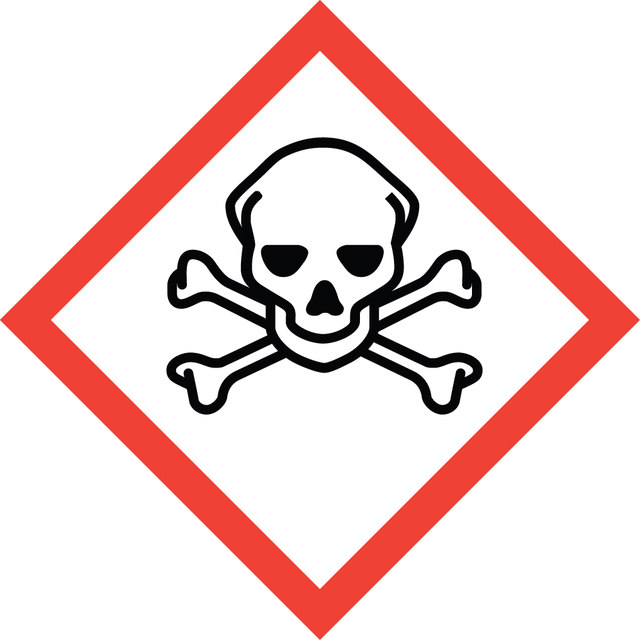
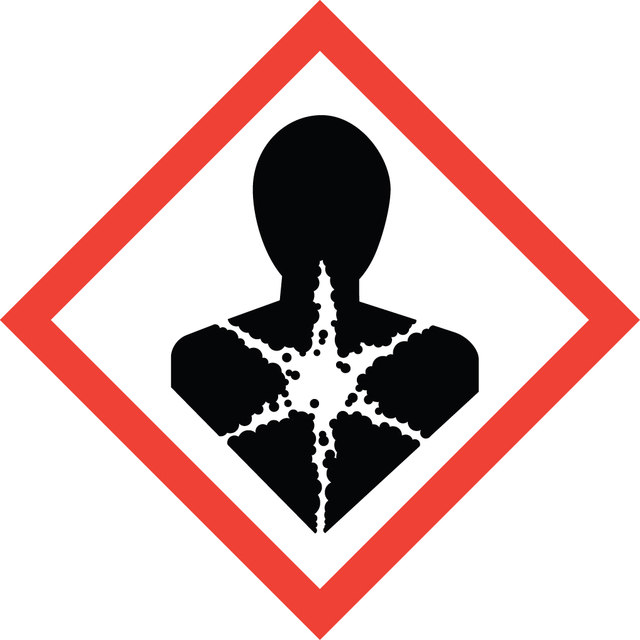

signalword
Danger
hcodes
Hazard Classifications
Acute Tox. 2 Oral - Carc. 2 - Skin Corr. 1B
Storage Class
6.1A - Combustible acute toxic Cat. 1 and 2 / very toxic hazardous materials
wgk
WGK 3
flash_point_f
Not applicable
flash_point_c
Not applicable
ppe
Eyeshields, Faceshields, Gloves, type P3 (EN 143) respirator cartridges
Regulatory Information
新产品
This item has
Choose from one of the most recent versions:
Already Own This Product?
Find documentation for the products that you have recently purchased in the Document Library.
Trichloromethyl ketones as synthetically versatile donors: application in direct catalytic mannich-type reactions and the stereoselective synthesis of azetidines.
Hiroyuki Morimoto et al.
Angewandte Chemie (International ed. in English), 45(19), 3146-3150 (2006-04-06)
N I Riabchenko et al.
Radiobiologiia, 31(1), 22-26 (1991-01-01)
Regularities of chromatin degradation in thymocytes and LS/BL tumor cells have been investigated. It has been shown that the rate of DNA degradation by Ca/Mg-dependent endonuclease in LS/BL tumor cells is 25 times lower than that in thymocytes, and radiation
D B Wildenauer et al.
Biochimica et biophysica acta, 603(1), 101-116 (1980-12-02)
The influence of tris(2-chloroethyl)amine on shape changes of human erythrocytes and ghosts was studied in vitro and correlated with alterations in the molecular structure of the membrane. (1) Reaction with 1--2 mM tris(2-chloroethyl)amine, a concentration which caused polymerisation of spectrin
L Szinicz et al.
Arzneimittel-Forschung, 31(10), 1713-1717 (1981-01-01)
The effect of tris-(2-chloroethyl)-amine (HN-3) on RNA and DNA was investigated spectrophotometrically. The shift in the absorbance spectrum caused by the addition of HN-3 was used to test a variety of compounds for their ability to inhibit RNA alkylation. The
T Hiratsuka
Biochemistry, 27(11), 4110-4114 (1988-05-31)
The chemotherapeutic alkylating reagent tris(2-chloroethyl)amine (TCEA) was used as a trifunctional cross-linking reagent with a cross-linking span of 5 A for myosin subfragment 1 (S-1). When S-1 was incubated with TCEA, all three domains of 20, 26, and 50 kDa
Our team of scientists has experience in all areas of research including Life Science, Material Science, Chemical Synthesis, Chromatography, Analytical and many others.
Contact Technical Service