
P62003

2-Pyridinecarboxaldehyde
99%
Synonym(s):
Picolinaldehyde, Pyridine-2-aldehyde
Sign In to View Organizational & Contract Pricing.
Select a Size
Change View
About This Item
Empirical Formula (Hill Notation):
C6H5NO
CAS Number:
Molecular Weight:
107.11
UNSPSC Code:
12352100
NACRES:
NA.22
PubChem Substance ID:
EC Number:
214-333-6
Beilstein/REAXYS Number:
105341
MDL number:
Assay:
99%
Quality Level
assay
99%
refractive index
n20/D 1.536 (lit.)
bp
181 °C (lit.)
density
1.126 g/mL at 25 °C (lit.)
storage temp.
2-8°C
SMILES string
[H]C(=O)c1ccccn1
InChI
1S/C6H5NO/c8-5-6-3-1-2-4-7-6/h1-5H
InChI key
CSDSSGBPEUDDEE-UHFFFAOYSA-N
Application
2-Pyridinecarboxaldehyde has been used:
It can also be combined with thiosemicarbazide to form 2-pyridinecarboxaldehyde thiosemicarbazone ligand (L) which can further complex with Ni(II) and Cu(II) salts (MX) to form [M(L)2X2] complexes.
- To synthesize chitosan based bifunctionalized adsorbent.
- In the aldol addition reaction with pyruvate in the presence of 2-keto-3-deoxy-6-phosphogluconate aldolase (KDPG) catalyst to form (S)-4-hydroxy-2-keto-4-(2′-pyridyl)butyrate.
- In the condensation reaction with (S)-(−)-α-methylbenzylamine and (R)-(+)-α-methylbenzylamine to synthesize two chiral (S)-(−)- and (R)-(+)Schiff base compounds.
It can also be combined with thiosemicarbazide to form 2-pyridinecarboxaldehyde thiosemicarbazone ligand (L) which can further complex with Ni(II) and Cu(II) salts (MX) to form [M(L)2X2] complexes.
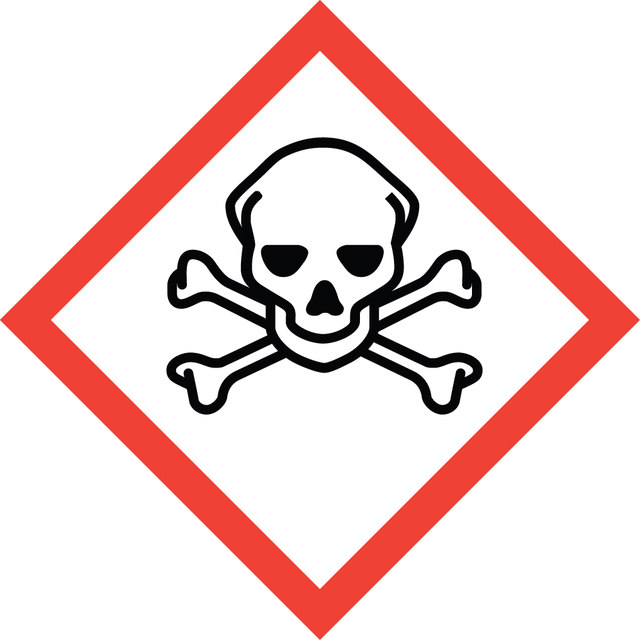

signalword
Danger
Storage Class
6.1A - Combustible acute toxic Cat. 1 and 2 / very toxic hazardous materials
flash_point_f
170.6 °F
flash_point_c
77 °C
ppe
Eyeshields, Faceshields, Gloves, type ABEK (EN14387) respirator filter
hcodes
Hazard Classifications
Acute Tox. 3 Inhalation - Acute Tox. 4 Oral - Aquatic Chronic 3 - Eye Dam. 1 - Skin Corr. 1B - Skin Sens. 1
Choose from one of the most recent versions:
Already Own This Product?
Find documentation for the products that you have recently purchased in the Document Library.
Bifunctionalized chitosan: A versatile adsorbent for removal of Cu (II) and Cr (VI) from aqueous solution
Moreira ALSL, et al.
Carbohydrate Polymers, 201, 218-227 (2018)
Ferenc Matyuska et al.
Dalton transactions (Cambridge, England : 2003), 46(26), 8626-8642 (2017-06-27)
Manganese(ii), copper(ii) and zinc(ii) complexes of four polydentate tripodal ligands (tachpyr (N,N',N''-tris(2-pyridylmethyl)-cis,cis-1,3,5-triaminocyclohexane), trenpyr (tris[2-(2-pyridylmethyl)aminoethyl]amine, tach3pyr (N,N',N''-tris(3-pyridylmethyl)-cis,cis-1,3,5-triaminocyclohexane) and tren3pyr (tris[2-(2-pyridylmethyl)aminoethyl]amine)) were characterized in both solution and solid states. A combined evaluation of potentiometric, UV-VIS, NMR and EPR data allowed the conclusion
Gaganpreet Kaur et al.
Dalton transactions (Cambridge, England : 2003), 47(16), 5595-5606 (2018-03-17)
The unregulated use of organophosphates (OPs) as pesticides and toxic chemical warfare agents demands their continuous monitoring from a human health perspective. This study describes a fluorescence turn-on sensing assay for the selective quantification of OPs in aqueous medium. Metal
Global Trade Item Number
| SKU | GTIN |
|---|---|
| P62003-100G | 04061838258700 |
| P62003-25G | 04061838258717 |
| P62003-500G | 04061838258724 |