Skip to Content
Merck
CN

P51478

Propionic anhydride

97%

Synonym(s):

Propanoic anhydride

Sign In to View Organizational & Contract Pricing.

Select a Size


About This Item

Linear Formula:
(CH3CH2CO)2O
CAS Number:
Molecular Weight:
130.14
UNSPSC Code:
12352100
NACRES:
NA.22
PubChem Substance ID:
EC Number:
204-638-2
Beilstein/REAXYS Number:
507066
MDL number:
Technical Service
Need help? Our team of experienced scientists is here for you.
Let Us Assist
Technical Service
Need help? Our team of experienced scientists is here for you.
Let Us Assist

Product Name

Propionic anhydride, 97%

InChI key

WYVAMUWZEOHJOQ-UHFFFAOYSA-N

InChI

1S/C6H10O3/c1-3-5(7)9-6(8)4-2/h3-4H2,1-2H3

SMILES string

CCC(=O)OC(=O)CC

vapor density

4.5 (vs air)

vapor pressure

10 mmHg ( 57.7 °C)

assay

97%

autoignition temp.

545 °F

expl. lim.

11.9 %

refractive index

n20/D 1.404 (lit.)

bp

167 °C (lit.)

mp

−43 °C (lit.)

solubility

H2O: decomposes (when in contact with water)

density

1.015 g/mL at 25 °C (lit.)

Quality Level

Looking for similar products? Visit Product Comparison Guide

Application

Propionic anhydride can be used as an acylating agent for the lipase-catalyzed esterification of alcohols. Recent studies indicate that the particle boards manufactured from wood chips modified with propionic anhydride show enhanced dimensional stability.

pictograms

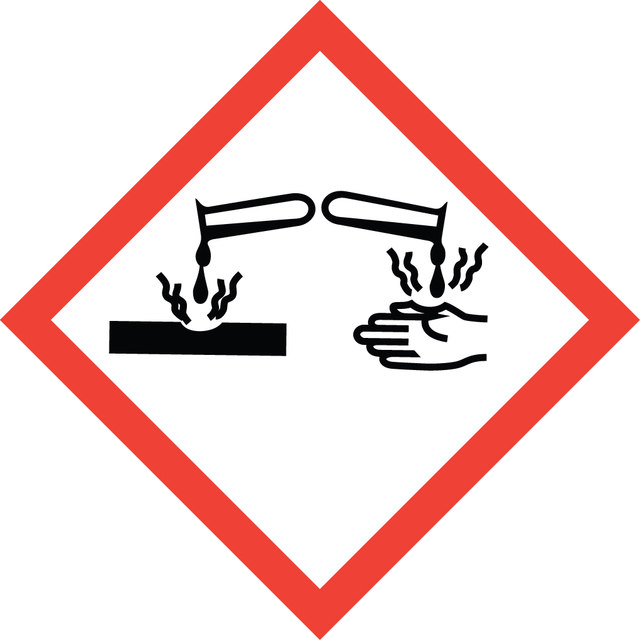
Corrosion

signalword

Danger

hcodes

Hazard Classifications

Eye Dam. 1 - Skin Corr. 1B

Storage Class

8A - Combustible corrosive hazardous materials

wgk

WGK 1

flash_point_f

165.2 °F - closed cup

flash_point_c

74 °C - closed cup

ppe

Faceshields, Gloves, Goggles, type ABEK (EN14387) respirator filter

Regulatory Information

危险化学品
This item has

Choose from one of the most recent versions:

Certificates of Analysis (COA)

Lot/Batch Number

Don't see the Right Version?

If you require a particular version, you can look up a specific certificate by the Lot or Batch number.

Already Own This Product?

Find documentation for the products that you have recently purchased in the Document Library.

Visit the Document Library

Dimensional stabilisation and strength of particleboard by chemical modification with propionic anhydride.
Papadopoulos AN & Gkaraveli A
European Journal of Wood and Wood Products, 61(2), 142-144 (2003)
Anhydrides as acylating agents in lipase-catalyzed stereoselective esterification of racemic alcohols.
Bianchi D, et al.
The Journal of Organic Chemistry, 53(23), 5531-5534 (1988)
Mo Xu et al.
Methods in enzymology, 512, 29-55 (2012-08-23)
In eukaryotic cells, posttranslational modifications (PTMs) on histones regulate chromatin structure and thus impact nearly all chromatin-templated events, including replication, transcription, and DNA repair. During S phase, newly synthesized histones are deposited onto DNA, leading to dilution of total chromatin-associated
Sara Ongay et al.
Journal of the American Society for Mass Spectrometry, 24(1), 83-91 (2012-11-28)
Electron transfer dissociation (ETD) has attracted increasing interest due to its complementarity to collision-induced dissociation (CID). ETD allows the direct localization of labile post-translational modifications, which is of main interest in proteomics where differences and similarities between ETD and CID
Haim Tsubery et al.
The Journal of biological chemistry, 279(37), 38118-38124 (2004-06-11)
Polyethylene glycol (PEG)-conjugated therapeutic peptides/proteins have been shown to exhibit clinical properties superior to those of their corresponding unmodified parent molecules. However, the desirable pharmacological features gained by protein PEGylation become irrelevant if conjugates are inactivated or cannot reach their

Our team of scientists has experience in all areas of research including Life Science, Material Science, Chemical Synthesis, Chromatography, Analytical and many others.

Contact Technical Service