Skip to Content
Merck
CN

P4869

Phosphomolybdic acid solution

spray reagent, 10% in ethanol

Synonym(s):

Molybdophosphoric acid

Sign In to View Organizational & Contract Pricing.

Select a Size


About This Item

Linear Formula:
H3[P(Mo3O10)4]
CAS Number:
Molecular Weight:
1825.25
NACRES:
NA.22
PubChem Substance ID:
UNSPSC Code:
12352301
MDL number:
Concentration:
10% in ethanol
Technical Service
Need help? Our team of experienced scientists is here for you.
Let Us Assist
Technical Service
Need help? Our team of experienced scientists is here for you.
Let Us Assist

Product Name

Phosphomolybdic acid solution, spray reagent, 10% in ethanol

InChI

1S/12Mo.H3O4P.36O/c;;;;;;;;;;;;1-5(2,3)4;;;;;;;;;;;;;;;;;;;;;;;;;;;;;;;;;;;;/h;;;;;;;;;;;;(H3,1,2,3,4);;;;;;;;;;;;;;;;;;;;;;;;;;;;;;;;;;;;

SMILES string

O=[Mo](=O)=O.O=[Mo](=O)=O.O=[Mo](=O)=O.O=[Mo](=O)=O.O=[Mo](=O)=O.O=[Mo](=O)=O.O=[Mo](=O)=O.O=[Mo](=O)=O.O=[Mo](=O)=O.O=[Mo](=O)=O.O=[Mo](=O)=O.O=[Mo](=O)=O.OP(O)(O)=O

InChI key

DHRLEVQXOMLTIM-UHFFFAOYSA-N

reaction suitability

reagent type: oxidant

packaging

pkg of 100 mL

concentration

10% in ethanol

storage temp.

2-8°C

Quality Level

Application

For the detection of lipids, steroids, lactones, keto acids, hydroxy acids, unsaturated fatty acids, and phenolic compounds.

Other Notes

10% Phosphomolybdic acid in ethanol

signalword

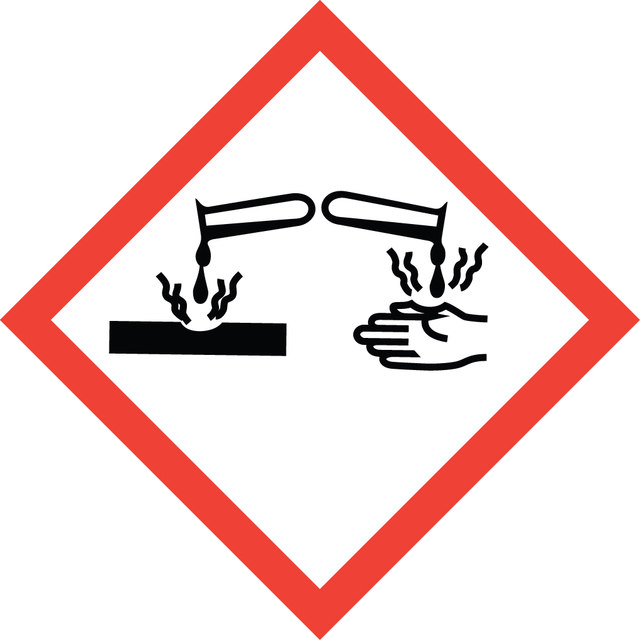
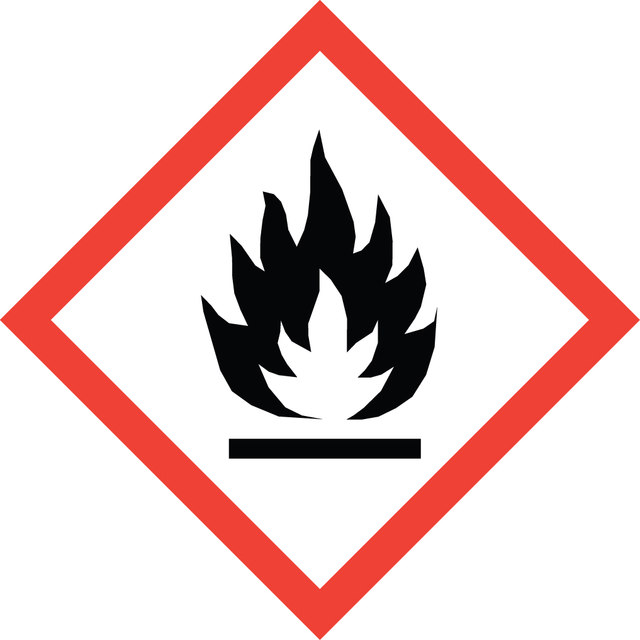
Danger

Hazard Classifications

Eye Dam. 1 - Flam. Liq. 2 - Ox. Liq. 3 - Skin Corr. 1B

Storage Class

5.1B - Oxidizing hazardous materials

wgk

WGK 3

flash_point_f

55.0 °F - closed cup

flash_point_c

12.8 °C - closed cup

ppe

Faceshields, Gloves, Goggles, type ABEK (EN14387) respirator filter
Regulatory Information

危险化学品
This item has

Choose from one of the most recent versions:

Certificates of Analysis (COA)

Lot/Batch Number

Don't see the Right Version?

If you require a particular version, you can look up a specific certificate by the Lot or Batch number.

Already Own This Product?

Find documentation for the products that you have recently purchased in the Document Library.

Visit the Document Library

Almino Afonso de O Paiva et al.
International immunopharmacology, 11(9), 1241-1250 (2011-04-21)
This study analyzes the action of sulfated polysaccharides, fucans, from algae Lobophora variegata on zymosan-induced arthritis in rats. Groups of fucans, obtained after acetone fractionation (0.3-2.0 volumes), were denominated F0.3, F0.5, F0.8, F1, F1.5, and F2. The results that F1
Zhiming Cui et al.
Physical chemistry chemical physics : PCCP, 13(36), 16349-16357 (2011-08-16)
A simple self-assembly approach has been developed to functionalize carbon nanotubes (CNTs) with chitosan (CS) and heteropolyacids (HPAs) of phosphomolybdic acid (H(3)PMo(12)O(40), HPMo) and phosphotungstic acid (H(3)PW(12)O(40), HPW). The non-covalent functionalization method, which introduces homogenous surface functional groups with no
Steven G Swarts et al.
Advances in experimental medicine and biology, 701, 291-297 (2011-03-30)
Fifty-eight semicarbazone and pyrazole derivatives of curcumin have been developed as potential mitigation agents to treat acute radiation syndrome (ARS). Pyridyl (D12, D13), furyl (D56), and phenyl (D68) derivatives of curcumin semi-carbazones were found to provide the highest dose modifying
Zhiming Cui et al.
Physical chemistry chemical physics : PCCP, 14(37), 12823-12828 (2012-08-11)
It is challenging to simultaneously increase double layer- and pseudo-capacitance for supercapacitors. Phosphomolybdic acid/polyaniline/graphene nanocomposites (PMo(12)-PANI/GS) were prepared by using PMo(12) as a bifunctional reagent for not only well dispersing graphene for high electrochemical double layer capacitance but also in
Paweł K Zarzycki et al.
Analytica chimica acta, 688(2), 168-174 (2011-02-22)
The main goal of present paper is to demonstrate the separation and detection capability of micro-TLC technique involving simple one step liquid extraction protocols of complex materials without multi-steps sample pre-purification. In the present studies target components (cyanobacteria pigments, lipids

Our team of scientists has experience in all areas of research including Life Science, Material Science, Chemical Synthesis, Chromatography, Analytical and many others.

Contact Technical Service