
Skip to Content
Merck
CN

N21588

2-Nitrophenylhydrazine

97%

Synonym(s):

(2-Nitrophenyl)hydrazine, (o-Nitrophenyl)hydrazine, 1-(2-Nitrophenyl)hydrazine, 1-Hydrazino-2-nitrobenzene, 2-Hydrazino-1-nitrobenzene, o-(Hydrazino)nitrobenzene

Sign In to View Organizational & Contract Pricing.

Select a Size


About This Item

Linear Formula:
O2NC6H4NHNH2
CAS Number:
Molecular Weight:
153.14
UNSPSC Code:
12352100
NACRES:
NA.22
PubChem Substance ID:
EC Number:
221-222-6
Beilstein/REAXYS Number:
512797
MDL number:
Assay:
97%
Form:
powder
Technical Service
Need help? Our team of experienced scientists is here for you.
Let Us Assist
Technical Service
Need help? Our team of experienced scientists is here for you.
Let Us Assist

InChI

1S/C6H7N3O2/c7-8-5-3-1-2-4-6(5)9(10)11/h1-4,8H,7H2

InChI key

FRBUNLLUASHNDJ-UHFFFAOYSA-N

SMILES string

NNc1ccccc1[N+]([O-])=O

assay

97%

form

powder

contains

30% water as stabilizer (minimum)

Quality Level

mp

91-93 °C (lit.)

storage temp.

2-8°C

Related Categories
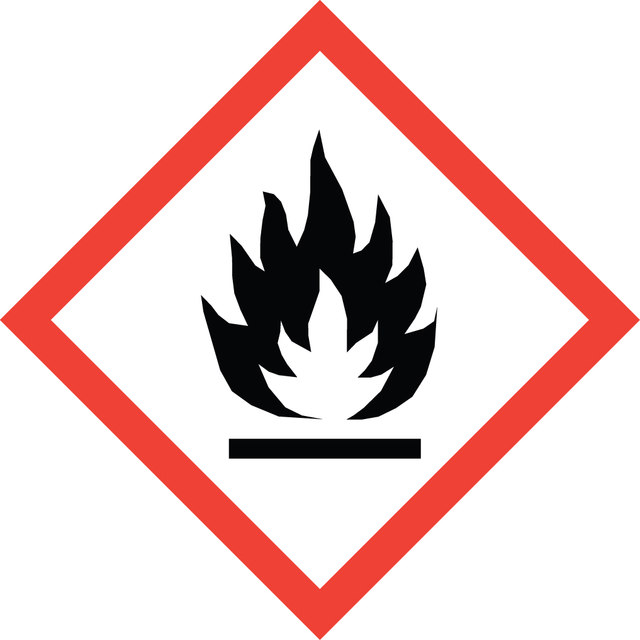
pictograms

FlameExclamation mark

signalword

Danger

Hazard Classifications

Acute Tox. 4 Oral - Eye Irrit. 2 - Flam. Sol. 1 - Skin Irrit. 2 - STOT SE 3

target_organs

Respiratory system

Storage Class

4.1B - Flammable solid hazardous materials

wgk

WGK 3

flash_point_f

Not applicable

flash_point_c

Not applicable

Regulatory Information

危险化学品
This item has

Choose from one of the most recent versions:

Certificates of Analysis (COA)

Lot/Batch Number

Don't see the Right Version?

If you require a particular version, you can look up a specific certificate by the Lot or Batch number.

Already Own This Product?

Find documentation for the products that you have recently purchased in the Document Library.

Visit the Document Library

Vida Časaitė et al.
Applied and environmental microbiology, 86(15) (2020-05-31)
Pyridine and its derivatives constitute the majority of heterocyclic aromatic compounds that occur largely as a result of human activities and contribute to environmental pollution. It is known that they can be degraded by various bacteria in the environment; however
A I Fattom et al.
Infection and immunity, 66(10), 4588-4592 (1998-09-24)
Bacterial capsular polysaccharides (CP) are carbohydrate polymers comprised of repeating saccharide units. Several of these CP have side chains attached to their backbone structures. The side chains may include O-acetyl, phosphate, sialic acid, and other moieties. Those moieties represent the
Chikako Yomota et al.
Journal of chromatography. A, 1142(2), 231-235 (2007-01-20)
Currently, biotin is typically determined in Japan using a microbiological method. Such microbiological assays are sensitive, but they are not always highly specific and are also rather tedious and time-consuming. In the present study, RP-HPLC and LC-MS methods for the
S Bystricky et al.
Biophysical chemistry, 51(1), 1-7 (1994-07-01)
The capsular polysaccharide of Salmonella typhi and Citrobacter freundii (Vi) is a linear homopolymer of (1-->4)-linked 2-acetamido-2-deoxy-alpha-D-galactopyranosyluronic acid partially O-acetylated at the C-3 position. The physico-chemical properties of the carboxyl groups of the Vi polysaccharide, as a function of different
Junmei Zhang et al.
Journal of the American Society for Mass Spectrometry, 22(11), 1958-1967 (2011-09-29)
Peptides with two or more basic residues, including those with post-translational modifications (PTMs), such as methylation and phosphorylation, can be highly hydrophilic and, therefore, are often difficult to be retained on a reversed-phase (RP) column. In addition, these highly hydrophilic

Our team of scientists has experience in all areas of research including Life Science, Material Science, Chemical Synthesis, Chromatography, Analytical and many others.

Contact Technical Service
