
Sign In to View Organizational & Contract Pricing.
Select a Size
About This Item
Empirical Formula (Hill Notation):
Be
CAS Number:
Molecular Weight:
9.01
NACRES:
NA.23
PubChem Substance ID:
UNSPSC Code:
12141501
MDL number:
InChI
1S/Be
SMILES string
[Be]
InChI key
ATBAMAFKBVZNFJ-UHFFFAOYSA-N
assay
≥99.7%
form
wire
autoignition temp.
1198 °F
manufacturer/tradename
Goodfellow 957-976-92
resistivity
4.46 μΩ-cm, 20°C
bp
2970 °C (lit.)
mp
1278 °C (lit.)
density
1.85 g/mL at 25 °C (lit.)
Looking for similar products? Visit Product Comparison Guide
General description
For updated SDS information please visit www.goodfellow.com.
Legal Information
Product of Goodfellow
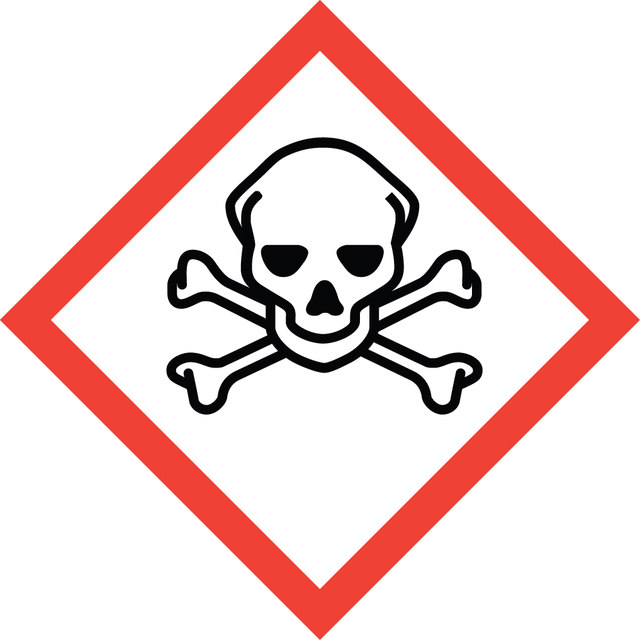
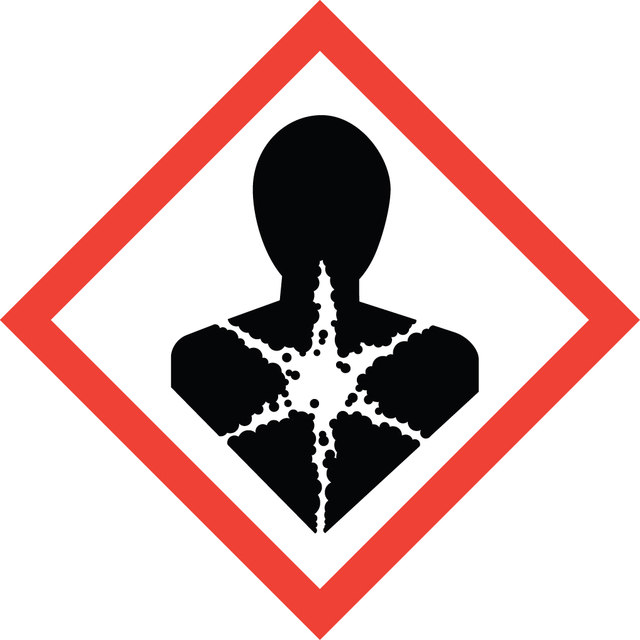
signalword
Danger
Hazard Classifications
Acute Tox. 3 Oral - Carc. 1B - Eye Irrit. 2 - Skin Irrit. 2 - Skin Sens. 1 - STOT RE 1
Storage Class
6.1C - Combustible acute toxic Cat.3 / toxic compounds or compounds which causing chronic effects
wgk
WGK 3
flash_point_f
Not applicable
flash_point_c
Not applicable
Regulatory Information
新产品
This item has
Choose from one of the most recent versions:
Already Own This Product?
Find documentation for the products that you have recently purchased in the Document Library.
Martin Harper
Journal of environmental monitoring : JEM, 8(6), 598-604 (2006-06-13)
Standardized conventions governing the fractions of airborne particles that can penetrate the human head airways, the thoracic airways and the alveolar spaces have been internationally (although not universally) adopted. Several agencies involved in setting limit values for occupational exposure concentrations
Shaodong Dai et al.
Current opinion in immunology, 25(6), 775-780 (2013-08-28)
Chronic beryllium disease (CBD) is a granulomatous lung disorder caused by a hypersensitivity to beryllium and characterized by the accumulation of beryllium-specific CD4(+) T cells in the lung. Genetic susceptibility to beryllium-induced disease is strongly associated with HLA-DP alleles possessing
Massimo Amicosante et al.
Clinical immunology (Orlando, Fla.), 121(2), 134-143 (2006-05-16)
Chronic beryllium disease (CBD) is a granulomatous lung disorder caused by beryllium exposure in the workplace and is characterized by the accumulation of beryllium-specific CD4(+) T cells. Depending on genetic susceptibility and the nature of the exposure, CBD occurs in
Paolo Boffetta et al.
Critical reviews in toxicology, 42(2), 107-118 (2012-01-27)
There is controversy on whether occupational exposure to beryllium causes lung cancer. We conducted a systematic review of epidemiologic studies on cancer among workers exposed to beryllium, including a study of seven U.S. production plants which has been recently updated
D M Hollins et al.
Critical reviews in toxicology, 39 Suppl 1, 1-32 (2009-11-13)
The potential carcinogenicity of beryllium has been a topic of study since the mid-1940s. Since then, numerous scientific and regulatory bodies have assigned beryllium to various categories with respect to its carcinogenicity. Past epidemiologic and animal studies, however, have been
Our team of scientists has experience in all areas of research including Life Science, Material Science, Chemical Synthesis, Chromatography, Analytical and many others.
Contact Technical Service