
F807

Fluoranthene
98%
Synonym(s):
Benzo[j,k]fluorene
Sign In to View Organizational & Contract Pricing.
Select a Size
Change View
About This Item
Empirical Formula (Hill Notation):
C16H10
CAS Number:
Molecular Weight:
202.25
UNSPSC Code:
12352100
NACRES:
NA.22
PubChem Substance ID:
EC Number:
205-912-4
Beilstein/REAXYS Number:
1907918
MDL number:
Assay:
98%
Quality Level
assay
98%
bp
384 °C (lit.)
mp
105-110 °C (lit.)
SMILES string
c1ccc-2c(c1)-c3cccc4cccc-2c34
InChI
1S/C16H10/c1-2-8-13-12(7-1)14-9-3-5-11-6-4-10-15(13)16(11)14/h1-10H
InChI key
GVEPBJHOBDJJJI-UHFFFAOYSA-N
Application
Fluoranthene can be used as a starting material in the synthesis of:
- Polyfluoranthene (PFA) based conducting polymer (PFA) by electrochemical anodic oxidation using Lewis acid catalyst.
- Substituted fluorenones.
- Fluorescence-emitting oligofluoranthene (OFA) nanorods by oxidative oligomerization.
Still not finding the right product?
Explore all of our products under Fluoranthene
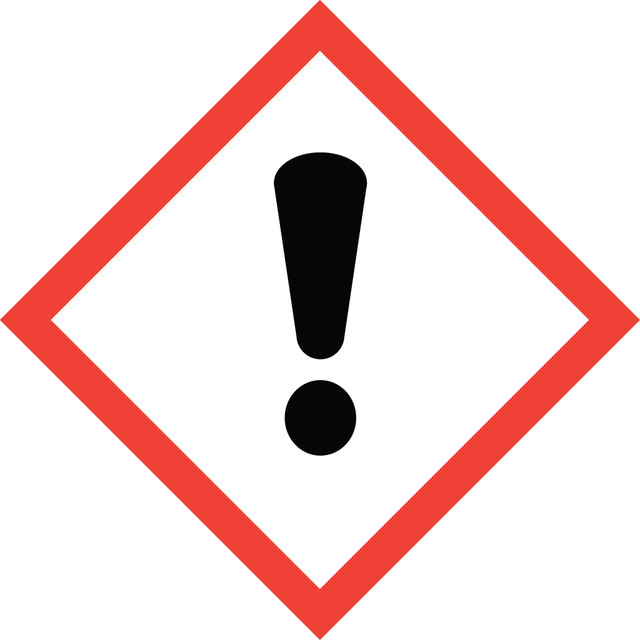
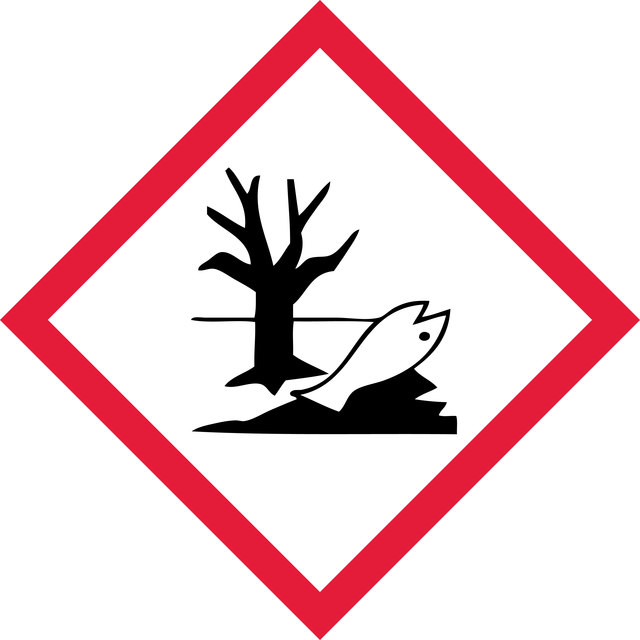
Storage Class
11 - Combustible Solids
wgk
WGK 2
flash_point_f
388.4 °F - closed cup
flash_point_c
198.0 °C - closed cup
ppe
dust mask type N95 (US), Eyeshields, Gloves
signalword
Danger
hcodes
Hazard Classifications
Acute Tox. 4 Oral - Aquatic Acute 1 - Aquatic Chronic 1 - PBT - vPvB
Regulatory Information
危险化学品
This item has
Choose from one of the most recent versions:
Already Own This Product?
Find documentation for the products that you have recently purchased in the Document Library.
Efficient synthesis of oligofluoranthene nanorods with tunable functionalities
Li X-G, et al.
Chemical Science, 6(12) (2015)
Electrochemical polymerization of fluoranthene and characterization of its polymers
Xu J, et al.
The Journal of Physical Chemistry B, 110(6), 2643-2648 (2006)
Synthesis of 1-Substituted Fluorenones
George SRD, et al.
Polycyclic Aromat. Compd., 36(5), 697-715 (2016)
Global Trade Item Number
| SKU | GTIN |
|---|---|
| F807-500G | 04061833553572 |
| F807-100G | 04061833553565 |
| F807-5G | 04061833620137 |
| F807-25G | 04061833620120 |