Skip to Content
Merck
CN

D72603

2,3-Dichloro-1-propene

98%

Synonym(s):

2,3-Dichloro-1-propene, 2,3-Dichloropropene, 2,3-Dichloropropylene, 2-Chloroallyl chloride

Sign In to View Organizational & Contract Pricing.

Select a Size


About This Item

Linear Formula:
ClCH2CCl=CH2
CAS Number:
Molecular Weight:
110.97
UNSPSC Code:
12352100
NACRES:
NA.22
PubChem Substance ID:
EC Number:
201-153-8
Beilstein/REAXYS Number:
1361491
MDL number:
Technical Service
Need help? Our team of experienced scientists is here for you.
Let Us Assist
Technical Service
Need help? Our team of experienced scientists is here for you.
Let Us Assist

Product Name

2,3-Dichloro-1-propene, 98%

InChI

1S/C3H4Cl2/c1-3(5)2-4/h1-2H2

InChI key

FALCMQXTWHPRIH-UHFFFAOYSA-N

SMILES string

ClCC(Cl)=C

vapor density

3.8 (vs air)

vapor pressure

44 mmHg ( 20 °C)

assay

98%

form

liquid

expl. lim.

7.8 %

refractive index

n20/D 1.461 (lit.)

bp

94 °C (lit.)

density

1.204 g/mL at 25 °C (lit.)

Quality Level

Looking for similar products? Visit Product Comparison Guide

signalword

Danger

Hazard Classifications

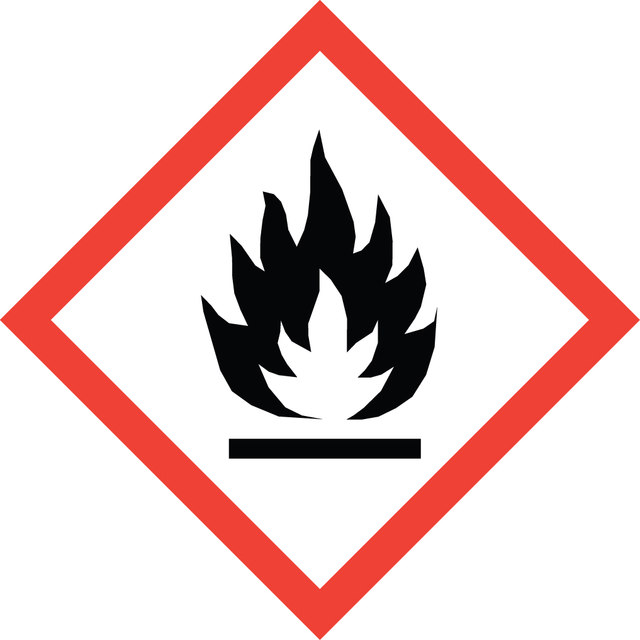
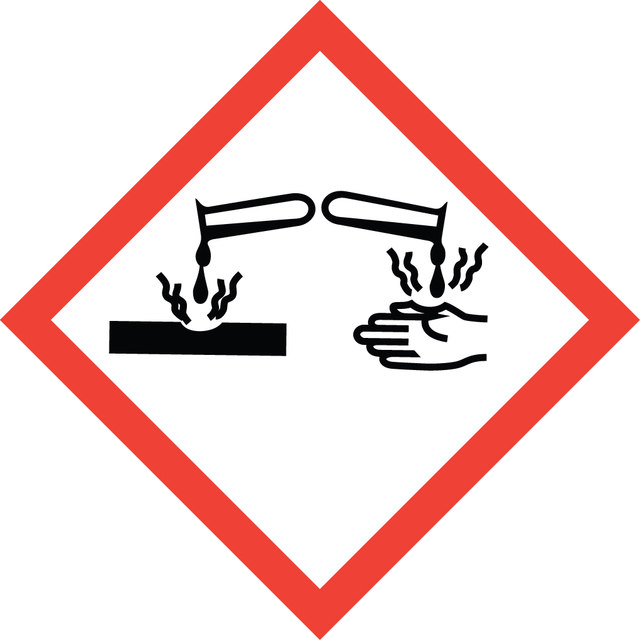
Acute Tox. 4 Dermal - Acute Tox. 4 Inhalation - Acute Tox. 4 Oral - Aquatic Chronic 3 - Eye Dam. 1 - Flam. Liq. 2 - Muta. 2 - Skin Irrit. 2 - STOT SE 3

target_organs

Respiratory system

Storage Class

3 - Flammable liquids

wgk

WGK 3

flash_point_f

50.0 °F - closed cup

flash_point_c

10 °C - closed cup

ppe

Eyeshields, Faceshields, Gloves, type ABEK (EN14387) respirator filter

Regulatory Information

危险化学品
This item has

Choose from one of the most recent versions:

Certificates of Analysis (COA)

Lot/Batch Number

Don't see the Right Version?

If you require a particular version, you can look up a specific certificate by the Lot or Batch number.

Already Own This Product?

Find documentation for the products that you have recently purchased in the Document Library.

Visit the Document Library

I Cascorbi et al.
Ecotoxicology and environmental safety, 30(3), 252-258 (1995-04-01)
Previously the toxicity of 45 heterogeneous environmental chemicals on growth and membrane functions in Saccharomyces cerevisiae and Chinese hamster ovary (CHO) cells (Cascorbi et al., 1993) was examined. In this study the inhibitory effects of the same set of chemicals
Roland P H Schmitz et al.
Environmental science & technology, 41(21), 7370-7375 (2007-11-30)
The reductive dehalogenation of chlorinated propenes was studied with the tetrachloroethene reductive dehalogenase purified from Sulfurospirillum multivorans to obtain indications for a radical mechanism of this reaction. When reduced methyl viologen (MV), which is a radical cation, was applied as
M A Medinsky et al.
Toxicology letters, 23(1), 119-125 (1984-10-01)
2,3-Dichloropropene (2,3-DCP), a component of commercial fumigants and nematocides, was mixed with [14C]2,3-DCP and given to rats by peroral (p.o.) or intraperitoneal (i.p.) administration. Urine, feces, and expired air were collected over 72 h. Excretion of radioactivity in urine predominated
E Eder et al.
Drug metabolism and disposition: the biological fate of chemicals, 16(1), 60-68 (1988-01-01)
At the present time, comprehensive metabolism studies of 2,3-dichloro-1-propene (2,3-DCP) have not yet been reported. We have investigated the biotransformation of 2,3-DCP using female Wistar rats in order to elucidate the bioactivation mechanisms. 175 mg/kg, 1,3-14C-2,3-DCP in corn oil was
F R Johannsen et al.
Journal of toxicology and environmental health, 33(3), 291-302 (1991-07-01)
Groups of 15 male and 15 female Sprague-Dawley rats were exposed to 1 of 3 chloropropene (2,3-Di = DCP; 1,2,3-Tri = TRCP; and 1,1,2,3-Tetra = TECP) vapors to provide information on repeated exposures and the potential for reproductive impairment by

Our team of scientists has experience in all areas of research including Life Science, Material Science, Chemical Synthesis, Chromatography, Analytical and many others.

Contact Technical Service