
D138401

Dimethyl acetylenedicarboxylate
95%
Synonym(s):
Dimethyl 2-butynedioate
Sign In to View Organizational & Contract Pricing.
Select a Size
About This Item
Linear Formula:
CH3OCOC≡CCO2CH3
CAS Number:
Molecular Weight:
142.11
UNSPSC Code:
12352100
NACRES:
NA.22
PubChem Substance ID:
EC Number:
212-098-4
Beilstein/REAXYS Number:
607063
MDL number:
Assay:
95%
Form:
liquid
InChI key
VHILMKFSCRWWIJ-UHFFFAOYSA-N
InChI
1S/C6H6O4/c1-9-5(7)3-4-6(8)10-2/h1-2H3
SMILES string
COC(=O)C#CC(=O)OC
assay
95%
form
liquid
Quality Level
bp
95-98 °C/19 mmHg (lit.)
density
1.156 g/mL at 25 °C (lit.)
Related Categories
General description
Dimethyl acetylenedicarboxylate (DMAD) is an ester utilized as a dienophile and a dipolarophile in cycloaddition reactions.
Application
Versatile dienophile used in Diels-Alder reactions.
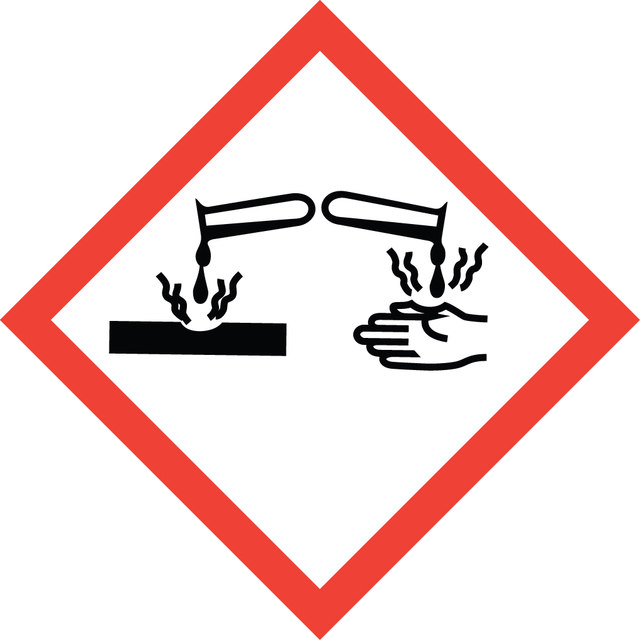

signalword
Danger
hcodes
Hazard Classifications
Acute Tox. 4 Oral - Eye Dam. 1 - Skin Corr. 1B
Storage Class
8A - Combustible corrosive hazardous materials
wgk
WGK 3
flash_point_f
186.8 °F - closed cup
flash_point_c
86 °C - closed cup
ppe
Faceshields, Gloves, Goggles, type ABEK (EN14387) respirator filter
Choose from one of the most recent versions:
Already Own This Product?
Find documentation for the products that you have recently purchased in the Document Library.
Jing Sun et al.
ACS combinatorial science, 13(4), 421-426 (2011-05-17)
A protocol has been developed for the efficient synthesis of structurally diverse 3,4-dihydropyridin-2(1H)-ones and 3,4-dihydro-2H-pyrans via four-component reactions of arylamines, acetylenedicarboxylate, aromatic aldehydes and cyclic 1,3-diketones. The selective formation of the very different pyridinone or pyran derivatives depends on the
Guan-Wu Wang et al.
Organic & biomolecular chemistry, 4(22), 4063-4064 (2007-02-23)
The novel multicomponent reaction of [60]fullerene with dimethyl acetylenedicarboxylate and isoquinoline, quinoline or substituted quinolines was investigated. This type of reaction presents the first example of a 1,4-dipolar cycloaddition reaction in fullerene chemistry.
Vijay Nair et al.
The Journal of organic chemistry, 71(6), 2313-2319 (2006-03-11)
The zwitterion formed by the reaction of dimethoxycarbene and DMAD adds efficiently to one of the carbonyl groups of 1,2-dicarbonyl compounds and anhydrides to generate dihydrofurans and spirodihydrofurans in good yields. In many cases, the carbene inserts into the C-C
Steven E Wheeler et al.
Journal of the American Chemical Society, 132(10), 3304-3311 (2010-02-18)
Stereoselective Diels-Alder cycloadditions that probe substituent effects in aryl-aryl sandwich complexes were studied experimentally and theoretically. Computations on model systems demonstrate that the stereoselectivity in these reactions is mediated by differential pi-stacking interactions in competing transition states. This allows relative
Dimethyl acetylenedicarboxylate: A versatile tool in organic synthesis
CG Neochoritis, et al.
Synthesis, 537-585 (2014)
Our team of scientists has experience in all areas of research including Life Science, Material Science, Chemical Synthesis, Chromatography, Analytical and many others.
Contact Technical Service