Sign In to View Organizational & Contract Pricing
Select a Size
About This Item
Linear Formula:
(ClCH2CH2)2O
CAS Number:
Molecular Weight:
143.01
Beilstein:
605317
EC Number:
MDL number:
UNSPSC Code:
12352100
PubChem Substance ID:
NACRES:
NA.22
vapor pressure
0.4 mmHg ( 20 °C)
Quality Level
Assay
99%
form
liquid
refractive index
n20/D 1.456 (lit.)
bp
65-67 °C/15 mmHg (lit.)
mp
−47 °C (lit.)
density
1.22 g/mL at 25 °C (lit.)
storage temp.
2-8°C
SMILES string
ClCCOCCCl
InChI
1S/C4H8Cl2O/c5-1-3-7-4-2-6/h1-4H2
InChI key
ZNSMNVMLTJELDZ-UHFFFAOYSA-N
Looking for similar products? Visit Product Comparison Guide
Related Categories
Signal Word
Danger
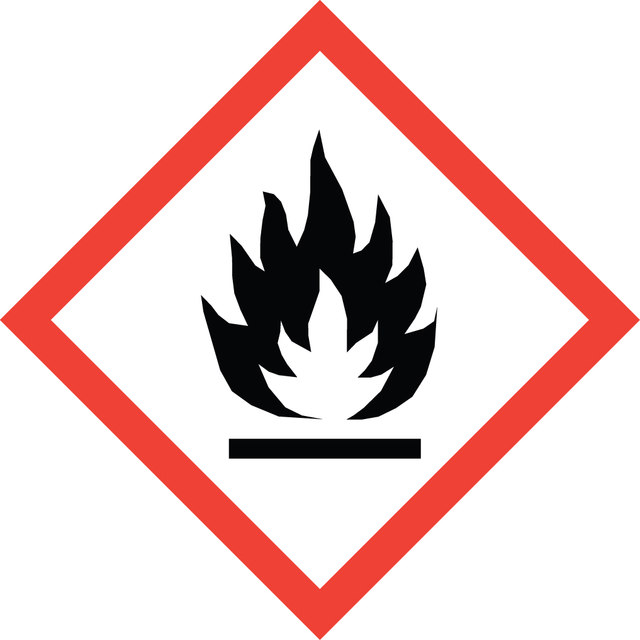
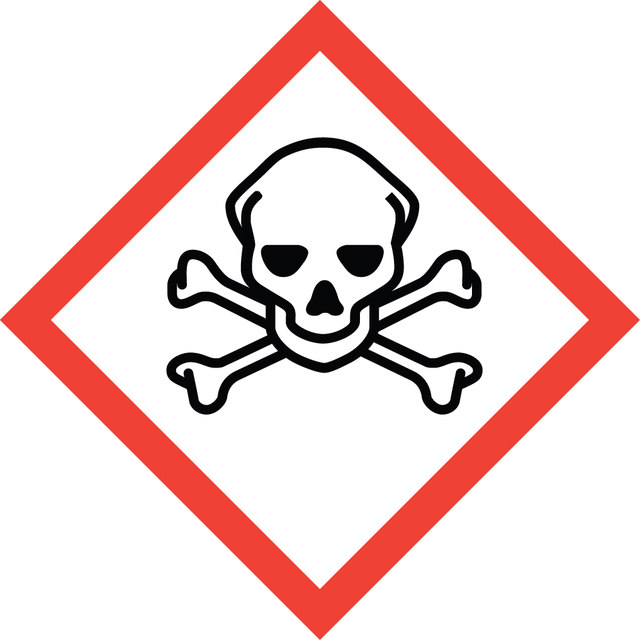
Hazard Statements
Precautionary Statements
Hazard Classifications
Acute Tox. 1 Dermal - Acute Tox. 2 Inhalation - Acute Tox. 2 Oral - Carc. 2 - Flam. Liq. 3
Supplementary Hazards
Storage Class Code
3 - Flammable liquids
WGK
WGK 2
Flash Point(F)
131.0 °F - closed cup
Flash Point(C)
55.0 °C - closed cup
Personal Protective Equipment
dust mask type N95 (US), Eyeshields, Gloves
Regulatory Information
非剧毒-急性毒性1
危险化学品
This item has
Choose from one of the most recent versions:
Already Own This Product?
Find documentation for the products that you have recently purchased in the Document Library.
Alex Christensen et al.
Water research, 43(16), 3910-3921 (2009-05-12)
The objective of this study was to evaluate the extent of improvement in the biodegradability of persistent organic compounds by pre-oxidation by using Sequential Batch Reactors (SBRs). Dichlorodiethyl ether (DCDE), a non-biodegradable compound, was used as a test chemical. Ozonation
Maria D M Mutuc et al.
Chemosphere, 70(8), 1390-1398 (2007-12-07)
This study examined the feasibility of using surface catalyzed Fenton treatment to remediate soil and groundwater contaminated by the chlorinated ethers, bis(2-chloroethyl) ether (BCEE) and bis(2-chloroethoxy) methane (BCEM). Parameters that affect the contaminant loss rate such as porewater pH, hydrogen
Kevin McClay et al.
Applied and environmental microbiology, 73(21), 6870-6875 (2007-09-18)
Degradation of bis(2-chloroethyl) ether (BCEE) was observed to occur in two bacterial strains. Strain ENV481, a Xanthobacter sp. strain, was isolated by enrichment culturing of samples from a Superfund site located in the northeastern United States. The strain was able
R D Lingg et al.
Archives of environmental contamination and toxicology, 11(2), 173-183 (1982-01-01)
Male rats were given single peroral doses of bis(1-14C-2-chloroethyl)ether ([1-14C]BCEE) (40 mg/kg) and of bis(1-14C-2-chloroisopropyl)ether ([1-14C]BCIE) (90 mg/kg). Excretion of 14CO2 and urinary 14C was followed for 48 hr. The time required to eliminate one half of the dose was
L M Gwinner et al.
Carcinogenesis, 4(11), 1483-1486 (1983-11-01)
The roles of chloroethylene oxide (CEO) and chloroacetaldehyde (CAA) in carcinogenicity of vinyl chloride (VC) have been studied by comparing biological effects of VC exposure with those of 2,2'-dichlorodiethylether (bis(chloroethyl)ether, BCEE) as a metabolic precursor of CAA. Biological end-points investigated
Our team of scientists has experience in all areas of research including Life Science, Material Science, Chemical Synthesis, Chromatography, Analytical and many others.
Contact Technical Service