Sign In to View Organizational & Contract Pricing.
Select a Size
About This Item
Linear Formula:
CH3C6H4Br
CAS Number:
Molecular Weight:
171.03
UNSPSC Code:
12352100
NACRES:
NA.22
PubChem Substance ID:
EC Number:
203-391-8
Beilstein/REAXYS Number:
1903636
MDL number:
Product Name
4-Bromotoluene, 98%
InChI key
ZBTMRBYMKUEVEU-UHFFFAOYSA-N
InChI
1S/C7H7Br/c1-6-2-4-7(8)5-3-6/h2-5H,1H3
SMILES string
Cc1ccc(Br)cc1
assay
98%
form
solid
bp
184 °C (lit.)
mp
26-29 °C (lit.)
density
1.39 g/mL at 25 °C (lit.)
Quality Level
Looking for similar products? Visit Product Comparison Guide
Related Categories
Application
4-Bromotoluene was used in the synthesis of ketones by Cu/Pd-catalyzed decarboxylative cross-coupling reaction.
General description
4-Bromotoluene is a p-substituted aryl bromide. 4-Bromotoluene undergoes C-O coupling reaction with 2,4-dimethylphenol catalyzed by the CuI/K2CO3/phen system. Complexes [Cu(phen)(1-(2,4-dimethylphenoxy)-4-methylbenzene)]+, {H[Cu(phen)(2,4-dimethylphenoxy)]}+ and [Cu(2,4-dimethylphenoxy)2]- were reported as intermediates during the reaction by in situ electrospray ionization mass spectrometry (ESI-MS) analysis. Suzuki coupling reaction of 4-bromotoluene and non-fluorescent phenylboronic acid (PBA) in the presence of palladium (II) acetate as a catalyst has been studied. Palladium catalyzed C-N cross-coupling reaction of 4-bromotoluene with piperidine in a microstructured continuous reactor has been described. 4-Bromotoluene has been reported to undergo Heck reaction with styrene in the presence of in situ generated palladium complexes of phosphine-functionalized N-heterocyclic carbene ligands.
signalword
Warning
hcodes
Hazard Classifications
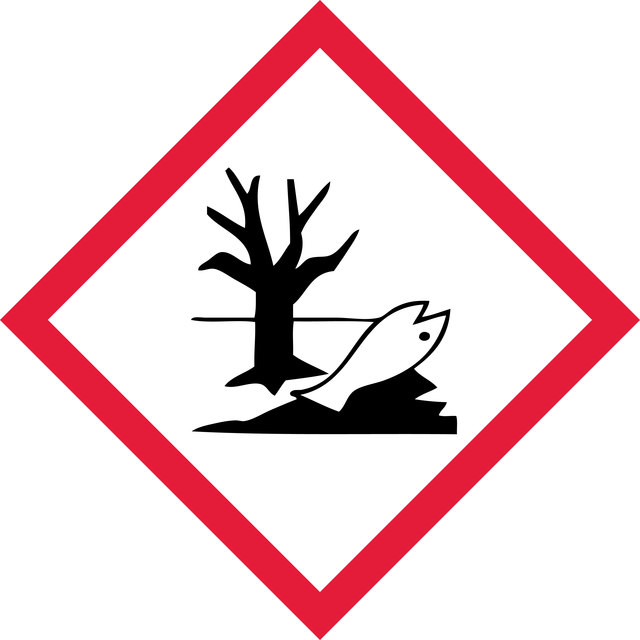
Acute Tox. 4 Inhalation - Aquatic Chronic 2
Storage Class
11 - Combustible Solids
wgk
WGK 3
flash_point_f
Not applicable
flash_point_c
Not applicable
ppe
dust mask type N95 (US), Eyeshields, Gloves
Regulatory Information
危险化学品
This item has
Choose from one of the most recent versions:
Already Own This Product?
Find documentation for the products that you have recently purchased in the Document Library.
Naoya Kishikawa et al.
Journal of chromatography. A, 1216(40), 6873-6876 (2009-09-01)
The fluorogenic derivatization method for aryl halide was developed for the first time. This method was based on the formation of fluorescent biphenyl structure by Suzuki coupling reaction between aryl halides and non-fluorescent phenylboronic acid (PBA). We measured the fluorescence
Hong-Jie Chen et al.
Dalton transactions (Cambridge, England : 2003), 43(29), 11410-11417 (2014-06-18)
The C-O coupling reaction between 2,4-dimethylphenol and 4-bromotoluene catalyzed by the CuI/K2CO3/phen system can be inhibited by the radical scavenger cumene. Complexes [Cu(i)(phen)(1-(2,4-dimethylphenoxy)-4-methylbenzene)](+) (denoted as A), {H[Cu(i)(phen)(2,4-dimethylphenoxy)]}(+) and [Cu(i)(2,4-dimethylphenoxy)2](-) (denoted as B) were observed by in situ electrospray ionization mass
Successful application of microstructured continuous reactor in the palladium catalysed aromatic amination.
Mauger C, et al.
Journal of Organometallic Chemistry, 690(16), 3627-3629 (2005)
Synthesis of ketones from alpha-oxocarboxylates and aryl bromides by Cu/Pd-catalyzed decarboxylative cross-coupling.
Lukas J Goossen et al.
Angewandte Chemie (International ed. in English), 47(16), 3043-3045 (2008-03-11)
Triaryl phosphine-functionalized N-heterocyclic carbene ligands for Heck reaction.
Wang A-E, et al.
Tetrahedron, 61(1), 259-266 (2005)
Our team of scientists has experience in all areas of research including Life Science, Material Science, Chemical Synthesis, Chromatography, Analytical and many others.
Contact Technical Service