Skip to Content
Merck
CN

A32608

Allyl glycidyl ether

≥99%

Synonym(s):

1-Allyloxy-2,3-epoxypropane, Allyl 2,3-epoxypropyl ether

Sign In to View Organizational & Contract Pricing.

Select a Size


About This Item

Empirical Formula (Hill Notation):
C6H10O2
CAS Number:
Molecular Weight:
114.14
UNSPSC Code:
12162002
NACRES:
NA.23
PubChem Substance ID:
EC Number:
203-442-4
Beilstein/REAXYS Number:
105871
MDL number:
Technical Service
Need help? Our team of experienced scientists is here for you.
Let Us Assist
Technical Service
Need help? Our team of experienced scientists is here for you.
Let Us Assist

Product Name

Allyl glycidyl ether, ≥99%

form

liquid

InChI key

LSWYGACWGAICNM-UHFFFAOYSA-N

InChI

1S/C6H10O2/c1-2-3-7-4-6-5-8-6/h2,6H,1,3-5H2

SMILES string

C=CCOCC1OC1

vapor density

3.9 (vs air)

vapor pressure

4.7 mmHg ( 25 °C)

assay

≥99%

refractive index

n20/D 1.433 (lit.)

bp

154 °C (lit.)

density

0.962 g/mL at 25 °C (lit.)

Quality Level

Looking for similar products? Visit Product Comparison Guide

Application

AGE can be used as a terminal epoxy group in the development of adhesive surfaces by hydrosilylation process. It can also be used in the synthesis of polymeric electrolytes for the fabrication of lithium batteries.
Useful in hydrosilylation, including the H2PtCl6·xH2O (cat. no. 206083) catalyzed hydrosilylation of siloxanes to epoxysiloxanes.

General description

Allyl glycidyl ether (AGE) is a monomer that acts as a building block in the polymerization of poly(allyl glycidyl ether) by anionic ring opening mechanism. It is industrially prepared by the reacting allyl alcohol and epichlorohydrin.

signalword

Danger

Hazard Classifications

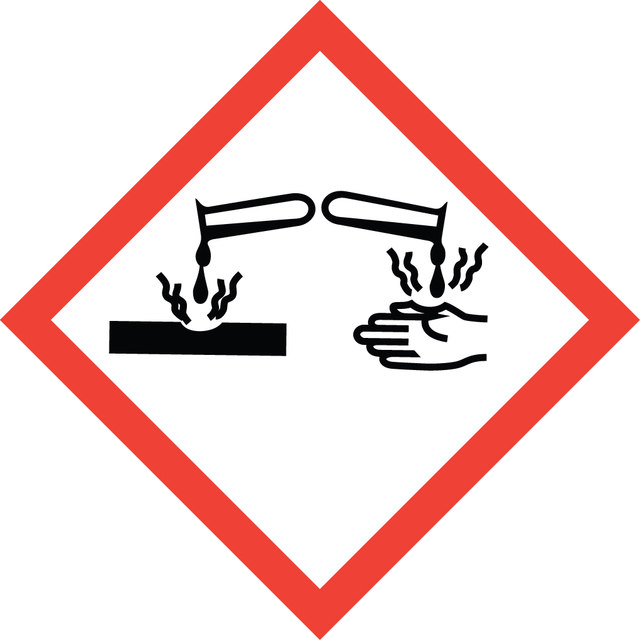
Acute Tox. 3 Inhalation - Acute Tox. 4 Oral - Aquatic Chronic 3 - Carc. 2 - Eye Dam. 1 - Flam. Liq. 3 - Muta. 2 - Repr. 2 - Skin Irrit. 2 - Skin Sens. 1 - STOT SE 3

target_organs

Respiratory system

Storage Class

3 - Flammable liquids

wgk

WGK 3

flash_point_f

134.6 °F - closed cup

flash_point_c

57 °C - closed cup

ppe

Eyeshields, Faceshields, Gloves, type ABEK (EN14387) respirator filter

Regulatory Information

危险化学品
This item has

Choose from one of the most recent versions:

Certificates of Analysis (COA)

Lot/Batch Number

Don't see the Right Version?

If you require a particular version, you can look up a specific certificate by the Lot or Batch number.

Already Own This Product?

Find documentation for the products that you have recently purchased in the Document Library.

Visit the Document Library

M Chiari et al.
Electrophoresis, 21(8), 1521-1526 (2000-06-01)
A fully automated coating procedure was devised based on adsorption of a new polymer, poly(dimethylacrylamide-co-allyl glycidyl ether) onto the capillary surface. The whole procedure takes less than 30 min and does not require the use of organic solvents, viscous solutions
Cancan Li et al.
Langmuir : the ACS journal of surfaces and colloids, 27(17), 11174-11179 (2011-08-02)
Poly(allyl glycidyl ether) (PAGE) and poly(ethylene glycol) (PEG) blocks were sequentially grown via anionic polymerization to form four block copolymer arms on a cholic acid (CA) core, yielding star block copolymers (CA(AGE(8)-b-EG(n))(4)) with low polydispersities (ca. 1.05). The introduction of
Boris Obermeier et al.
Bioconjugate chemistry, 22(3), 436-444 (2011-02-16)
A series of random copolymers comprising ethylene oxide (EO) and 0-100% allyl glycidyl ether (AGE) has been prepared by anionic ring-opening polymerization with molecular weights between 5000 and 13,600 g/mol and polydispersity indices in the range of 1.04-1.19. As key
Macromolecules, 27, 3397-3397 (1994)
Fatima M Plieva et al.
Journal of separation science, 27(10-11), 828-836 (2004-09-10)
Supermacroporous monolithic polyacrylamide (pAAm)-based columns have been prepared by radical cryo-copolymerization (copolymerization in the moderately frozen system) of acrylamide with functional co-monomer, allyl glycidyl ether (AGE), and cross-linker N,N'-methylene-bis-acrylamide (MBAAm) directly in glass columns (ID 10 mm). The monolithic columns

Articles

Discussion of synthetic modifications to gelatin, improving the three-dimensional (3D) print resolution, and resulting material properties.

Our team of scientists has experience in all areas of research including Life Science, Material Science, Chemical Synthesis, Chromatography, Analytical and many others.

Contact Technical Service