Skip to Content
Merck
CN

A30702

Allyl chloride

reagent grade, 98%

Synonym(s):

3-Chloro-1-propene, Chlorallylene

Sign In to View Organizational & Contract Pricing.

Select a Size


About This Item

Linear Formula:
CH2=CHCH2Cl
CAS Number:
Molecular Weight:
76.52
UNSPSC Code:
12352100
NACRES:
NA.22
PubChem Substance ID:
EC Number:
203-457-6
Beilstein/REAXYS Number:
635704
MDL number:
Technical Service
Need help? Our team of experienced scientists is here for you.
Let Us Assist
Technical Service
Need help? Our team of experienced scientists is here for you.
Let Us Assist

Product Name

Allyl chloride, reagent grade, 98%

InChI key

OSDWBNJEKMUWAV-UHFFFAOYSA-N

InChI

1S/C3H5Cl/c1-2-3-4/h2H,1,3H2

SMILES string

ClCC=C

grade

reagent grade

vapor density

2.6 (vs air)

vapor pressure

20.58 psi ( 55 °C)
5.71 psi ( 20 °C)

assay

98%

form

liquid

expl. lim.

11.2 %

refractive index

n20/D 1.414 (lit.)

bp

44-46 °C (lit.)

mp

−130 °C (lit.)

density

0.939 g/mL at 25 °C (lit.)

storage temp.

2-8°C

Quality Level

Looking for similar products? Visit Product Comparison Guide

Application

Allyl chloride can be used as a reactant to prepare:
  • 1-Allyl-2-alkynylbenzene derivatives through allylalkynylation of in situ generated benzynes.
  • α,ω-Difunctional intermediates by reacting with fatty acid methyl esters using ruthenium catalysts.
  • Homoallylic alcohols through Sn/I2 catalyzed Barbier-type allylation reactions of carbonyl compounds.

Other Notes
The article number A30702-4X1L will be discontinued. Please order the single bottle A30702-1L which is physically identical with the same exact specifications.

signalword

Danger

Hazard Classifications

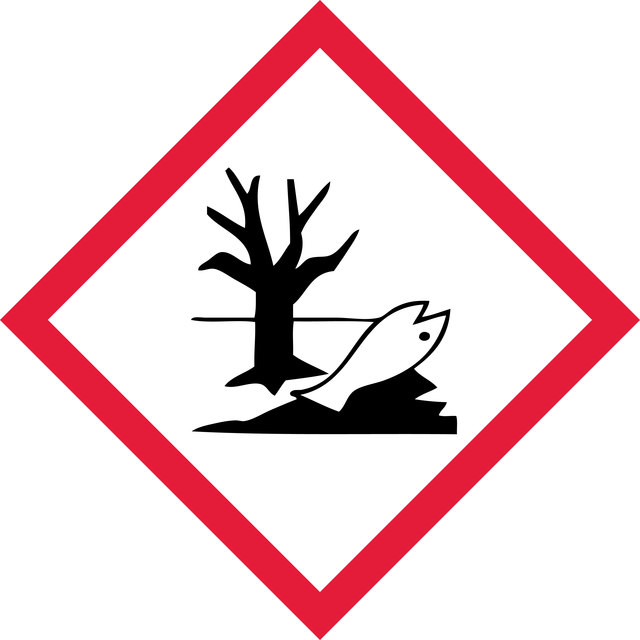
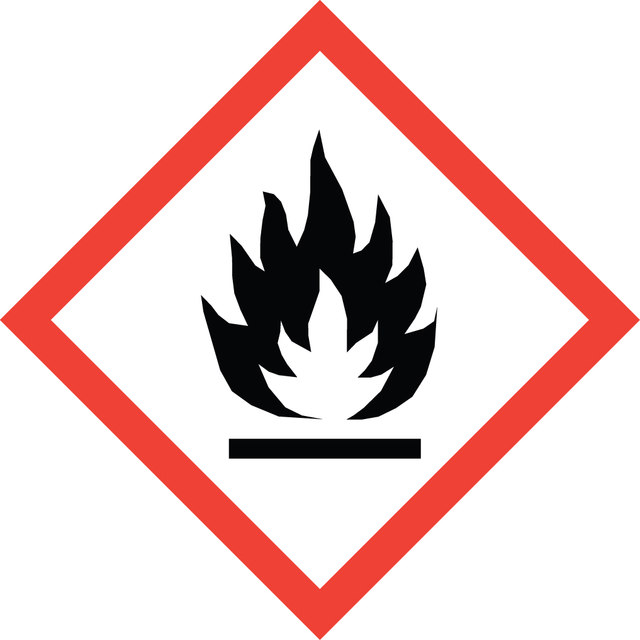
Acute Tox. 4 Dermal - Acute Tox. 4 Inhalation - Acute Tox. 4 Oral - Aquatic Acute 1 - Carc. 2 - Eye Irrit. 2 - Flam. Liq. 2 - Muta. 2 - Skin Irrit. 2 - STOT RE 2 - STOT SE 3

target_organs

Nervous system,Liver,Kidney, Respiratory system

Storage Class

3 - Flammable liquids

wgk

WGK 2

flash_point_f

-25.6 °F

flash_point_c

-32 °C

ppe

Eyeshields, Faceshields, Gloves

Regulatory Information

危险化学品
This item has

Choose from one of the most recent versions:

Certificates of Analysis (COA)

Lot/Batch Number

Don't see the Right Version?

If you require a particular version, you can look up a specific certificate by the Lot or Batch number.

Already Own This Product?

Find documentation for the products that you have recently purchased in the Document Library.

Visit the Document Library

Airong Xu et al.
Polymers, 11(5) (2019-05-15)
Cellulose is the most abundant natural biopolymer, with unique properties such as biodegradability, biocompability, nontoxicity, and so on. However, its extensive application has actually been hindered, because of its insolubility in water and most solvents. Herein, highly efficient cellulose solvents
Airong Xu et al.
Scientific reports, 9(1), 11518-11518 (2019-08-10)
The utilization of cellulose in industrial applicat is of great significance to sustainable development of human society and reducing dependence on dwindling fossil resources. Nevertheless, this utilization of cellulose has actually been limited due to its insolubilization. Here, novel solvents
Palladium-Catalyzed Allylalkynylation of Benzynes: A Highly Efficient Route to Substituted 1-Allyl-2-alkynylbenzenes
Jeganmohan M and Cheng C-H
Organic Letters, 6(16), 2821-2824 (2004)
Sn/I2 Mediated allylation of carbonyl compounds with allyl (crotyl) halide in water
Zhou Y, et al.
ARKIVOC (Gainesville, FL, United States), 11(1), 142-153 (2008)
Cross-metathesis reactions of allyl chloride with fatty acid methyl esters: Efficient synthesis of a, ?-difunctional chemical intermediates from renewable raw materials.
Jacobs T, et al.
Applied Catalysis A: General, 353(1), 32-35 (2009)

Our team of scientists has experience in all areas of research including Life Science, Material Science, Chemical Synthesis, Chromatography, Analytical and many others.

Contact Technical Service